Trikala History: From Ancient Healing Centers to Modern Greece
Trikala is a city where prehistoric footprints meet the grandeur of the Byzantine and Ottoman eras. Located in the heart of Thessaly, the region has been a hub of human activity for tens of thousands of years, evolving from a prehistoric sanctuary into a strategic administrative center and, eventually, a modern Greek city.
Key Facts
- Prehistoric Roots: Evidence of settlement at Theopetra cave dates back to approximately 49,000 BC.
- Ancient Fame: Known as Trikka, it was the legendary birthplace and residence of Asclepius, the god of healing.
- Strategic Shifts: The city transitioned through Persian, Macedonian, Roman, Byzantine, Serbian, and Ottoman rule.
- Ottoman Legacy: Once known as Tırhala, it served as the center of a sanjak (administrative district) and featured a diverse population of Muslims, Christians, and Jews.
- Modern Era: Trikala returned to Greek sovereignty in 1881 via the Treaty of Constantinople.
Antiquity: The City of Healing
The region's human history begins remarkably early. The cave of Theopetra provides evidence of habitation around 49,000 BC, while Neolithic settlements in Megalo Kefalovriso date back to 6,000 BC. The city itself was founded around the 3rd millennium BC as Trikka (or Trikke), named after the nymph Trikke.
Strategically positioned between a local hill and the Lithaios river, Trikka became a renowned center of antiquity. It was most famous as the home of Asclepius, the god of healing, and housed one of the most significant asclepieia (healing temples) of the ancient world.
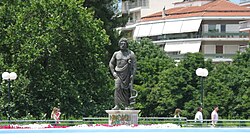
Trikka's influence extended to the legendary Trojan War, where Homer's Iliad notes the city's participation with thirty ships led by Asclepius' sons, Machaon and Podalirius. Over the centuries, the city served as a Mycenean capital and the center of the Estaiotis region. Its political fortunes shifted frequently: it fell to the Achaemenid Persians in 480 BC, joined the Thessalian monetary union in 470 BC, and was united with Philip II of Macedonia in 352 BC. After serving as a battleground between Macedonia and Rome, it finally fell to the Roman Republic after 168 BC.
The Middle Ages: Empires and Invasions
During the Byzantine era, Trikala remained a vital territory, though it was frequently targeted by nomadic raiders, including the Goths, Huns, Slavs, Bulgarians, Normans, and Catalans. The name "Trikala" first appeared in historical records during the 11th century in the Strategikon of Kekaumenos, referring to the "Trikalitan Vlachs." By the 12th century, the Arab geographer al-Idrisi described the town as a prosperous agrarian center rich in gardens and vineyards.
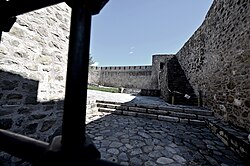
Following the Fourth Crusade in 1204, Trikala became part of the Despotate of Epirus before returning to the Byzantine Empire in 1259. The 14th century saw a period of semi-independence under sebastokrator Stephen Gabrielopoulos. However, by 1348, the city was incorporated into the Serbian Empire under Stefan Dušan. This era was marked by the establishment of the court of Symeon Uroš and the founding of the nearby Meteora monasteries in 1366/7.
The Ottoman Period: Tırhala
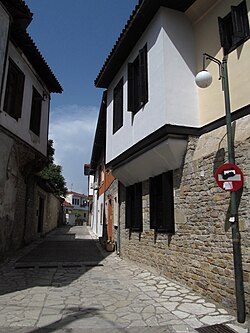
With the Ottoman conquest in 1393/4, the city was renamed Tırhala. Under the influence of Turahan Bey and his son Ömer Bey, the city was transformed into a typical Ottoman urban center. This included the construction of medreses (educational institutions), hammams (public baths), and caravanserais, while the Christian population remained concentrated in the Varoussi (Varosh) quarter.
As the capital of the Sanjak of Trikala, the city became a multicultural hub. Census data from the 15th and 16th centuries show a growing population of Muslim, Christian, and Jewish families. It also emerged as an intellectual center through the Trikke School, where scholars like Dionysius the Philosopher taught. However, the city also faced hardships; Christian boys from surrounding villages were often levied as Janissaries (elite Ottoman soldiers).
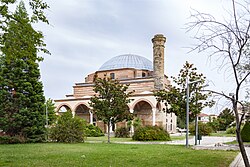
By the 17th century, traveler Evliya Çelebi described a bustling city with 2,300 houses and numerous mosques, the most prominent being the Osman Shah Mosque designed by the architect Mimar Sinan. Despite suffering a devastating fire in 1749 and further destruction during the Orlov Revolt, the city maintained a population of roughly 25,000 until the Greek Revolution of 1821.
The Modern Era and Urban Evolution
Trikala officially returned to Greek sovereignty on August 23, 1881, following the Treaty of Constantinople. Although briefly re-occupied by Ottoman forces during the Greco-Turkish War of 1897, the city soon became a focal point for social change. In the early 20th century, Trikala was central to rural workers' mobilizations against the Tsiflikades (Thessalian landlords), leading to the establishment of Greece's first Agricultural Cooperative in 1906.
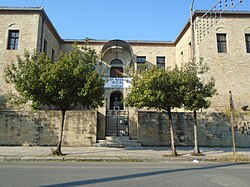
The city's architectural landscape changed significantly in the 20th century. Many medieval and Ottoman structures were lost, particularly during the implementation of a modern urban plan in the 1930s.
| Period | Ruling Power / Entity | Key Characteristic |
|---|---|---|
| Antiquity | Ancient Trikka / Macedonia / Rome | Center of healing (Asclepius) |
| Early Middle Ages | Byzantine Empire | Target of nomadic raids |
| 14th Century | Serbian Empire | Founding of Meteora monasteries |
| 1393 – 1881 | Ottoman Empire | Administrative center (Tırhala) |
| 1881 – Present | Kingdom of Greece / Hellenic Republic | Agricultural and urban modernization |
Frequently Asked Questions
Who was Asclepius and why is he linked to Trikala?
Asclepius was the ancient Greek god of healing. Trikala (then Trikka) was considered his birthplace and main residence, hosting one of the most important asclepieia, or healing temples, in antiquity.
What is the significance of the Osman Shah Mosque?
The Osman Shah Mosque is the only surviving mosque from the Ottoman period in Trikala. It is historically significant for being designed by the famous Ottoman architect Mimar Sinan.
When did Trikala become part of the modern Greek state?
Trikala passed to Greek sovereignty on August 23, 1881, as a result of the Treaty of Constantinople signed between the Ottoman Empire and the Kingdom of Greece.
What was the 'Varoussi' quarter?
The Varoussi (or Varosh) was the quarter of Trikala that remained predominantly Christian during the Ottoman period, distinguishing it from the administrative and Muslim-dominated areas of the city.
What role did Trikala play in Greek agricultural history?
Trikala was a center for rural worker mobilizations against landlords in the early 20th century and is the site where the first Agricultural Cooperative of Greece was founded in 1906.