Tri-Rail: Connecting South Florida's Greater Miami Region
Tri-Rail is a vital commuter rail system serving the Greater Miami area, providing a critical transit link across the densely populated corridor of South Florida. Owned by the South Florida Regional Transportation Authority (SFRTA) and operated by Herzog Transit Services, the system spans 80 miles, connecting passengers from Mangonia Park in the north to the heart of Miami.
Since its inauguration on January 9, 1989, Tri-Rail has evolved from a basic commuter service into a complex network that integrates with various other transit modes, including Metrorail, Metromover, and Amtrak, helping thousands of residents avoid the region's notorious traffic congestion.
Key Facts
- Total Line Length: 80 miles (128.7 km).
- Daily Ridership: Approximately 13,400 weekday passengers (Q1 2026).
- Annual Ridership: 4,924,100 passengers (2025).
- Termini: Mangonia Park and Miami Airport MiamiCentral.
- Operating Speed: Average of 38 mph with a top speed of 79 mph.
- Infrastructure: Standard gauge (4 ft 8.5 in) at-grade rail.
Historical Evolution
Early Foundations and Launch
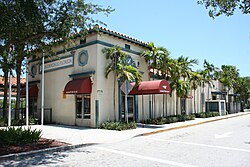
The roots of the current system trace back to the 1920s with the Seaboard–All Florida Railway. Many of the historic stations still in use today, such as the West Palm Beach station built in 1925, date back to this era.
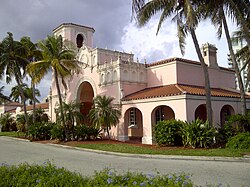
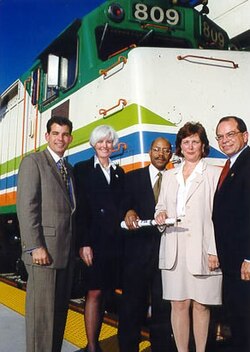
After decades of planning throughout the 1980s, Tri-Rail officially opened in 1989. The system underwent significant growth in the 1990s and 2000s, focusing on expanding service and upgrading station facilities to accommodate a growing population.
Modernization and Expansion
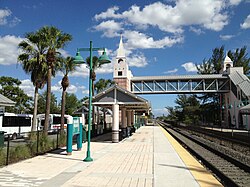
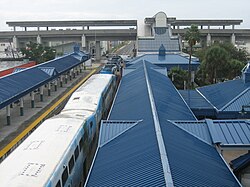
The mid-2000s saw a wave of rebuilding projects. Stations like Boca Raton were upgraded with double track platforms and pedestrian overpasses to improve safety and efficiency.
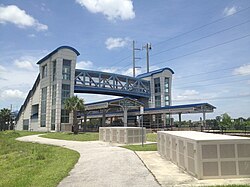
While some stations were updated during the double-tracking phase, others, like Pompano Beach, were renovated later in the 2010s.
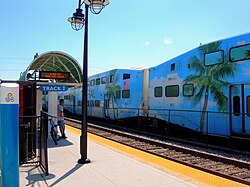
The system continues to maintain its historic charm in certain locations, such as the Fort Lauderdale station (built in 1927) and the Opa-locka station, which features distinct Moorish Revival architecture.
Network and Stations
Tri-Rail operates 19 stations across several fare zones. The network is designed for high accessibility and seamless transfers to local bus systems like Palm Tran and Broward County Transit (BCT).
Major Transit Hubs
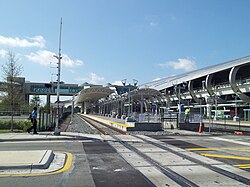
The Miami Intermodal Center, opened in April 2015, stands as the largest station in Florida, serving as a massive nexus for Tri-Rail, Metrorail, and various bus lines.
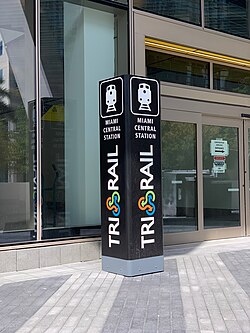
Another pivotal addition is MiamiCentral, which provides direct connections to Brightline, Metrorail, and Metromover within a mixed-use complex. The Downtown Miami Link, which connects the Metrorail Transfer station to MiamiCentral, became operational on January 13, 2024.
![Schematic of rapid transit and passenger rail service in the Miami area in 2018. Tri-Rail's Downtown Miami Link (shown in pink) became operational on January 13, 2024.[36]](/images/25/82/258284011c9871f1cc534113caa56249b759ea49665e8d11f61a92b63788f923.png)
For those transferring to Miami-Dade Transit, the Tri-Rail and Metrorail Transfer Station remains one of the busiest points on the entire line.
Station Summary Table
| Station | Zone | Year Opened | Key Connections |
|---|---|---|---|
| Mangonia Park | 1 | 1998 | Palm Tran |
| West Palm Beach | 1 | 1925 | Amtrak, Brightline, Palm Tran |
| Boca Raton | 3 | 1989 | Palm Tran, BR Shuttles |
| Fort Lauderdale | 4 | 1927 | Amtrak, BCT, LauderGO! |
| Miami Airport | 6 | 2012 | Metrorail, MIA Mover, Metrobus |
| MiamiCentral | 6 | 2018 | Brightline, Metrorail, Metromover |
Fleet and Operations
Tri-Rail utilizes a diverse fleet of locomotives and passenger cars to manage its daily load. The current locomotive fleet includes Brookville BL36PH units, alongside EMD GP49H-3 and MK F40PHM-3C models. Passenger service is provided by a mix of UTDC BiLevel coaches, Bombardier BiLevel cars, and Hyundai Rotem trainsets.
The system has also experimented with Diesel Multiple Units (DMUs) from Colorado Railcar, though several of these are now part of the former fleet. To enhance the commuter experience, Tri-Rail provides specialized bicycle cars to encourage multi-modal travel.
Future Outlook
The SFRTA is looking toward significant expansions to increase ridership and coverage. The most prominent proposal is the Coastal Link, which aims to utilize the FEC line to provide more efficient service. Additionally, there are proposed routes extending toward Homestead and Doral via the CSX Homestead Subdivision line, as well as potential new stations at the VA Medical Center and Little River.
Frequently Asked Questions
What is the current daily ridership of Tri-Rail?
As of the first quarter of 2026, Tri-Rail sees an average of 13,400 riders on weekdays.
How does Tri-Rail connect to downtown Miami?
Tri-Rail provides service to MiamiCentral via the Downtown Miami Link, which became operational on January 13, 2024, allowing passengers to connect with Brightline, Metrorail, and Metromover.
Which stations are the oldest in the system?
Several stations date back to the 1920s, including West Palm Beach (1925), Deerfield Beach (1926), Fort Lauderdale (1927), and Opa-locka (1927).
Can I take my bicycle on Tri-Rail?
Yes, Tri-Rail operates specific bicycle cars within its trainsets to accommodate cyclists.
What is the Coastal Link?
The Coastal Link is a proposed expansion project that would utilize the Florida East Coast (FEC) railway line to increase service capacity and reach across South Florida.