Trench Warfare: The Evolution and Impact of Static Combat
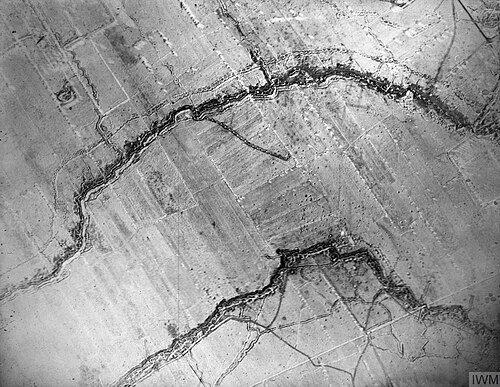
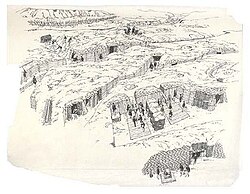
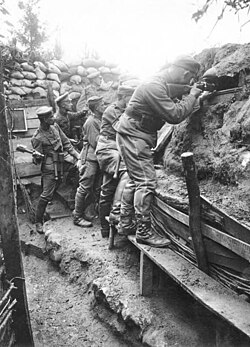
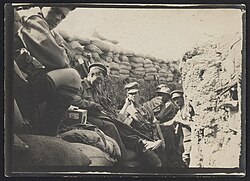
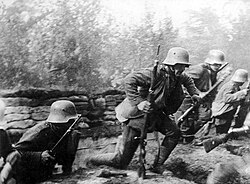
Trench warfare is a method of land combat characterized by the use of occupied lines of military trenches. These fortifications provide combatants with essential protection from small arms fire and substantial shelter from artillery. While it is most archetypically associated with the grueling stalemate of World War I, the practice of digging in to survive has deep historical roots and continues to appear in modern conflicts.
The proliferation of this warfare style typically occurs when a revolution in firepower—such as the introduction of rapid-fire weaponry—outpaces advances in mobility. This creates a tactical environment where the defender holds a significant advantage, often resulting in a war of attrition, where victory is determined by which side can sustain the highest losses and commit the last of its reserves.
Key Facts
- Primary Era: Most prominent on the Western Front during World War I (1914–1918).
- No Man's Land: The exposed area between opposing trenches, typically 90 to 275 meters wide.
- Main Cause: A mismatch between lethal firepower (machine guns, artillery) and soldier mobility.
- Casualties: Artillery was the leading killer, accounting for approximately 75% of casualties.
- Resolution: The stalemate was eventually broken by combined arms tactics and the development of armored tanks.
Precursors to the Great War
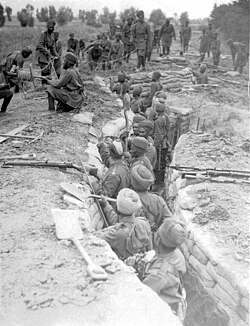
Long before the 20th century, military forces utilized field works to protect infantry. During the American Civil War (1861–1865), both Union and Confederate armies employed extensive trench systems, most notably during the sieges of Vicksburg in 1863 and Petersburg (1864–1865). The latter saw the early use of the Gatling gun, a precursor to the modern machine gun.
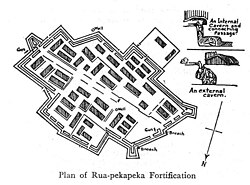
Other significant early examples include the Ruapekapeka Pā in 1846, an innovative Ngāpuhi fortification that some historians argue laid the groundwork for modern trench systems. Trenches were also utilized in the Paraguayan War, the Second Anglo-Boer War, and the Russo-Japanese War.
The Adoption of Trench Warfare in World War I
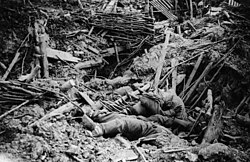
By October 1914, the "Race to the Sea" had resulted in a continuous line of trenches stretching across Belgium and France. Mass infantry assaults became futile against the combined power of rapid rifle fire, machine guns, and heavy artillery. Because the lines were continuous with no open flanks, frontal assaults became the only option, leading to staggering casualties for both attackers and defenders.
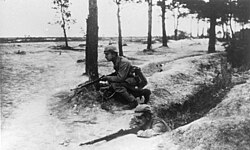
Trench Layout and Construction
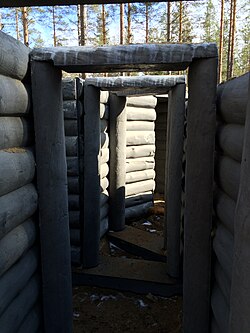
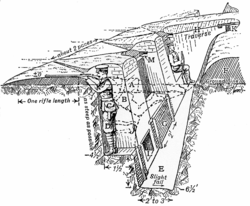
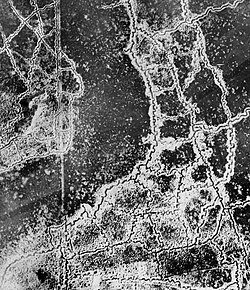
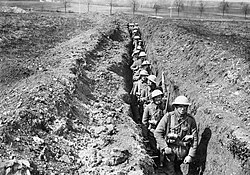
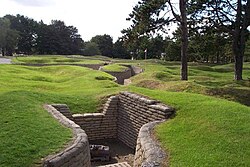
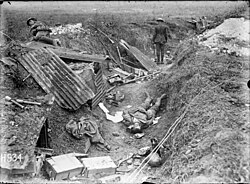
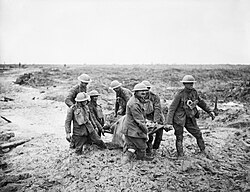
While layouts varied by terrain, British defensive doctrine generally utilized three parallel lines connected by communication trenches—narrow paths used to move troops and casualties between the rear and the front.
- Front Trench: Lightly garrisoned and facing No Man's Land; occupied in force only during "stand to" at dawn and dusk.
- Support Trench: Located 200–300 yards behind the front line.
- Reserve Trench: Located another 200–300 yards back, where troops amassed for counter-attacks.
No Man's Land
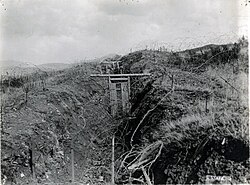
The space between opposing lines, known as no man's land, was a lethal zone fully exposed to artillery. Its width varied; while typically between 90 and 275 meters on the Western Front, it was as narrow as 25 meters at Vimy Ridge.
Weaponry of the Trenches
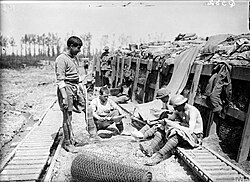
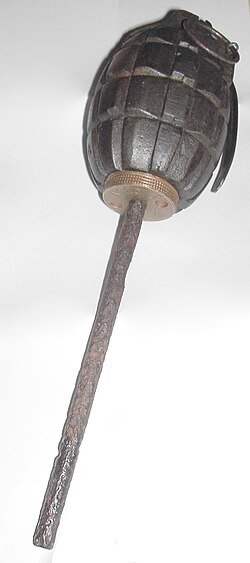
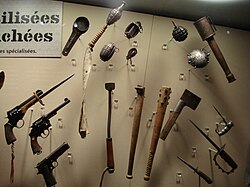
The static nature of the war drove rapid technological innovation. Hand grenades became primary tools, allowing soldiers to attack enemies in trenches without exposing themselves. The British Mills bomb became a staple, with 75 million used by the war's end.
Specialized Combat Tools
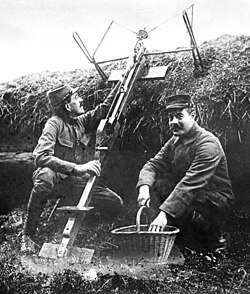
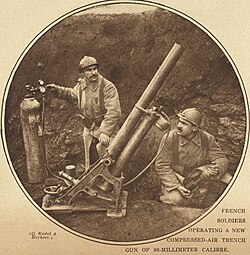
- Grenade Launchers: Devices like the German Wurfmaschine and French Sauterelle were used to lob grenades into enemy lines before being replaced by mortars.
- Flamethrowers: The Flammenwerfer was first used by Germany in 1915 and later became a preferred tool for Stoßtruppen (stormtroopers).
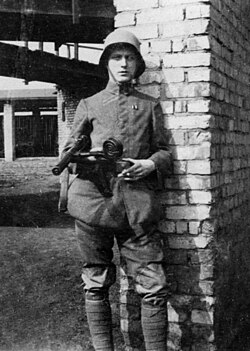
- Submachine Guns: Developed for close-quarters trench clearing, the MP 18 was the first practical submachine gun used in combat.
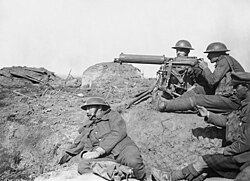
- Machine Guns: The Vickers machine gun and modified aircraft weapons like the Bergmann LMG 15 provided devastating defensive fire.
Artillery and Chemical Warfare
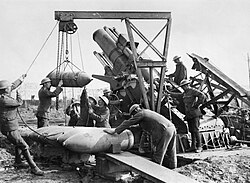
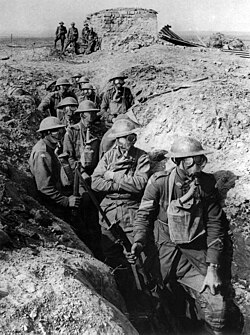
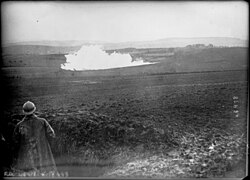
Artillery was the dominant force of the war. Beyond traditional shells, chemical agents were introduced to break the stalemate. Tear gas was used first in 1914, followed by lethal chlorine gas in April 1915 and phosgene in December 1915, which was 18 times more powerful than chlorine.
Life and Hardship in the Lines
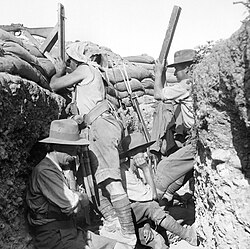
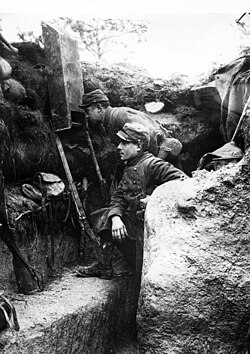
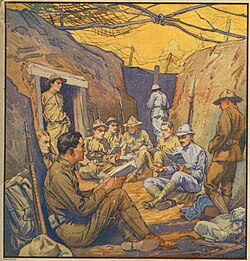
Life for a soldier was a cycle of extreme tension and boredom. Most units rotated through the lines in short bursts, though some, like the Portuguese Expeditionary Corps, served up to six consecutive months due to a lack of reinforcements.
A typical British soldier's year was distributed as follows:
| Location/Activity | Percentage of Year |
|---|---|
| Front Line | 15% |
| Support Line | 10% |
| Reserve Line | 30% |
| Rest | 20% |
| Other (Hospital, Leave, Training) | 25% |
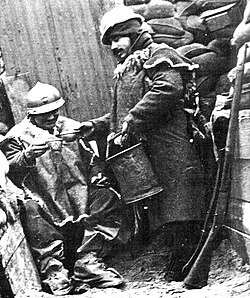
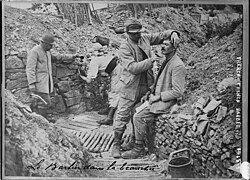
Beyond combat, soldiers faced psychological trauma, disease, and the constant presence of trench rats. Basic hygiene was a struggle, though some French engineers installed hot shower-baths to improve conditions.
Breaking the Stalemate
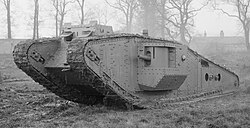
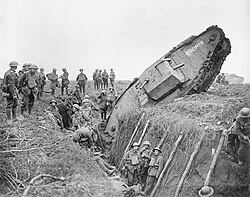
The decline of trench warfare began with the development of combined arms tactics—the coordinated use of infantry, artillery, and air support. The introduction of the tank was pivotal. Although early models faced technical failures and struggled with wide anti-tank trenches, by 1918, improved tank capabilities helped Allied forces bypass and defeat static lines.
Later Use and Modern Context
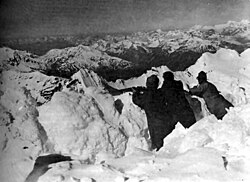
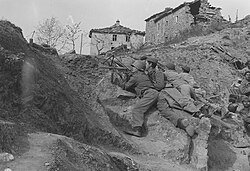
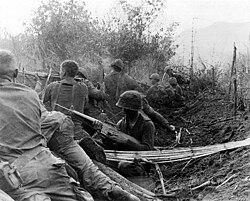
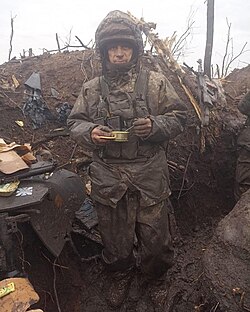
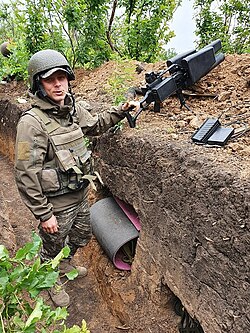
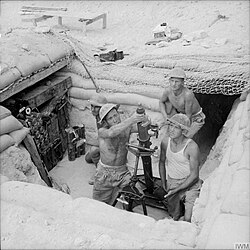
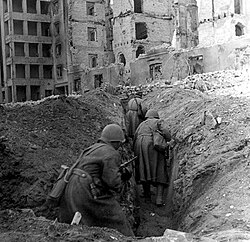
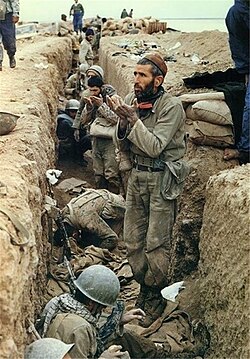
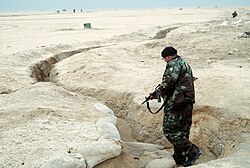
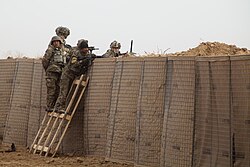
Trench warfare did not vanish after 1918. It appeared in the Spanish Civil War and World War II (such as the Battle of Montese). In more recent history, it has been seen in the Iran-Iraq War and the Vietnam War. Most recently, the Russo-Ukrainian War has seen a return to extensive trench systems, now augmented by modern technology like anti-drone jammers.
Frequently Asked Questions
Why did trench warfare become so common in World War I?
It occurred because defensive firepower, specifically machine guns and heavy artillery, became far more effective than the ability of infantry to move across open ground, forcing soldiers to dig in for survival.
What was "No Man's Land"?
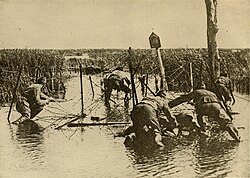
No Man's Land was the lethal, unoccupied territory between the front lines of opposing armies, often filled with barbed wire and cratered by artillery shells.
How did tanks end the era of trench warfare?
Tanks provided mobile armor that could cross trenches and crush barbed wire, allowing infantry to advance under protection and bypass the static defenses that had caused the stalemate.
What were the primary non-combat dangers in the trenches?
Soldiers faced severe risks from diseases, psychological trauma (shell shock), and environmental conditions leading to ailments like trench foot.
Is trench warfare still used today?
Yes, it remains a viable defensive strategy in modern conflicts, as seen in the Russo-Ukrainian War, though it is now contested by drones and precision munitions.