Treaty of Paris 1814: Ending the Napoleonic Wars
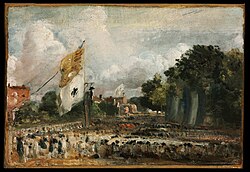
The Treaty of Paris, signed on May 30, 1814, marked a pivotal turning point in European history. It formally ended the conflict between France and the Sixth Coalition—a powerful alliance comprising the United Kingdom, Russia, Austria, and Prussia—bringing a temporary close to the Napoleonic Wars. This agreement, often called the First Peace of Paris to distinguish it from a subsequent treaty in 1815, followed an armistice signed on April 23 between the allies and Charles, Count of Artois.
The treaty was the direct result of Napoleon Bonaparte's abdication on April 6, following negotiations at Fontainebleau. Peace talks began on May 9, led by the French diplomat Talleyrand, who represented the exiled Bourbon king, Louis XVIII. The goal of the coalition was not to crush France, but to establish a stable, lasting peace through a just distribution of power across the continent.
Key Facts
- Date Signed: May 30, 1814.
- Primary Parties: France and the Sixth Coalition (UK, Russia, Austria, Prussia).
- French Leadership: Restored the Bourbon monarchy under Louis XVIII.
- Border Changes: France was generally returned to its June 1, 1792, borders.
- Diplomatic Outcome: Paved the way for the Congress of Vienna (September 1814 – June 1815).
- Key Territorial Shift: Formally recognized the independence of Switzerland.
The Restoration of the House of Bourbon
A central pillar of the treaty was the recognition of the House of Bourbon. The agreement was signed between the heads of state of the Coalition powers and Louis XVIII, officially reinstating the Bourbon monarchy in France. Because the allies viewed the restoration of the monarchy as a stabilizing force, they opted for moderate terms rather than imposing harsh penalties that might have destabilized the new regime.
Redefining French Borders and Territories
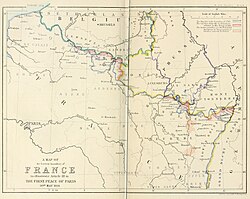
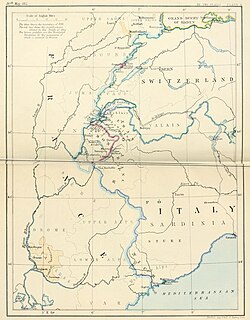
The allies agreed to reduce France to its 1792 borders, effectively stripping away the vast territorial gains made by Napoleon. However, France was permitted to retain several specific areas, including Saarbrücken, Saarlouis, Landau, the County of Montbéliard, Avignon, the Comtat Venaissin, and parts of Savoy (including Annecy and Chambéry).
Beyond the mainland, the treaty reorganized colonial holdings. France reacquired many territories previously lost to Britain, including Guadeloupe. To facilitate this, Sweden—which had been granted Guadeloupe by Britain—was compensated with 24 million francs, creating the so-called Guadeloupe Fund. However, Britain maintained sovereignty over Malta and kept control of Mauritius, Seychelles, Saint Lucia, and Tobago.
International Territorial Adjustments
- Spain: Regained the territory of Santo Domingo, which had been transferred to France in 1795.
- Switzerland: Its independence was formally recognized under Article VI.
- Haiti: While the treaty addressed Santo Domingo, France did not recognize the independence of Haiti (proclaimed by Dessalines) until 1824.
The Path to the Congress of Vienna
The Treaty of Paris served as a preliminary framework. Article 32 specifically called for a final settlement to be concluded within two months at a general congress of all belligerents. This mandate led to the Congress of Vienna, which took place from September 1814 to June 1815. The congress aimed to ensure long-term European stability by balancing power among the great nations.
Social and Political Aftermath
The treaty also touched upon social issues, specifically the slave trade. It aimed to abolish the French slave trade (though not slavery itself) over a five-year period, though this mandate did not apply to French territories.
Despite the moderate terms, some powers remained wary of French resurgence. This fear led to the secret "Eight Articles of London" (June 21, 1814), where the great powers agreed to support a strong buffer state on France's border. This resulted in the formation of the United Kingdom of the Netherlands under King William I, incorporating former Austrian-ruled low countries.
| Category | Details |
|---|---|
| Signatories | France, UK, Russia, Austria, Prussia (later ratified by Spain, Portugal, Sweden) |
| French Borders | Restored to June 1, 1792 levels (with minor exceptions) |
| Political Change | Restoration of Louis XVIII and the Bourbon Monarchy |
| Key Gains for Allies | UK kept Malta, Mauritius, and Seychelles; Switzerland gained independence |
| Key Gains for France | Recovery of Guadeloupe and various mainland enclaves |
Frequently Asked Questions
Why is this called the First Peace of Paris?
It is called the First Peace of Paris because a second treaty was signed in November 1815 following Napoleon's brief return to power (the Hundred Days) and his final defeat at Waterloo.
Did the treaty end slavery in France?
No. The treaty aimed to abolish the slave trade over a five-year period, but it did not abolish the institution of slavery itself.
What happened to the borders of France?
France was generally reduced to its borders as they existed on June 1, 1792, though it was allowed to keep certain territories like Saarbrücken and Avignon to ensure the stability of the restored monarchy.
How did the treaty lead to the Congress of Vienna?
Article 32 of the treaty explicitly provided a draft for a final settlement to be decided at a congress involving all warring parties, which directly resulted in the Congress of Vienna.
Which territories did Britain keep?
Britain maintained sovereignty over Malta and took control of Tobago, Saint Lucia, Seychelles, and Mauritius.