Treaty of Kyakhta: The 1915 Agreement Between Russia, China, and Mongolia
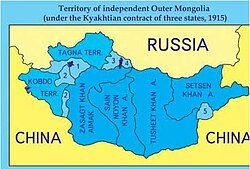
The Treaty of Kyakhta was a pivotal tri-party diplomatic agreement signed on May 25, 1915. Negotiated in Kyakhta within the Russian Empire, the treaty sought to resolve the complex political status of Mongolia by balancing the interests of three major powers: the Russian Empire, the Republic of China, and the Bogd Khanate of Mongolia.
At its core, the treaty was a compromise designed to stabilize the region. While it provided a legal framework for Mongolian governance, it created a tension between the concept of autonomy and the reality of sovereign independence.
Key Facts
- Date Signed: May 25, 1915.
- Location: Kyakhta, Russian Empire.
- Signatories: The Russian Empire, the Republic of China, and the Bogd Khanate of Mongolia.
- Primary Outcome: Recognition of Outer Mongolia's autonomy under Chinese suzerainty.
- Key Restriction: Mongolia was prohibited from signing international treaties regarding political or territorial matters.
The Diplomatic Struggle for Sovereignty
The negotiations were marked by conflicting goals among the three parties. The Mongolian representative, Prime Minister Tögs-Ochiryn Namnansüren, aimed to push the definition of autonomy toward de facto independence. His goal was to ensure that Chinese suzerainty—the right of a sovereign state to exercise control over a tributary state—remained vague and ineffectual in practice.
Conversely, the Chinese government sought to minimize or entirely eliminate Mongolian autonomy to maintain tighter control over the region. Russia acted as a mediating force, balancing its own strategic interests in Central Asia with the stability of its neighbors.
Legal Status and International Perception
From the Mongolian perspective, the treaty was viewed as a disaster because it failed to secure the recognition of a fully independent, all-Mongolian state. However, the practical reality differed from the legal text. Outer Mongolia remained effectively outside of Chinese control.
Baron B.E. Nolde, the Director of the Law Section of the Russian Foreign Ministry, noted that despite the treaty's restrictions, Outer Mongolia possessed all the necessary attributes of a state according to the international law of that era.
Historical Context and Legacy
The Treaty of Kyakhta significantly curtailed the independent status that Mongolia had declared during the National Liberation Revolution of 1911. However, the geopolitical landscape shifted rapidly in the following years. The treaty eventually became moot following two seismic political events: the October Revolution of 1917 in Russia and the Mongolian Revolution of 1921.
To understand where this treaty fits into the broader timeline of the region, it is helpful to view the progression of Mongolian states from prehistoric cultures to the modern era.
| Period | Key States/Cultures | Approximate Timeline |
|---|---|---|
| Prehistoric | Afanasievo, Sagsai, Deer stones, Pazyryk | 3300 BC – 300 BC |
| Ancient | Xiongnu, Rouran Khaganate, Göktürks, Uyghur Khaganate | 209 BC – 840 AD |
| Medieval | Mongol Empire, Yuan dynasty, Northern Yuan, Dzungar Khanate | 9th Century – 1757 |
| Qing Rule | Mongolia under Qing dynasty | 1635 – 1911 |
| Modern | Bogd Khanate, People's Republic, Modern Mongolia | 1911 – Present |
Frequently Asked Questions
Who were the ratifiers of the Treaty of Kyakhta?
The treaty was ratified by Emperor Nicholas II of Russia, President Yuan Shikai of China, and the Bogd Khan of Mongolia.
What does "Chinese suzerainty" mean in the context of this treaty?
In this context, suzerainty meant that while Outer Mongolia was granted autonomy to manage its internal affairs, it was still legally recognized as part of Chinese territory.
Why did Mongolians consider the treaty a failure?
Mongolians viewed it as a disaster because it denied the international recognition of a truly independent, unified Mongolian state.
What happened to the treaty after 1917?
The treaty became irrelevant (moot) due to the political upheavals caused by the October Revolution in Russia and the subsequent Mongolian Revolution of 1921.
Could Mongolia sign its own treaties after 1915?
No; the treaty specifically forbade Mongolia from concluding international treaties with foreign countries regarding territorial or political questions.