Transylvania History: From the Magyar Conquest to Modern Romania
Transylvania is a region defined by its complex tapestry of ethnic identities and shifting political borders. From the early migrations of Central Asian tribes to its current status as a vital part of Romania, the region has served as a crossroads for empires, cultures, and conflicting national aspirations.
Early Origins and the Magyar Conquest
The history of the region's Hungarian influence began in the 9th century. The Magyar tribes, originating near the Ural Mountains, migrated through Etelköz (an area encompassing parts of present-day Southern Ukraine, Moldova, and the Romanian province of Moldavia). Around 895 AD, these tribes crossed the Carpathians and occupied the Carpathian Basin, including Transylvania, meeting little resistance from the local population.
While the exact date of the conquest is debated, archaeological evidence in the form of Magyar artifacts dates back to the first half of the 10th century.
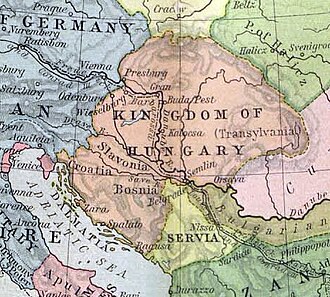
The Principality and Ottoman Influence
A turning point occurred in 1526 at the Battle of Mohács, where the Ottoman Empire defeated the Hungarian army. By 1571, Transylvania had evolved into an autonomous state under Ottoman suzerainty. This era saw the rise of the Principality of Transylvania, governed by its own princes and a parliament known as the Diet.
The political structure of the Diet was based on the Unio Trium Nationum (Union of Three Nations), which granted power to three specific estates:
- The Hungarian nobility (comprising ethnic Hungarian nobles and clergy).
- The Transylvanian Saxons (German burghers).
- The free Székely Hungarians.
Habsburg Rule and the Path to Integration
The geopolitical tide shifted following the Battle of Vienna in 1683. As Ottoman power waned, the Habsburg monarchy began asserting control over Transylvania. This consolidation was finalized after Rákóczi's War for Independence in 1711, replacing local princes with imperial governors.
In 1691, the Diploma Leopoldinum established a separate status for the region, which was later formalized in 1765 with the proclamation of the Grand Principality of Transylvania. Despite these titles, the region remained administratively part of the Kingdom of Hungary within the Habsburg Empire.
Following the Austro-Hungarian Compromise of 1867, Transylvania was fully integrated into the Kingdom of Hungary. This period was marked by the introduction of Magyarization, a policy aimed at promoting the Hungarian language and culture as the official standard.
The 20th Century: World Wars and Border Shifts
The collapse of Austria-Hungary after World War I led to a dramatic shift in sovereignty. On December 1, 1918, elected Romanian representatives from Transylvania, Banat, Crișana, and Maramureș proclaimed their union with Romania. This was formalized by the Treaty of Trianon on June 4, 1920, which established the new borders and left over 1.5 million Hungarians as a minority within the Romanian state.
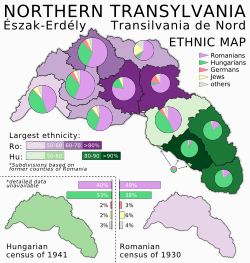
During World War II, the region's borders shifted again. In August 1940, the Second Vienna Award returned the northern half of Transylvania to Hungary. This created a complex demographic split: between 1.15 and 1.3 million Romanians remained in the ceded northern territory, while between 363,000 and 800,000 Hungarians remained in the south.
By late 1944, Romanian and Soviet forces retook Northern Transylvania. The Treaty of Paris (1947) officially overturned the Vienna Award, confirming the region as part of Romania.
Communist Era and Modern Administration
Under communist rule, a Magyar Autonomous Region was established in 1952, though it was dissolved in 1968 in favor of a county-based administrative system. Later, under the regime of Nicolae Ceaușescu, the state implemented policies of Romanianization to diminish minority cultural influence.
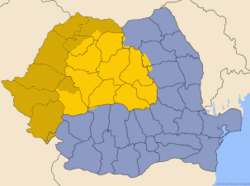
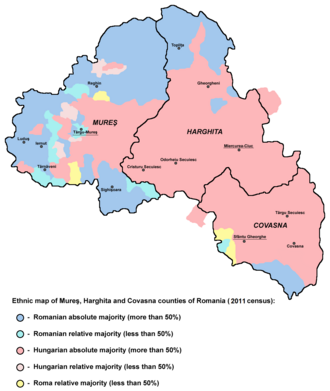
Today, "Transylvania proper" consists of several Romanian counties (județe), including Alba, Bistrița-Năsăud, Brașov, Cluj, Covasna, Harghita, Hunedoara, Mureș, Sibiu, and part of Sălaj. The broader definition of modern Transylvania also encompasses Crișana and parts of Banat.
Key Facts
- 895 AD: Approximate date of the Magyar crossing of the Carpathians.
- Unio Trium Nationum: The political alliance of Hungarian nobles, Saxons, and Székelys.
- Treaty of Trianon (1920): The agreement that formally integrated Transylvania into Romania.
- Second Vienna Award (1940): Temporarily returned Northern Transylvania to Hungary during WWII.
- 1989 Revolution: Led to the formation of ethnic-based political parties like the Democratic Union of Hungarians in Romania.
| Period/Event | Governing Power | Key Characteristic |
|---|---|---|
| 9th - 16th Century | Kingdom of Hungary | Magyar settlement and consolidation |
| 1571 - 1683 | Principality of Transylvania | Autonomy under Ottoman suzerainty |
| 1711 - 1918 | Habsburg Monarchy / Austria-Hungary | Imperial governors and later Magyarization |
| 1920 - 1940 | Romania | Post-WWI integration (Treaty of Trianon) |
| 1940 - 1944 | Hungary (Northern part) | Second Vienna Award period |
| 1945 - Present | Romania | Post-WWII restoration and EU membership |
Post-Communist Era and Diplomacy
Following the 1989 Romanian Revolution, ethnic political parties emerged, including the Democratic Union of Hungarians in Romania and the Romanian National Unity Party. While some violence occurred, such as the Târgu Mureș events of March 1990, large-scale ethnic conflict was avoided.
Diplomatic relations were stabilized by a 1995 basic treaty, in which Hungary renounced territorial claims to Transylvania and Romania committed to respecting minority rights. The accession of both nations to the European Union in the 2000s further improved bilateral relations.
Frequently Asked Questions
When did the Hungarians first arrive in Transylvania?
The Magyar tribes crossed the Carpathians around 895 AD, with the earliest archaeological artifacts in the region dating to the first half of the 10th century.
What was the Unio Trium Nationum?
It was the "Union of Three Nations," a political arrangement in the Principality of Transylvania that shared power among the Hungarian nobility, the Transylvanian Saxons, and the free Székely Hungarians.
How did the Treaty of Trianon affect the region?
Signed on June 4, 1920, the treaty defined the new border between Hungary and Romania, officially making Transylvania part of Romania and leaving over 1.5 million Hungarians as a minority group there.
What happened during the Second Vienna Award?
In August 1940, the northern half of Transylvania was returned to Hungary. This lasted until 1944, when the territory was retaken by Romanian and Soviet forces.
What is the current status of ethnic relations in Transylvania?
Since the 1989 Revolution and the 1995 treaty between Hungary and Romania, relations have stabilized. Hungary has renounced territorial claims, and both countries' membership in the EU has fostered better cooperation.