Transparency International: Leading the Global Fight Against Corruption
Corruption is more than just a legal violation; it is the abuse of entrusted power for private gain. When those in authority prioritize personal profit over the public good, the integrity of institutions erodes, harming everyone who depends on them. To combat this systemic issue, Transparency International (TI) operates as a global umbrella organization dedicated to promoting transparency and accountability worldwide.
Founded on February 9, 1993, in The Hague, Netherlands, and later registered in Berlin, Germany, TI has grown from a small operation into one of the world's most prominent international non-governmental organizations (INGOs). Today, it coordinates more than 100 national chapters, each working to fight perceived corruption within their respective home countries.
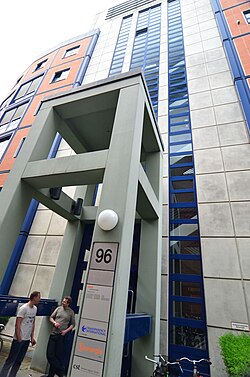
Key Facts
- Founded: February 9, 1993.
- Headquarters: Berlin, Germany.
- Legal Status: Eingetragener Verein (German registered voluntary association).
- Leadership: Maíra Martini (CEO), François Valérian (Chair), and Ketakandriana Rafitoson (Vice-Chair).
- Global Reach: Over 100 national chapters worldwide.
- Key Metric: Publishes the annual Corruption Perceptions Index (CPI).
Organizational Structure and Global Partnerships
Transparency International functions as a movement rather than a single entity. Its Secretariat in Berlin provides central coordination, while national chapters—such as those in Bangladesh, Canada, Serbia, and Slovakia—execute localized strategies. Transparency International Bangladesh currently holds the record for the largest number of members.
To amplify its impact, TI maintains strategic partnerships with several high-level international bodies. It holds consultative status with UNESCO and is a member of the G20 Think Tanks (T20), Civil Society 20, the United Nations Global Compact, and the Sustainable Development Solutions Network. These collaborations align with the United Nations Sustainable Development Group (UNSDG) goals of peace, justice, and strong institutions.
Core Tools and Anti-Corruption Products
TI is widely recognized for developing data-driven tools that quantify corruption and hold power to account. Its primary objective is outlined in the strategy "Holding Power to Account – A Global Strategy Against Corruption 2021–2030."
The Corruption Perceptions Index (CPI)
Since 1995, the CPI has served as a benchmark for measuring perceived levels of public sector corruption globally. Alongside the CPI, TI publishes the Global Corruption Report, the Global Corruption Barometer, and the Bribe Payers Index (BPI). While the BPI—which ranked nations based on the likelihood of their corporations offering bribes—was published from 1999 to 2011, it was eventually closed due to funding constraints.
Defense and Security Monitoring
Recognizing the high risk of corruption in the arms trade, TI produces the Defense Companies Index. First published in 2012 and overhauled in 2020, this report assesses the anti-corruption policies and transparency procedures of 134 of the world's largest defense companies.
Controversies and Challenges
As a high-profile watchdog, Transparency International has faced its own share of scrutiny regarding funding and internal culture.
Funding and the Siemens Case
In 2015, TI faced criticism for accepting $3 million from the Siemens Integrity Initiative. This was controversial because Siemens had previously paid a record $1.6 billion fine in 2008 for widespread bribery. TI defended the funding, stating that the money supported Integrity Pacts—tools designed to strengthen government procurement practices to prevent the very type of corruption Siemens had committed. These pacts have since become a global format for transparent procurement.
Internal Culture and Disaccreditations
The organization has dealt with internal turmoil, including reports of a "toxic workplace" at the Berlin Secretariat between 2017 and 2021. Former managing director Cobus de Swardt later published a book alleging abuse of power and the silencing of whistleblowers.
Additionally, TI has strictly enforced its accreditation standards. In 2017, the TI Secretariat stripped the US chapter of its accreditation due to differences in philosophy and reports that the chapter had become a corporate front group funded by multinational corporations. A new TI USA chapter was subsequently established in 2020.
Summary of Transparency International
| Category | Details |
|---|---|
| Primary Purpose | Combat corruption and prevent crime |
| Key Publications | Corruption Perceptions Index (CPI), Global Corruption Report |
| Global Presence | 100+ National Chapters |
| Key Strategy | Holding Power to Account (2021–2030) |
| Legal Form | Eingetragener Verein (Germany) |
Frequently Asked Questions
How does Transparency International define corruption?
Transparency International defines corruption as the abuse of entrusted power for private gain, which negatively impacts everyone who relies on the integrity of those in authority.
What is the Corruption Perceptions Index (CPI)?
The CPI is an annual index published by TI since 1995 that ranks countries based on perceived levels of public sector corruption.
Why was the original TI USA chapter disaccredited?
The chapter was stripped of its accreditation in 2017 due to strategic differences and concerns that it was acting as a corporate front group funded by large multinational corporations.
What are Integrity Pacts?
Integrity Pacts are tools developed by TI to strengthen government procurement practices, ensuring transparency and reducing the risk of bribery during the awarding of public contracts.
Who leads Transparency International currently?
The organization is led by Chief Executive Officer Maíra Martini, with François Valérian serving as Chair and Ketakandriana Rafitoson as Vice-Chair.