Tomás Eloy Martínez: The Master of Argentine Journalism and Fiction
Tomás Eloy Martínez (1934–2010) was a towering figure in Latin American letters, seamlessly blending the rigor of journalism with the imaginative power of the novel. An Argentine writer and reporter, he is remembered for his innovative ability to weave historical facts with fictional narratives, creating a unique literary style that captured the political turbulence of his homeland.
Born on July 16, 1934, in San Miguel de Tucumán, Martínez laid his academic foundation with a degree in Spanish and Latin American literature from the University of Tucumán and a Master of Arts from the University of Paris. This dual background in regional and international scholarship informed his lifelong pursuit of truth and storytelling.
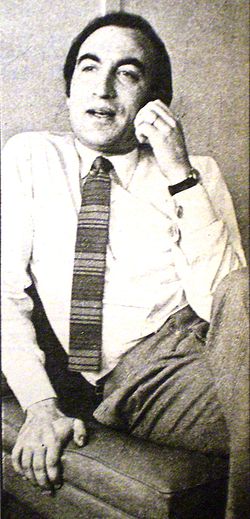
Key Facts
- Full Name: Tomás Eloy Martínez (Eloy as paternal surname, Martínez as maternal).
- Career: Renowned journalist, novelist, and professor.
- Major Awards: Winner of the 2002 Premio Alfaguara de Novela for Flight of the Queen; recipient of Guggenheim and Woodrow Wilson fellowships.
- Literary Style: Famous for combining historical truth with fictional content.
- Key Subjects: The political legacy of Juan Domingo Perón and Eva Perón.
A Career in Journalism and Political Courage
Martínez began his professional journey in Buenos Aires as a film critic for La Nación (1957–1961) before serving as the editor-in-chief of Primera Plana from 1962 to 1969. His time as a reporter in Paris (1969–1970) proved pivotal; it was during this period that he interviewed the exiled former Argentine President Juan Domingo Perón in Madrid. These conversations later served as the primary inspiration for two of his most celebrated works: La Novela de Perón (1985) and Santa Evita (1995).
Beyond his own writing, Martínez was a catalyst for Latin American literature on the global stage, helping to bring international attention to masterpieces such as Gabriel García Márquez's One Hundred Years of Solitude.
Reporting the Truth Under Pressure
In 1970, Martínez became the director of Panorama magazine. His commitment to journalistic integrity was tested on August 15, 1972, when he reported on an uprising of political prisoners in Rawson, Chubut Province. Because Panorama provided an account that contradicted the official version of the de facto government, Martínez was fired on August 22.
Undeterred, he traveled to Rawson and Trelew to document the subsequent violence, resulting in his book The Passion According to Trelew. The work was subsequently banned by the Argentine dictatorship.
Exile and International Influence
The political climate of the 1970s eventually forced Martínez into exile (1975–1983). He moved to Caracas, Venezuela, where he co-founded the newspaper El Diario de Caracas. During this period, he faced severe threats from the Triple A (Alianza Anticomunista Argentina), a far-right paramilitary group. In his book The Memoirs of the General, he recounts a harrowing incident where gunmen threatened his three-year-old son.
![Martínez on CUNY TV's Charlando con Cervantes, 1996[5]](/images/f3/7a/f37a76efe09828855bfe5ab9e0dc4b2b923ce24fb6a0d9d1d3fc8d2af90cfc78.jpg)
In 1984, Martínez transitioned into academia, moving to the United States to teach at the University of Maryland. He later served as a professor and director of the Latin American studies program at Rutgers University in New Jersey. Even while teaching in the U.S., he remained deeply connected to Latin American media, contributing columns to La Nación and the New York Times syndicate.
Later Works and Legacy
His final book, Purgatory, explored the profound melancholy of exile and the trauma experienced by the families of the desaparecidos—individuals kidnapped and presumed dead during the military dictatorship known as "El Proceso."
Tomás Eloy Martínez passed away from cancer in Buenos Aires on January 31, 2010, leaving behind a legacy of intellectual bravery and literary innovation.
Summary of Major Works
| Year | Title | Significance |
|---|---|---|
| 1973 | The Passion According to Trelew | Reportage on the Trelew Massacre; banned by the dictatorship. |
| 1985 | The Perón Novel | Based on interviews with Juan Domingo Perón. |
| 1995 | Santa Evita | Celebrated blend of history and fiction regarding Eva Perón. |
| 2002 | The Flight of the Queen | Winner of the Premio Alfaguara de Novela. |
| 2008 | Purgatory | Exploration of exile and the "desaparecidos." |
Frequently Asked Questions
What was Tomás Eloy Martínez's unique writing style?
Martínez was known for blending historical facts with fictional elements, a technique he used to explore the complexities of Argentine history and politics in a way that was considered unparalleled among Latin American writers.
Which of his books won the Premio Alfaguara?
He won the 2002 Premio Alfaguara de Novela for his work titled Flight of the Queen.
Why was he forced into exile?
Martínez was forced into exile between 1975 and 1983 due to political persecution by the military authorities and threats from the far-right paramilitary group known as the Triple A.
What was his relationship with Juan Domingo Perón?
Martínez interviewed the former president while Perón was exiled in Madrid in 1969. These interviews became the foundational material for two of his most famous novels, La Novela de Perón and Santa Evita.
What is the significance of "The Passion According to Trelew"?
This book documented the Massacre of Trelew. It was a courageous piece of reporting that challenged the official government narrative of the time, leading to the book being banned by the Argentine dictatorship.