Tokyo Game Show Layout and Exhibition Areas
The Tokyo Game Show (TGS) is one of the world's most significant gaming events, serving as a massive hub for industry professionals and fans alike. Because of the scale of the event, the layout is designed to categorize the vast array of gaming technology, software, and culture into specialized zones. While the specific configuration varies by year—for instance, the 2015 event featured eleven distinct exhibition areas—the core objective remains the same: providing a structured environment for business, education, and public entertainment.
Key Facts
- General Exhibition Area: The largest section of the show, featuring major industry leaders like Sony Interactive Entertainment and Square Enix.
- Asia New Stars: A dedicated zone launched in 2012 to highlight emerging developers from across Asia.
- Cosplay Collection Night: A massive Saturday night parade featuring over 100 cosplayers hosted by CURE.
- Business Solutions: A restricted area reserved exclusively for industry professionals and not open to the general public.
- Competitive Gaming: TGS hosts official Capcom Pro Tour qualifying events for the Street Fighter series.
Public Exhibition Zones
General Exhibition
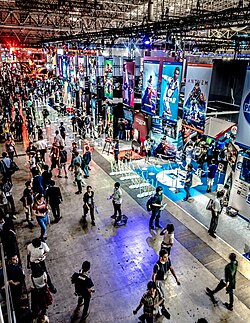
The General Exhibition Area serves as the heart of the Tokyo Game Show. Occupying the largest portion of the venue, this zone is where digital gaming entertainment and related services are showcased. It hosts demo areas for global giants such as Bandai Namco Entertainment, Capcom, Sony Interactive Entertainment, and Square Enix, while also providing a platform for emerging companies to debut their work.
Specialized Gaming Categories
To ensure visitors can easily find specific interests, the show divides gaming into several niche areas:
- Smartphone and Social Games: This area focuses on tablets, smartphones, and social gaming. This sector saw a massive surge in 2012, filling the void left by the temporary absence of Microsoft, which later returned in 2013 to launch the Xbox One.
- Personal Computing: A hub for major Japanese computing firms to display the latest desktop and notebook computers.
- Children: A family-friendly zone featuring games aimed at younger audiences, with booths from companies like Sega and Taito.
- Game Device: This section is dedicated to hardware and peripherals, including controllers, headphones, and specialized gaming furniture for home and portable consoles.
Asia New Stars and Merchandise
Introduced in 2012, the Asia New Stars area is specifically designed to introduce the world to emerging game developers from the Asian region. For those looking to take a piece of the show home, the Merchandise Sales area provides game-related goods from vendors such as Konami and Square Enix.
Education and Industry Infrastructure
Game School
The Game School area bridges the gap between education and the professional industry. It provides information on Japanese colleges and universities offering degrees in computer programming, animation, and digital art. Institutions such as Tokyo Designer Gakuin College and Numazu Professional College of Information Technology use this space to showcase student portfolios and academic programs.
Business and Technical Pavilions
Beyond the public spectacle, TGS facilitates critical industry growth through specialized pavilions:
- Business Solutions: The primary business hub, which remains closed to the general public to allow for private corporate negotiations.
- Sales: The main transaction area where business deals between companies and consumers occur, featuring entities like Nikkei Business Publications.
- Cloud/Data Center Pavilion: A technical zone focused on improving the infrastructure and environments required for network and social games.
Culture and Competition
Cosplay at TGS
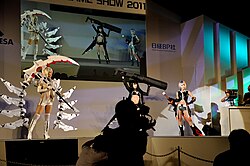
Cosplay is a cornerstone of the TGS experience. Cure, Japan's largest cosplay community website, organizes the Cosplay Collection Night. This Saturday event runs from 6:30 pm to 8:00 pm and features a stage parade of over 100 cosplayers. Hosted by Tatsumi Inui and Yunmao Ayakawa from CURE World Cosplay, with music by DJ & MC: WAN, the event features members of the Worldcosplay website, including international winners from countries such as the US, China, Spain, Turkey, South Korea, Indonesia, Singapore, and the Philippines.
Street Fighter Tournaments
Since 2014, TGS has been a venue for high-stakes competition. The show has featured Street Fighter tournaments that serve as qualifying events for the Capcom Cup as part of the official Capcom Pro Tour. While these were sponsored by Mad Catz from 2014 to 2015, the 2016 event proceeded without them due to the sponsor's financial difficulties during that fiscal year.
TGS Area Summary
| Area Name | Primary Focus | Key Participants/Features |
|---|---|---|
| General Exhibition | Major Game Demos | Sony, Capcom, Square Enix |
| Asia New Stars | Emerging Asian Developers | New indie and regional studios |
| Game School | Academic Programs | Tokyo Designer Gakuin College |
| Business Solutions | B2B Networking | Industry Professionals (Private) |
| Cosplay Area | Fan Culture | CURE, Worldcosplay |
| Cloud/Data Center | Infrastructure | Network and Social Game Tech |
Frequently Asked Questions
Can the general public enter the Business Solutions area?
No, the Business Solutions area is the main business hub of the convention and is not open to the general public.
What is the Cosplay Collection Night?
It is a parade and stage show hosted by CURE on Saturday nights from 6:30 pm to 8:00 pm, featuring over 100 cosplayers, including international contest winners.
Which companies are typically found in the Children's area?
Companies such as Sega and Taito typically showcase games aimed at younger audiences in this section.
How does the Street Fighter tournament relate to the Capcom Cup?
The tournament at TGS is part of the official Capcom Pro Tour, meaning it serves as a qualifying event for players to reach the Capcom Cup.
What is the purpose of the Asia New Stars area?
Introduced in 2012, this area is specifically geared toward introducing and promoting emerging game developers from across Asia.