Todd Phillips: From Raunchy Comedies to Psychological Thrillers
Todd Phillips is an American filmmaker whose career trajectory is one of the most distinct in modern cinema. Starting as a documentary filmmaker and evolving into a master of the R-rated comedy, Phillips eventually pivoted toward dark, psychological character studies. From the chaotic energy of The Hangover to the haunting depths of Joker, his work reflects a constant willingness to challenge audience expectations and explore the fringes of social behavior.
Key Facts
- Full Name: Todd Philip Bunzl.
- Career Start: Began filmmaking in 1993.
- Major Accolades: Won the Golden Lion at the 76th Venice International Film Festival for Joker.
- Academy Awards: Received four nominations, including Best Director and Best Adapted Screenplay.
- Commercial Peak: Directed The Hangover trilogy, which grossed a combined $1.4 billion.
- Education: Attended New York University Film School before dropping out for financial reasons.
Early Life and Educational Struggles
Born in Brooklyn, New York City, to a Jewish family and raised in Dix Hills, Long Island, Phillips's path to cinema was not linear. He enrolled in the New York University (NYU) Film School but was forced to drop out because he could not simultaneously afford tuition and the costs of producing his first film. During this period, he worked at Kim's Video and Music to make ends meet.
His early experiences were marked by a rebellious streak; he once appeared as a driver in the first season of the HBO hidden camera series Taxicab Confessions and admitted in a New York Times profile to having trouble with shoplifting as a youth.
The Documentary Roots
Phillips first made his mark as a student at NYU with the documentary Hated: GG Allin and the Murder Junkies, which examined the life of the controversial punk rocker GG Allin. The film became one of the highest-grossing student films of its time. In a bizarre turn of events, Phillips secured $10,000 for the project by selling replicas of artwork painted by convicted serial killer John Wayne Gacy, whom Phillips jokingly referred to as the film's "executive producer."
He continued his documentary work with Frat House, which won the Grand Jury Prize for documentary features at the 1998 Sundance Film Festival, and Bittersweet Motel, a deep dive into the jam band Phish. It was at Sundance that Phillips met Ivan Reitman, the producer who would help transition him into the world of mainstream studio comedies.
The Era of the "Frat Packagers"
Under the guidance of Reitman's Montecito Picture Company, Phillips directed a string of successful comedies in the early 2000s, including Road Trip, Old School, Starsky & Hutch, and School for Scoundrels. His influence on the genre was so significant that Details Magazine labeled him one of the "Frat Packagers" alongside Judd Apatow and Adam McKay.
Phillips also contributed to the satirical hit Borat (2006). Although he resigned as director early in production due to creative differences with Sacha Baron Cohen, his work on the story earned him an Academy Award nomination for Best Adapted Screenplay.
The Hangover Phenomenon
In 2008, Phillips established Green Hat Films and released The Hangover. The film was a massive commercial success, becoming the highest-grossing R-rated comedy of its time with a worldwide gross of $480 million. Phillips negotiated a deal where he took little up-front salary in exchange for a share of the profits, eventually earning approximately $50 million from the first film alone.
The success continued with The Hangover Part II, which broke multiple records for R-rated comedy openings and grossed over $581 million worldwide, and The Hangover Part III. Together, the trilogy amassed $1.4 billion at the global box office.
Transition to Psychological Drama: Joker
After directing the crime film War Dogs in 2016, Phillips took a drastic creative turn with Joker (2019). This origin story for the DC Comics villain shifted away from comedy toward a psychological thriller. The film premiered at the 76th Venice International Film Festival, where it won the prestigious Golden Lion.
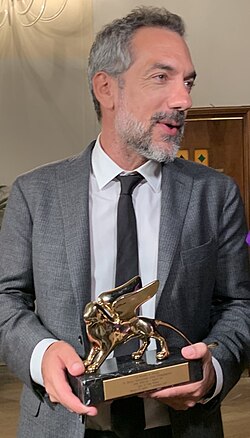
Joker earned Phillips three Academy Award nominations: Best Picture, Best Director, and Best Adapted Screenplay (shared with Scott Silver). He followed this with the 2024 sequel, Joker: Folie à Deux, though the latter received a more polarized reception from critics and audiences.
Personal Beliefs and Views on Comedy
Phillips has expressed a nuanced view of spirituality, stating in a 2014 BBC interview that while he does not believe in God, he believes in a "higher power" or a "collective energy in people." In recent years, he has been vocal about his departure from the comedy genre, citing the pressures of "woke culture" and the fear of offending audiences on social media as primary reasons why making comedies has become increasingly difficult.
Career Summary
| Year | Title | Genre | Key Achievement |
|---|---|---|---|
| 1993 | Hated: GG Allin and the Murder Junkies | Documentary | High-grossing student film |
| 1998 | Frat House | Documentary | Sundance Grand Jury Prize |
| 2009 | The Hangover | Comedy | Golden Globe for Best Motion Picture (Musical/Comedy) |
| 2019 | Joker | Psychological Thriller | Golden Lion (Venice Film Festival) |
| 2024 | Joker: Folie à Deux | Psychological Thriller | Sequel to the 2019 hit |
Frequently Asked Questions
Why did Todd Phillips drop out of NYU?
Phillips dropped out of the New York University Film School because he could not afford to pay his tuition while simultaneously funding the production of his first film.
What is the "Frat Packagers" term?
The term was coined by Details Magazine to describe a group of filmmakers, including Phillips, Judd Apatow, and Adam McKay, who specialized in a specific style of male-centric, raunchy comedy.
How much did Todd Phillips earn from The Hangover?
Due to a deal where he took a large share of the profits instead of a high upfront salary, Phillips earned approximately $50 million from the first film's success.
Which awards did Joker win?
Joker won the Golden Lion at the 76th Venice International Film Festival and received several other accolades, including awards from the Latino Entertainment Journalists Association and the Music City Film Critics' Association.
Why did Phillips stop making comedies?
Phillips stated that he stopped making comedies due to the backlash associated with "woke culture," arguing that the fear of offending people on platforms like Twitter has made it difficult to be funny.