Timur: The Turco-Mongol Conqueror and Founder of the Timurid Empire
Timur, widely known in the West as Tamerlane, was a formidable Turco-Mongol conqueror who established the Timurid Empire in the 14th century. Ruling over vast territories that encompass modern-day Afghanistan, Iran, and Central Asia, Timur is remembered as one of history's most brilliant military tacticians and, simultaneously, one of its most brutal leaders. His reign was characterized by a duality of extreme violence in conquest and a profound devotion to the arts and sciences, sparking a cultural flowering known as the Timurid Renaissance.
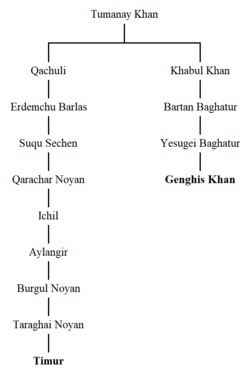
Born in the 1320s near Kesh in the Chagatai Khanate (modern-day Uzbekistan), Timur rose from the Barlas tribe—a Mongol subgroup that had become Turkic-speaking and adopted Sunni Islam. Throughout his life, he sought to legitimize his rule by linking himself to the legacy of Genghis Khan, the founder of the Mongol Empire.
Key Facts
- Reign: 9 April 1370 – 18 February 1405.
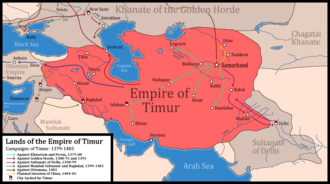
- Empire: Founded the Timurid Empire, spanning Central Asia, Persia, and parts of India and Anatolia.
- Military Record: Remained undefeated in battle throughout his career.
- Cultural Impact: Patron of scholars like ibn Khaldun and founder of the Timurid Renaissance.
- Legacy: Ancestor of the Mughal Empire founder, Babur.
Ancestry and Early Life
Timur was born to Amir Taraghai and Tekina Khatun. While later dynastic records suggest a birth date of April 8, 1336, contemporary sources indicate he was likely born in the late 1320s. Some historians believe the 1336 date was a later fabrication to align his birth with the death of Abu Sa'id Bahadur Khan, a descendant of Hulegu Khan, thereby strengthening his political legitimacy.
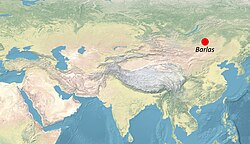
His early life was spent within the Barlas tribe, which had settled in the valley of Kashka Darya. This environment, blending Mongol nomadic traditions with Turkic language and Islamic faith, shaped his identity as a leader capable of uniting disparate steppe tribes.
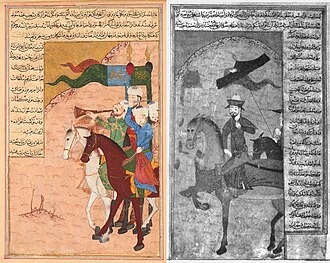
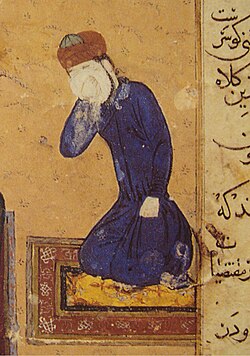
![Earliest known portrait of Timur, commissioned right after his death in 1405–1409, by his grandson Khalil Sultan for an illustrated Timurid genealogy (TSMK, H2152).[42]](/images/a3/ff/a3ffc213351b61eb0d68c2d959cd9b48c6c9478e687508ff755b82a081dcced4.jpg)
The Rise to Power and Military Expansion
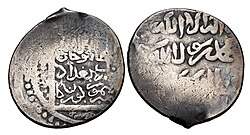
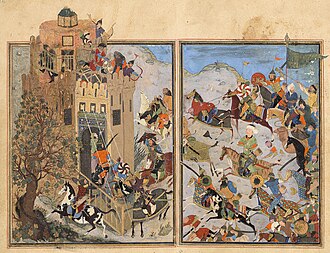
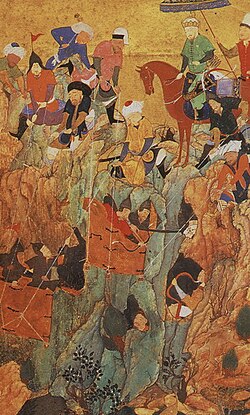
Timur's ascent began with a series of strategic conflicts, including the Battle of Tashkent and the Siege of Balkh. He was officially crowned in Balkh on April 9, 1370. From this power base, he launched an era of relentless expansion, utilizing sophisticated military tactics and a disciplined army.
Conquest of Persia and the Steppes
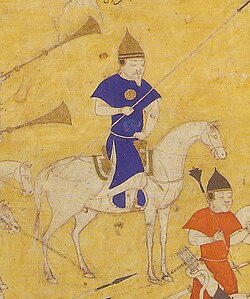
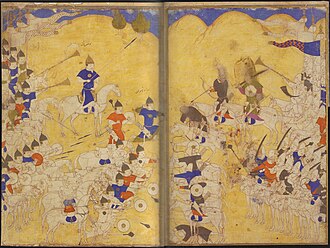
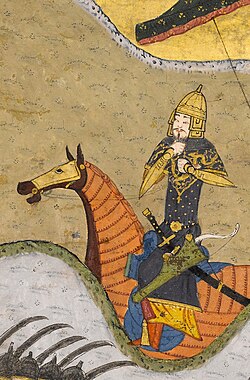
Timur's campaigns in Persia were marked by significant sieges, including Isfahan in 1387 and Shiraz in 1393. His conflict with Tokhtamysh, Khan of the Golden Horde, demonstrated his logistical genius. In 1391, Timur led over 100,000 men across 1,700 miles of steppe to destroy Tokhtamysh's army at the Battle of the Kondurcha River.
The Invasion of India and the Levant
In 1398, Timur turned his attention to the Delhi Sultanate. Before the decisive battle on December 17, 1398, Timur ordered the slaughter of approximately 100,000 captured slaves to prevent a revolt during the assault on Delhi. Following the sack of Delhi, he campaigned through the Levant, sacking Aleppo and Damascus in 1400 and besieging Baghdad in 1401.
Anatolia and the Ottoman Conflict
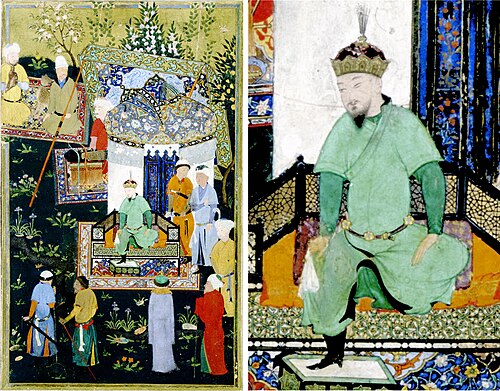
One of Timur's most significant victories occurred in Anatolia, where he faced the Ottoman Empire. At the Battle of Ankara, Timur defeated Sultan Bayezid I, taking the Ottoman ruler prisoner and effectively halting Ottoman expansion for a generation.
![Festivities with Bayezid I as prisoner, after conquering Anatolia. Zafarnama, 1528 (Golestan, MS 708).[106]](/images/ba/c7/bac7fb053735bf0d91eb86ed7a7595059090ece4c6f3ed56df698a27558b1b3e.jpg)
Diplomacy and Global Relations
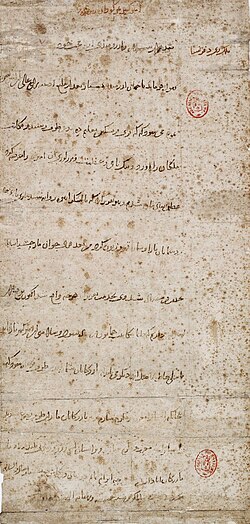
Despite his reputation for brutality, Timur engaged in high-level diplomacy. He maintained correspondence with European monarchs, including Charles VI of France. However, his relations with the Ming Dynasty of China were strained; Timur detained several Chinese ambassadors after the Hongwu Emperor addressed him as a subject in a letter.
Death and Succession
Timur died on February 17 or 18, 1405, in Farab while preparing for a campaign against China. He was succeeded by his grandson, Khalil Sultan. His son, Shah Rukh, also played a pivotal role in maintaining the empire's stability after his death.
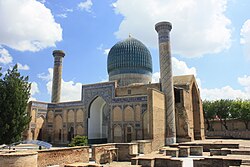
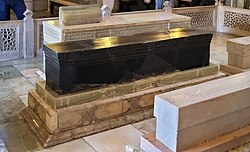
Timur was buried in the Gur-e-Amir mausoleum in Samarkand, Uzbekistan, a site that remains a testament to the architectural grandeur of his era.
Summary of Timur's Life and Empire
![Jalayirid and Timurid territories in 1400.[100]](/images/ce/df/cedfe6b84ebb108c3baa961c3b1c436495b705f66829e5348c5af27c4dbf64ca.png)
| Category | Details |
|---|---|
| Full Name | Shihab-e-Qiran Amir Timur Gurqani |
| Dynasty | Timurid |
| Key Victories | Battle of Ankara, Battle of the Kondurcha River, Sack of Delhi |
| Major Cities Controlled | Samarkand, Baghdad, Delhi, Isfahan |
| Notable Descendants | Ulugh Beg (Astronomer), Babur (Mughal Founder) |
| Religion | Sunni Islam |
Frequently Asked Questions
Was Timur related to Genghis Khan?
While Timur was of Turco-Mongol descent and belonged to the Barlas tribe, his claim to be a direct descendant of Genghis Khan is viewed by many historians as a political move to legitimize his rule over Mongol territories.
What was the Timurid Renaissance?
The Timurid Renaissance was a period of significant cultural, artistic, and scientific achievement under Timur and his successors. It was characterized by the patronage of poets, scholars, and architects, and the construction of magnificent monuments in cities like Samarkand.
How did Timur treat his defeated enemies?
Timur is known for extreme brutality, often depopulating cities and creating pyramids of skulls to intimidate opponents. However, he also showed respect to scholars and artisans, often forcibly relocating them to his capital to enhance its cultural prestige.
Who were Timur's most famous descendants?
His most famous descendants include his grandson Ulugh Beg, a renowned astronomer and mathematician, and his great-great-great-grandson Babur, who founded the Mughal Empire in India.
Where is Timur buried?
Timur is buried in the Gur-e-Amir, a magnificent mausoleum located in Samarkand, Uzbekistan.