Timmelsjoch Hochalpenstrasse
The Timmelsjoch Hochalpenstrasse is a breathtaking high-alpine road that connects the Ötztal valley in Austria with the Passeier Valley in Italy. Renowned for its dramatic scenery and engineering, this route offers a challenging yet rewarding experience for travelers crossing the Alps.
The History of the Northern Route
The vision for a road crossing the Timmelsjoch began long before construction actually started. In 1897, the Tyrolean Landtag—the regional assembly of Tyrol—developed a construction agenda that included several "rival roads," one of which was the route over the Timmelsjoch. However, these plans remained on paper for decades.
Actual construction did not commence until the autumn of 1955. After four years of intensive work, the 12-kilometre (7.5 mi) road was officially opened to the public on July 7, 1959. This section was carefully engineered to integrate seamlessly into the surrounding natural landscape.
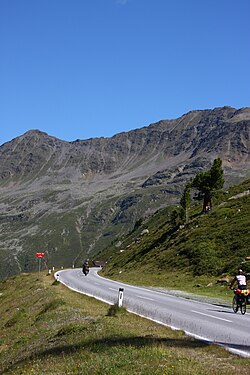
The Southern Route: A Military Legacy
While the northern side was designed for tourism, the road ascending from the Passeier Valley on the southern side had a more strategic origin. During the rule of Benito Mussolini (1922–1945), numerous military roads were constructed across the Italian Alps to secure international borders.
Work on the road from Moos in Passeier, located 10 km southeast of the pass, began in the 1930s. By 1939, following a meeting between Mussolini and Adolf Hitler at the Brenner, construction abruptly ceased. At that time, the road was narrow and rough, but nearly complete; a 700-metre (2,300 ft) tunnel had been dug, leaving only a final 2 km stretch to the pass unfinished.
For several decades, from 1939 to the mid-1960s, the unfinished road was reclaimed by nature and used exclusively for forestry. Construction finally resumed in the mid-1960s, and the road was fully completed and opened to through traffic in 1967.
Modern Tourism and Athletics
Today, the Timmelsjoch pass is a premier destination for car and motorbike tourists. However, due to its significant elevation, steep gradients, and narrow passages, the road is closed to lorries and vehicles towing trailers.
The route is equally popular with cyclists, who are drawn to the dramatic vistas of the southern side. One of the most notable events is the Ötztaler Cycling Marathon, held on the last Sunday in August. Thousands of cyclists tackle a grueling 238-kilometre (148 mi) course, which concludes with a 29-kilometre (18 mi) climb from St. Leonhard in Passeier (672 metres / 2,205 ft) to the pass, gaining 1,800 metres (5,900 ft) in elevation.
Key Facts
- Opening Date (North): July 7, 1959.
- Opening Date (South): 1967.
- Northern Section Length: 12 kilometres (7.5 mi).
- Cycling Challenge: 1,800-metre elevation gain from St. Leonhard in Passeier.
- Restrictions: Closed to lorries and vehicles with trailers.
| Feature | Ötztal Side (North) | Passeier Side (South) |
|---|---|---|
| Primary Purpose | Tourism | Military (originally) |
| Construction Start | 1955 | 1930s |
| Completion Year | 1959 | 1967 |
| Key Characteristic | Integrated landscape engineering | Dramatic scenery and military tunnels |
Frequently Asked Questions
Which vehicles are prohibited from using the Timmelsjoch pass?
Due to the road's narrowness, steepness, and high elevation, lorries and vehicles with trailers are not permitted to use the pass.
When was the road from the Ötztal valley opened?
The 12-kilometre road from the Ötztal valley was opened to the public on July 7, 1959.
What is the history of the southern road in the Passeier Valley?
It began as a military project in the 1930s under Mussolini. Construction stopped in 1939 and the road was used only for forestry until work resumed in the mid-1960s, leading to its completion in 1967.
What is the Ötztaler Cycling Marathon?
It is a 238-kilometre (148 mi) marathon held on the last Sunday in August. It includes a final, challenging climb of 29 kilometres from St. Leonhard in Passeier to the pass, ascending 1,800 metres.
How long did it take to build the northern section of the road?
Construction of the northern section took four years, beginning in the autumn of 1955 and finishing in 1959.