Thermometers: The Science, History, and Evolution of Temperature Measurement
A thermometer is a fundamental scientific instrument designed to measure temperature—the degree of hotness or coldness of an object—or a temperature gradient, which refers to the rate at which temperature changes across a specific space. To function, every thermometer requires two essential components: a temperature sensor that undergoes a physical change when heat is applied, and a method to convert that change into a readable numerical value, such as a visible scale or a digital readout.
From monitoring industrial processes and meteorological shifts to providing critical data in medical settings and scientific research, thermometers are indispensable tools in modern technology.
![Mercury thermometer (mercury-in-glass thermometer) for measurement of room temperature.[1]](/images/0b/b1/0bb1a5b163a1315671a6878e8ee2445b2c0609b5ae5515dc706101a413df1da9.jpg)
Key Facts

- Core Components: A thermometer consists of a sensor and a conversion mechanism (scale or digital display).
- Standard Scales: Modern measurements rely on internationally agreed scales, such as the International Temperature Scale of 1990.
- Historical Milestone: The first sealed liquid-in-glass thermometer was described by Joseph Solomon Delmedigo in 1629.
- Precision: High-quality liquid-in-glass thermometers can achieve measurement uncertainties as low as ±0.01 °C.
- Diverse Methods: Measurement techniques range from thermal expansion and electrical resistance to infrared radiation.
The Evolution of Temperature Measurement

Ancient Foundations and Early Experiments
The roots of thermometry can be traced back to ancient pneumatic experiments. Philo of Byzantium conducted early studies on air movement, and Hero of Alexandria (10–70 AD) later described a "Fountain which trickles by the Action of the Sun's Rays" in his work Pneumatics. This device utilized the principle of heating and cooling air to move water, a concept later studied by Galileo Galilei.

From Thermoscopes to Sealed Liquid-in-Glass
The transition from observing air movement to measuring temperature began with the thermoscope. Giuseppe Biancani published the first clear diagram of a thermoscope in 1617, and Santorio Santorio produced the first version with a scale in 1625. These early "air thermometers" were vertical tubes where water levels were controlled by the expansion and contraction of air.
However, these devices were sensitive to atmospheric pressure, acting as barometers as much as thermometers. A major breakthrough occurred in 1629 when Joseph Solomon Delmedigo described a sealed liquid-in-glass thermometer using brandy. By 1654, Ferdinando II de' Medici produced a modern-style thermometer that relied on liquid expansion, making it independent of air pressure.

The Quest for Standardization
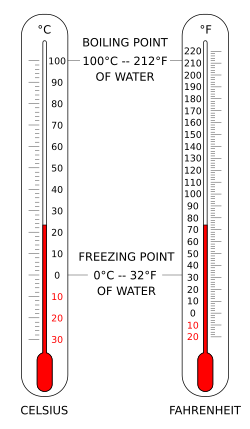
Early thermometers lacked a universal scale, making comparisons impossible. Scientists began attempting to standardize readings using fixed points, such as the freezing and boiling points of water. While Christiaan Huygens suggested using these points in 1665, and Carlo Rinaldini proposed a universal scale in 1694, it was the 18th century that saw the rise of the most famous scales.
In 1714, Daniel Gabriel Fahrenheit revolutionized the field by using mercury instead of alcohol or water mixtures, creating a highly reliable instrument. Shortly after, in 1742, Anders Celsius proposed a scale based on the boiling and freezing points of water (though the scale was later inverted to its modern form). Meanwhile, René Antoine Ferchault de Réaumur developed an alcohol-based scale, though it proved less reliable than Fahrenheit's mercury model.

Modern Thermometry and Applications
Medical and Clinical Use
The application of thermometers in medicine has evolved significantly. Herman Boerhaave was the first physician to use thermometer measurements in clinical practice. Later, in 1866, Sir Thomas Clifford Allbutt invented a clinical thermometer that reduced reading times from twenty minutes to just five.


Diverse Measurement Technologies
Today, thermometers utilize a wide array of physical principles to achieve varying levels of precision:
- Thermal Expansion: Using the expansion of liquids (mercury or alcohol) or metals (bi-metallic strips).
- Electrical Resistance: Utilizing materials like platinum or thermistors where electrical resistance changes with temperature.
- Radiometric Thermometry: Using infrared sensors (pyrometers) to measure heat radiation without physical contact.
- Vapour Pressure and Density: Measuring changes in pressure or the density of substances.


Industrial and Specialized Tools
Specialized environments require specialized tools. For example, the "Boyce MotoMeter" was used in early 20th-century automobiles to measure vapor temperature. In modern kitchens, bi-metallic thermometers are common for baking, while industrial settings may use platinum resistance thermometers for extreme accuracy.


Summary of Thermometer Types and Uses
| Type | Primary Principle | Common Application |
|---|---|---|
| Mercury-in-glass | Liquid expansion | Laboratory and general use |
| Alcohol thermometer | Liquid expansion | General temperature monitoring |
| Infrared (Pyrometer) | Blackbody radiation | Non-contact industrial/medical |
| Bi-metallic | Differential expansion | Cooking and ovens |
| Resistance (RTD) | Electrical resistance | High-precision industrial |

Frequently Asked Questions
What is the difference between a thermometer and a thermoscope?
A thermoscope is an early device that shows temperature changes through the movement of air or liquid but lacks a standardized scale. A thermometer is a more advanced version that includes a calibrated scale to provide specific numerical readings.
Why was mercury preferred over alcohol in early precision thermometers?
Daniel Gabriel Fahrenheit's use of mercury provided a more reliable and consistent measurement compared to the alcohol and water mixtures used previously, as mercury has more predictable thermometric properties.
How does an infrared thermometer work?
An infrared thermometer, also known as a pyrometer, measures the thermal infrared radiation emitted by an object to determine its temperature without needing physical contact.
What is the International Temperature Scale of 1990?
It is the most recent official temperature scale used to ensure international agreement and accuracy, covering a range from 0.65 K to approximately 1,358 K.
Can thermometers be inaccurate?
Yes. Factors such as being sensitive to air pressure (in early models), separated columns in liquid-in-glass types, or improper calibration can lead to inaccurate readings.