The Yankee Rajah: The Rise and Fall of the American Trading Company of Borneo
In the mid-19th century, the allure of untapped natural resources drove ambitious entrepreneurs to the farthest reaches of Southeast Asia. One of the most curious chapters of this era is the attempt by American businessmen to establish a colonial foothold in North Borneo. This venture, led by the man known as the "Yankee Rajah," blended geopolitical strategy with high-stakes speculation, ultimately ending in a cautionary tale of ambition and misfortune.
The Foundation of the Concession
The journey began with a commercial treaty signed between the United States and Brunei in 1850, which became active in 1865. Leveraging this agreement, Charles Lee Moses, the US First Consul to the sultanate, secured a 10-year lease for a vast territorial concession in North Borneo in August 1865. This grant was issued by Sultan Abdul Momin and his successor, Pengiran Temenggung, as part of a strategic effort to curb piracy, suppress rebellions, and resolve internal power struggles within the region.
Moses, however, was less interested in governance than in profit. He immediately sought buyers for the lease, attracting the attention of Hong Kong-based American merchants Joseph Torrey and Thomas Harris. Lured by reports of land rich in diamonds, gold, precious stones, and spices, Torrey and Harris purchased the concession in September 1865.
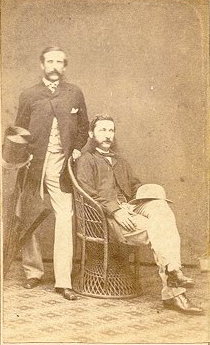
The Birth of the American Trading Company of Borneo
By October 1865, Torrey and Harris partnered with Chinese lenders Pong Ampong and Lee Assing to form the American Trading Company of Borneo. Their primary objective was to establish a colony at Kimanis and generate wealth through plantation agriculture.
To solidify his authority, Torrey obtained a new concession letter on November 24, 1865, at Brunei Palace. Sealed by the Sultan and three ministers, this document not only confirmed the acquisition but granted Torrey the title of "Rajah of Ambong and Marudu." The document gave him absolute authority, described as the power of "life and death," earning him the enduring nickname of the "Yankee Rajah."
The Colony of Ellena and Its Collapse
In December 1865, Torrey founded the colony of Ellena, appointing himself governor and Thomas Harris as vice-governor. The initial settlement consisted of 12 Americans and 60 Chinese laborers. The plan was to attract more settlers by cultivating rice, tobacco, and sugarcane.
However, the colony was doomed by its geography. Situated at the mouth of the sluggish Kimanis River, the location became a breeding ground for malaria and other debilitating diseases. Combined with a lack of financial stability, the venture began to crumble. Torrey was forced to return to Hong Kong and Shanghai to seek new investors, leaving Harris in charge. Tragically, Harris succumbed to malaria on May 22, 1866.
By 1866, the colony of Ellena was abandoned. The failure was the result of a perfect storm: a lack of capital and labor, violent riots among the workforce, and rampant disease. The collapse left Torrey penniless and Charles Lee Moses still unpaid for the original sale of the concession.
The Final Sale
Despite the failure of the colony, the rights to the concession remained. In January 1876, shortly before the original ten-year lease expired, the group sold all rights to Baron von Overbeck of Germany in Hong Kong. The sale price was set at $15,000, though this payment was contingent upon the group securing an extension of the concessions from the Sultan of Brunei within nine months.
Key Facts
- Founder: Joseph Torrey, known as the "Yankee Rajah."
- Colony Name: Ellena, located at the mouth of the Kimanis River.
- Key Figures: Charles Lee Moses (US First Consul), Thomas Harris (Vice-Governor), and Baron von Overbeck (Buyer).
- Primary Crops: Sugarcane, tobacco, and rice.
- Cause of Failure: Malaria, lack of capital, labor riots, and poor location.
- Final Sale Price: $15,000 to Baron von Overbeck in 1876.
| Event/Entity | Details | Date/Value |
|---|---|---|
| US-Brunei Commercial Treaty | Activated agreement allowing trade | 1865 |
| Initial Concession | Secured by Charles Lee Moses | August 1865 |
| Company Formation | American Trading Company of Borneo | October 1865 |
| Colony Foundation | Ellena (Kimanis River) | December 1865 |
| Abandonment | Due to disease and financial ruin | 1866 |
| Final Asset Sale | Sold to Baron von Overbeck | January 1876 ($15,000) |
Frequently Asked Questions
Who was the "Yankee Rajah"?
The "Yankee Rajah" was Joseph Torrey, an American merchant from Hong Kong who was granted the title of "Rajah of Ambong and Marudu" by the Sultan of Brunei in 1865.
Why did the colony of Ellena fail?
Ellena failed due to a combination of poor location at the mouth of the Kimanis River, which led to outbreaks of malaria, a lack of sufficient capital and labor, and riots among the workers.
What was the purpose of the American Trading Company of Borneo?
The company was founded to establish a colony in North Borneo and profit from plantation agriculture, specifically the cultivation of sugarcane, tobacco, and rice, as well as the extraction of precious stones and minerals.
How did the venture eventually end?
After the colony was abandoned in 1866, the rights to the concession were eventually sold to Baron von Overbeck of Germany in January 1876 for $15,000, provided an extension was granted by the Sultan.
What role did Charles Lee Moses play?
Charles Lee Moses was the US First Consul to the sultanate who originally secured the 10-year territorial lease from Sultan Abdul Momin and later sold it to Joseph Torrey and Thomas Harris.