The Western World: Evolution, History, and Cultural Identity

The Western World: Evolution, History, and Cultural Identity

The Western world, often referred to as the West or the Occident (from the Latin occidens, meaning "sunset"), is a conceptual term primarily encompassing nations in Europe, Northern America, and Australasia. Unlike a rigid geographical region with fixed borders, the West is an evolving synergy of cultural, political, and economic ties. While its core is well-defined, debate continues regarding whether Latin America and former Soviet Union states constitute part of this global identity.

The concept stands in contrast to the Orient (from the Latin oriens, meaning "sunrise"), representing the Eastern world. Because the definition of the West depends on perspective and context, it has shifted over millennia, moving from a Mediterranean center to a global network of influence.

Key Facts
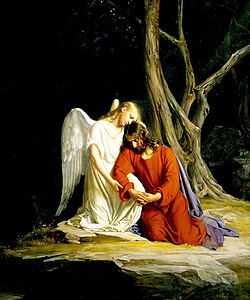
Kristus i Getsemane (1873), an angel comforting Jesus Christ before his arrest in the Garden of Gethsemane, by Carl Heinrich Bloch.
  • Foundations: Ancient Greece and Rome are widely regarded as the birthplaces of Western civilization.
  • Religious Split: The Great Schism of 1054 CE formally divided the Western (Catholic) and Eastern (Orthodox) churches.
  • Expansion: The Age of Discovery led Western European powers to colonize the Americas, expanding the concept of the West.
  • Non-Geographic Inclusion: Countries like Australia and New Zealand are considered part of the West due to British colonization and European immigration.
  • Terminology: The earliest known reference to the term "Western world" appears in the writings of William Warner in 1586.

The Foundations of Western Civilization
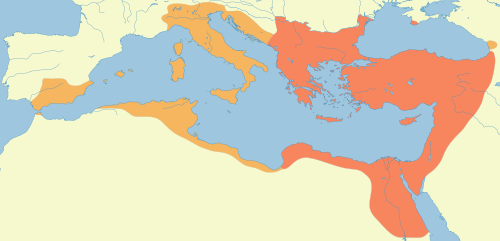
Apex of Byzantine Empire's conquests (AD 527–565)

The roots of the West are found in the classical Greco-Roman world. Ancient Greece is frequently cited as the cradle of Western culture, providing the foundational elements of literature, science, and democracy. Alongside these Greek contributions, the Jewish and Christian traditions of Jerusalem provided the theological framework that would later define the region.
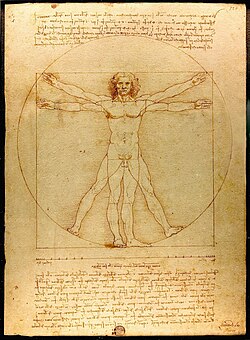
Leonardo da Vinci's Vitruvian Man, based on the correlations of ideal human proportions with geometry described by the ancient Roman architect Vitruvius in Book III of his treatise De architectura.

The Roman Influence

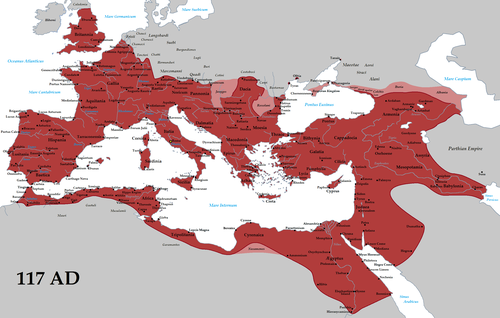
The Roman Republic and subsequent Empire unified much of the Mediterranean, spreading Latin language and law. By AD 117, the Roman Empire had expanded its area twenty-five times over from its early Republic days, creating a vast administrative and cultural network.
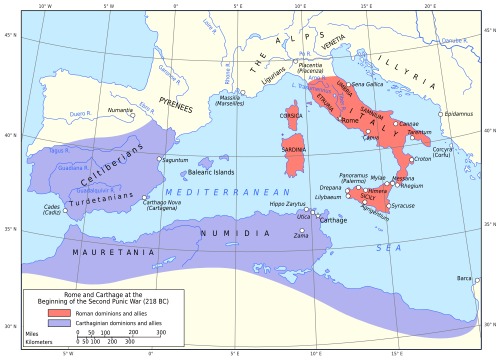
The Roman Republic in 218 BC after having managed the conquest of most of the Italian Peninsula, on the eve of its most successful and deadliest war with the Carthaginians

The Roman Empire in AD 117. During 350 years the Roman Republic turned into an Empire expanding up to twenty-five times its area.

Historical Divisions and the Middle Ages
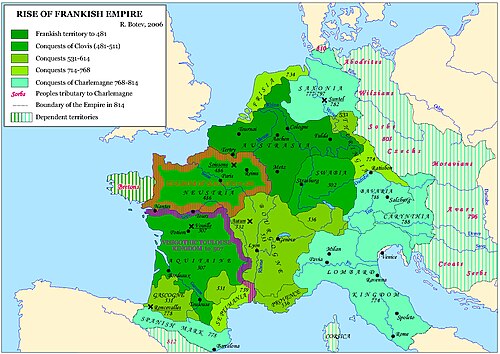
Rise of the Germanic Frankish Empire before Charlemagne's coronation in Rome

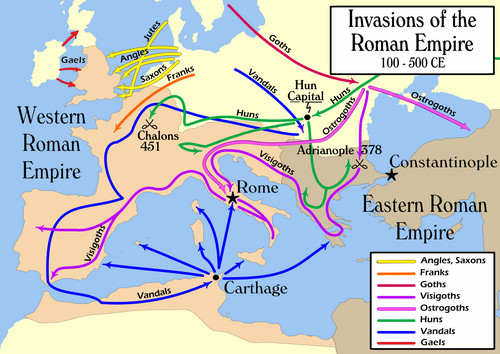
The geographical concept of the West began to crystallize in the 4th century CE. Emperor Constantine, the first Christian Roman emperor, divided the empire into a Greek East and a Latin West. While the Western Roman Empire collapsed relatively quickly under the pressure of Germanic migrations, the Eastern Roman Empire—later known as the Byzantine Empire—survived for another millennium.

Map of the Western and Eastern Roman Empire at the death of the last emperor to rule both halves.[89]

Ending invasions on Roman Empire since the 2nd and throughout the 5th centuries establishing mostly Germanic kingdoms in its place

The Great Schism

Over time, theological and ecclesiastical differences grew between the two halves of Christendom. This tension culminated in 1054 CE with the Great Schism (or East-West Schism), where the church in Rome excommunicated the patriarch of Byzantium. This politico-religious divide was further solidified by the hostility of the Crusades.
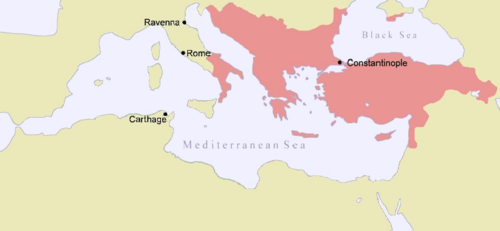
The Byzantine Empire in AD 1025 before Christian East-West Schism

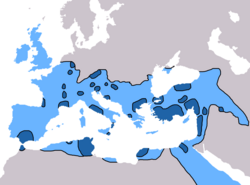
History of the spread of Christianity: in AD 325 (dark blue) and AD 600 (blue) following Western Roman Empire's collapse under Germanic migrations.

Expansion and the Age of Discovery
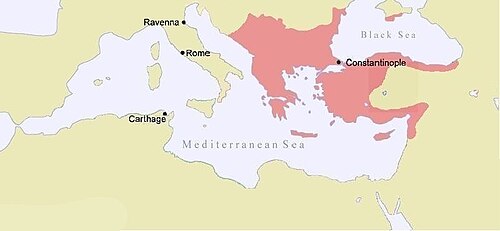
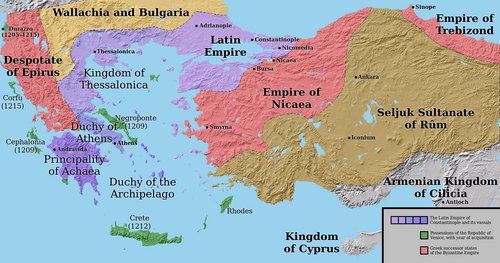
The Byzantine Empire in AD 1180 before Latin Fourth Crusade

During the Crusades, Western Europeans attempted to secure trade routes to the East. While these specific efforts failed, they sparked a broader era of exploration. This led to the discovery and subsequent colonization of the Americas, primarily by Western European powers.
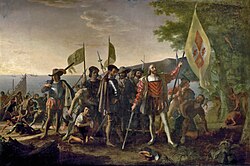
Christopher Columbus arrives at the New World.

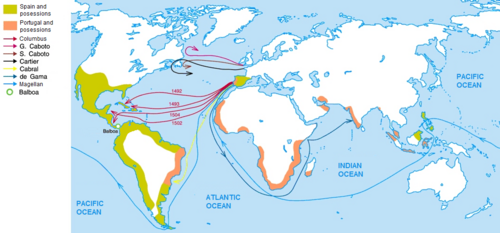
The main travels of the Age of Discovery (began in 15th century)

This era of expansion transformed the West from a European regional identity into a global one. The inheritors of Latin Christendom established colonies that exported European legal, religious, and political systems to the New World. This process is why nations in the Western Hemisphere and Australasia are integrated into the modern definition of the West.
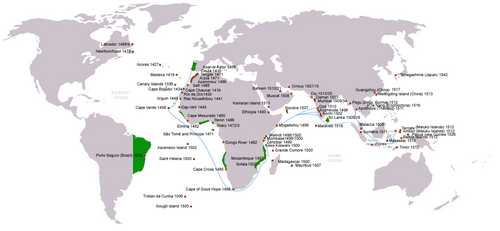
Portuguese discoveries and explorations since 1336: first arrival places and dates; main Portuguese spice trade routes in the Indian Ocean (blue); territories claimed by King John III of Portugal (c. 1536) (green)

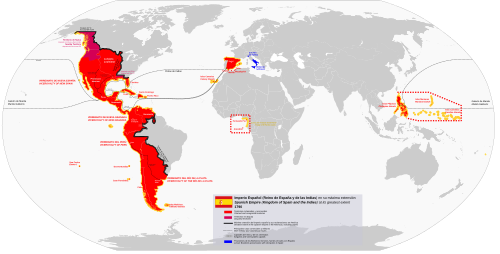
Apex of Spanish Empire in 1790

Modern Definitions of the West

The Greek Byzantine Empire split by a newly established Latin Crusader State after the Fourth Crusade (shown partly in Greece and partly in Turkey)

In the contemporary era, the "West" is defined more by cultural and economic alignment than by longitude. The rise of the United States as a global power, aided by the development of the telegraph and railroads, effectively "shrank" the Atlantic Ocean, tightening the bond between North America and Europe.
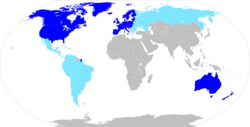
A map of the "Western world" based-on Samuel P. Huntington's 1996 Clash of Civilizations. In turquoise are the Orthodox World and Latin America, which are either a part of the West or distinct civilizations intimately related to the West.

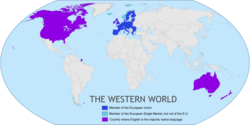
Map of the Western world consisting of the anglosphere (as defined by James Bennett), the European Union and European Single Market members, 2017

Cultural and Economic Perspectives

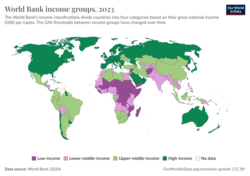
Culturally, the West is often associated with values such as individualism and the legacy of the Enlightenment. Economically, it is frequently linked to high-income nations and the Global North. However, the status of Russia remains fluid; it has been viewed as part of the West at times and as a distinct, anti-Western entity at others.
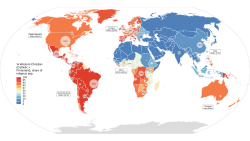
Western Christianity by country in 2010

Countries by income group

Summary of Western World Evolution
Period Key Driver Defining Characteristic
Antiquity Greco-Roman Culture Birth of democracy, philosophy, and Roman law.
Middle Ages Religious Schism Division between Latin West and Greek East (Byzantine).
15th–20th Century Colonialism Expansion to the Americas and Australasia.
Modern Era Economic/Political Synergy Alignment of high-income, democratic nations.

Frequently Asked Questions

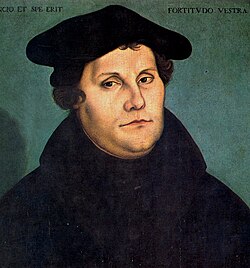
Martin Luther, Protestant Reformer

Is Australia part of the West?

Yes. Despite being located in the Eastern Hemisphere, Australia is included in modern definitions of the West due to its history of British colonization and the subsequent immigration of Europeans.

What was the Great Schism?

The Great Schism of 1054 CE was the formal split between the Western church (Catholic) and the Eastern church (Orthodox), resulting from long-standing theological and political differences.

How did the Americas become part of the West?

Through European colonization, primarily by Western European powers, the Americas inherited the religious, legal, and cultural frameworks of Latin Christendom.

Is Russia considered part of the Western world?

The status of Russia is debated. Depending on the historical period and political context, it has been viewed as a constituent of the West, a separate entity, or a proponent of anti-Western sentiment.

What are the primary foundations of Western civilization?

Western civilization is generally considered to be built upon a threefold heritage: the classical traditions of Athens (Greece), the legal and administrative legacy of Rome, and the religious traditions of Jerusalem.

References

  1. See [21][22][23][24][25][26][27][28][29]See [30][31][32][33][34]
  2. See [35][36][37][38]
  3. By Rome's central location at the heart of the Empire, "West" and "East" were terms used to denote provinces west and east of the capital itself. Therefore, Iberia (Portugal and Spain), Gaul (France), the Mediterranean coast of North Africa (Tunisia, Algeria, and Morocco) and Britannia were all part of the "West". Greece, Cyprus, Anatolia, Lebanon, Syria, Israel, Palestine, Egypt, and Libya were part of the "East". Italy itself was considered central, until the reforms of Diocletian dividing the Empire into true two halves: Eastern and Western.[citation needed]
  4. Portuguese sailors began exploring the coast of Africa and the Atlantic archipelagos in 1418–19, using recent developments in navigation, cartography and maritime technology such as the caravel, in order that they might find a sea route to the source of the lucrative spice trade.[citation needed] In 1488, Bartolomeu Dias rounded the southern tip of Africa under the sponsorship of Portugal's John II, from which point he noticed that the coast swung northeast (Cape of Good Hope).[citation needed] In 1492 Christopher Columbus would land on an island in the Bahamas archipelago on behalf of the Spanish, and documenting the Atlantic Ocean's routes would be granted a coat of arms by Pope Alexander VI motu proprio in 1502.[citation needed] With the discovery of the American continent or 'New World' in 1492–1493, the European colonial Age of Discovery and exploration was born, revisiting an imperialistic view accompanied by the invention of firearms, while marking the start of the Modern Era. During this long period the Catholic Church launched a major effort to spread Christianity in the New World and to convert the Native Americans and others. A 'Modern West' emerged from the Late Middle Ages (after the Renaissance and fall of Constantinople) as a new civilization greatly influenced by the interpretation of Greek thought preserved in the Byzantine Empire, and transmitted from there by Latin translations and emigration of Greek scholars through Renaissance humanism. (Popular typefaces such as italics were inspired and designed from transcriptions during this period.) Renaissance architectural works, revivals of Classical and Gothic styles, flourished during this modern period throughout Western colonial empires. In 1497 Portuguese navigator Vasco da Gama made the first open voyage from Europe to India.[citation needed] In 1520, Ferdinand Magellan, a Portuguese navigator in the service of the Crown of Castile ('Spain'), found a sea route into the Pacific Ocean.
  5. In the 16th century, the Portuguese broke the (overland) medieval monopoly of the Arabs and Italians of trade (goods and slaves) between Asia and Europe by the discovery of the sea route to India around the Cape of Good Hope.[112] With the ensuing rise of the rival Dutch East India Company, Portuguese influence in Asia was gradually eclipsed; Dutch forces first established fortified independent bases in the East and then between 1640 and 1660 wrestled some southern Indian ports, and the lucrative Japan trade from the Portuguese. Later, the English and the French established some settlements in India and trade with China, and their own acquisitions would gradually surpass those of the Dutch. In 1763, the British eliminated French influence in India and established the British East India Company as the most important political force on the Indian subcontinent.