The Reformation and Counter-Reformation: A Conflict of Faith and Power
The 16th century witnessed one of the most profound schisms in Western history. What began as a series of theological disputes evolved into a systemic overhaul of the Christian faith, splitting the church into various Protestant traditions and forcing the Roman Catholic Church to undergo a rigorous internal transformation known as the Counter-Reformation.
The Protestant Challenge to the Papacy
The Protestant Reformation was characterized by a fierce rejection of the papacy's authority. Leading reformers such as Martin Luther, John Calvin, Thomas Cranmer, and John Knox did not merely disagree with church policy; they identified the Roman Papacy as the Antichrist. This view was codified in the 12-volume "Magdeburg Centuries," written by Lutheran scholars led by Matthias Flacius to systematically discredit the pope.
Martin Luther's relationship with the papacy was complex. While he once praised Pope Leo's "blameless life" in 1520, by 1531 he was publishing pamphlets alleging that the pope and cardinals practiced sodomy and vetoed measures to restrict the behavior of cardinals. Luther urged Germans to stop fighting their own countrymen in defense of a papacy he viewed as corrupt.
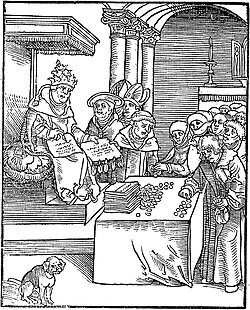
This theological opposition was formally embedded in the confessions of faith for several emerging traditions: the Lutheran, Reformed (Calvinist/Presbyterian), Anabaptist, and Anglican schools. For example, the Smalcald Articles (1537) and the Westminster Confession (1646) explicitly stated that the Pope was the Antichrist, arguing that he exalted himself above Christ and claimed a divine right to be the supreme head of the Church.
The Catholic Response: The Counter-Reformation
The Roman Catholic Church did not mount a coordinated response until the election of Pope Paul III in 1534. He shifted the papacy into a leadership role for churchwide reform, establishing a reform commission and authorizing the founding of the Jesuits, an order that became fiercely loyal to the papacy.
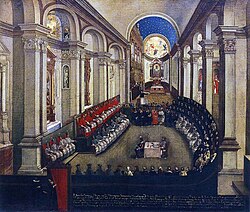
The centerpiece of this movement was the Council of Trent, which met intermittently from 1545 to 1563. The council sought to address the moral and administrative failures that had fueled the Reformation, such as the sale of indulgences (payments made to the church for the remission of temporal punishment for sins) and the corruption of bishops.
Doctrinal Reaffirmation and Institutional Reform
While the Council of Trent admitted the need for administrative cleanup, it rejected Protestant theology. It reaffirmed the following core tenets:
- Transubstantiation: The belief that consecrated bread and wine substantially become the body and blood of Christ.
- The Seven Sacraments: The essential religious rites of the Church.
- Faith and Works: The dogma that salvation is achieved through both faith and active works.
- Traditional Practices: The continued spiritual vitality of pilgrimages, the veneration of saints, relics, and the Virgin Mary.
To bridge the gap between the clergy and the laity, the Church established seminaries to ensure priests were properly trained in theology and spiritual life. This addressed the issue of poorly educated rural priests who often lacked knowledge of Latin.
Combating Corruption and Absenteeism
The Council took a hard line against the excesses of the Renaissance-era church. It specifically targeted absenteeism—the practice of bishops living in Rome or on private estates rather than in their assigned dioceses. By tightening organization and improving discipline, the Church empowered bishops to supervise religious life more closely, exemplified by Archbishop Carlo Borromeo of Milan.
Renewal through Authority and Devotion
The later stages of the Counter-Reformation were marked by a duality of aggressive authoritarianism and deep personal piety. Pope Paul IV (1555–1559) focused on eliminating heresy through the Inquisition and the censorship of prohibited books. The Inquisition became a powerful tool of state and church control, particularly in Spanish-controlled territories.
Simultaneously, a wave of devotionalism emerged. This provided a personal outlet for religious experience through meditation and the reciting of the Rosary, contrasting the fear of an absolute ruler God with a path toward popular piety.
The papacy of St. Pius V (1566–1572) synthesized these approaches. A former Dominican with an austere lifestyle, Pius V focused on charity and the poor while strictly enforcing the disciplines of the Council of Trent and supporting the Inquisition to stem the spread of Protestantism.
Key Facts
- Major Protestant Traditions: Lutheran, Reformed/Calvinist/Presbyterian, Anabaptist, and Anglican.
- Council of Trent (1545–1563): The primary body that defined modern Roman Catholicism and rejected Protestant compromises.
- Key Reformers: Martin Luther, John Calvin, and Thomas Cranmer identified the Pope as the Antichrist.
- Institutional Changes: Establishment of seminaries for priest training and the elimination of bishop absenteeism.
- Enforcement Tools: The Inquisition and the censorship of books were used to eradicate heresy.
| Feature | Protestant Reformers | Counter-Reformation (Catholic) |
|---|---|---|
| View of the Pope | Seen as the Antichrist / Usurper | Supreme head of the Church by divine right |
| Salvation | Primarily by faith | By faith and works |
| Sacraments | Reduced number / Simplified | Reaffirmed Seven Sacraments |
| Clerical Training | Emphasis on scripture access | Established formal seminaries |
| Church Practices | Rejected indulgences and relics | Reaffirmed indulgences and veneration |
Frequently Asked Questions
Why did Protestant reformers call the Pope the Antichrist?
Reformers like Luther and Calvin believed the Pope had exalted himself above Christ, claiming divine authority and prohibiting salvation outside of papal power, which they viewed as a violation of biblical teachings.
What was the primary purpose of the Council of Trent?
The Council of Trent aimed to reform the administration and morality of the Catholic Church—addressing issues like corrupt bishops and the sale of indulgences—while firmly rejecting Protestant doctrines and reaffirming traditional Catholic dogma.
How did the Catholic Church improve the quality of its priesthood?
The Church founded seminaries to provide standardized theological and spiritual training, ensuring that parish priests were educated and capable of guiding their flocks, particularly in rural areas.
What was "absenteeism" in the context of the Church?
Absenteeism was the practice where bishops held titles and landholdings for political or financial gain but lived in Rome or on private estates instead of residing in and managing their own dioceses.
What role did the Inquisition play in the Counter-Reformation?
The Inquisition served as a judicial instrument to identify and eliminate heresy. Under Pope Paul IV, it became an aggressive tool of censorship and persecution to maintain doctrinal purity and papal authority.