The Most Exalted Order of the Star of India
Founded in 1861 by Queen Victoria, The Most Exalted Order of the Star of India was a prestigious order of chivalry designed to strengthen the bonds between the British Crown and the Indian Empire. Established in the wake of the Indian Rebellion of 1857, the order served as a public testimony of the Queen's regard for the Princes, Chiefs, and people of India, rewarding loyalty and conspicuous merit among both Indian rulers and British administrators.
The order was the fifth most senior British order of chivalry, ranking below the Order of the Bath but above the Order of St Michael and St George. It stood as the premier honor associated with the British Raj, more exclusive than the later Order of the Indian Empire.
![The flag of the Viceroy of India displayed the Star of the Order beneath the Tudor Crown.[2]](/images/c5/12/c51274a655dbb9b4219202e373dd4dc46ba8581f560d6a37b1205ec96a5842a8.jpg)
Key Facts
- Founded: 1861 by Queen Victoria.
- Motto: "Heaven's Light Our Guide".
- Purpose: To honor Indian Princes, Chiefs, and British officers/administrators in India.
- Status: Dormant since 2009 following the death of the last surviving member.
- Unique Feature: Insignia avoided the use of crosses to remain acceptable to non-Christian recipients.
Structure and Grades
Initially established with a single class of Knights Companion (KSI), the order was expanded in 1866 to include three distinct grades. To avoid offending non-Christian members, the highest rank was titled "Knight Grand Commander" rather than the traditional "Knight Grand Cross".
The Three Classes
- Knight Grand Commander (GCSI): The highest rank, reserved for the most prestigious rulers and high-ranking officials.
- Knight Commander (KCSI): The intermediate rank.
- Companion (CSI): The entry rank of the order.
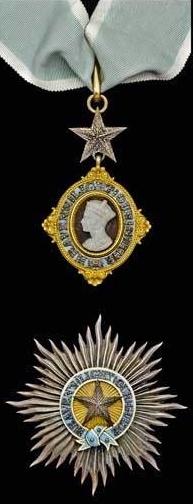
Recipients and Eligibility
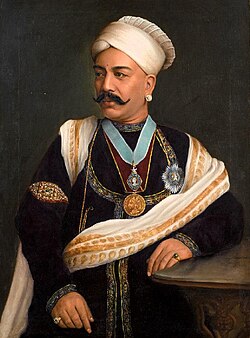
The order was primarily awarded to the rulers of Indian Princely States, such as the Nizam of Hyderabad and the Maharaja of Baroda. Eligibility also extended to former Viceroys, high-ranking British officials who served at least thirty years in the Department of the Secretary of State for India, and rulers of other Asian and Middle Eastern nations, including the Khedive of Egypt and the King of Bhutan.
While generally reserved for men, the order admitted a small number of women, specifically princely rulers. Notable female members included Nawab Sikander Begum of Bhopal and Queen Mary, the consort of George V. Unlike other orders, women were admitted as "Knights" rather than "Dames".
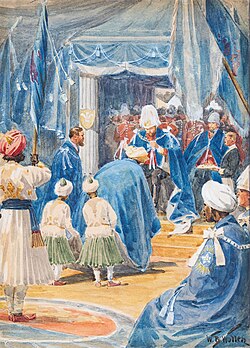
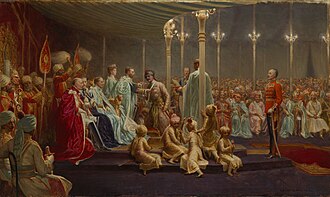
Vestments and Insignia
The Order of the Star of India was known for its elaborate ceremonial attire and symbolic jewelry. Because the order was intended for a multi-faith empire, the designers intentionally omitted crosses from all insignia.
Ceremonial Dress
- The Mantle: A light blue satin robe lined with white silk, worn exclusively by Knights Grand Commander.
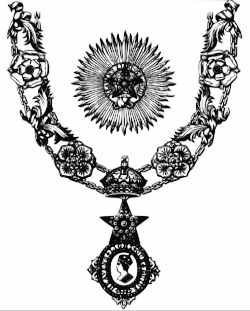
- The Collar: A gold chain featuring alternating lotuses, roses, and palm branches, with an imperial crown at the center.
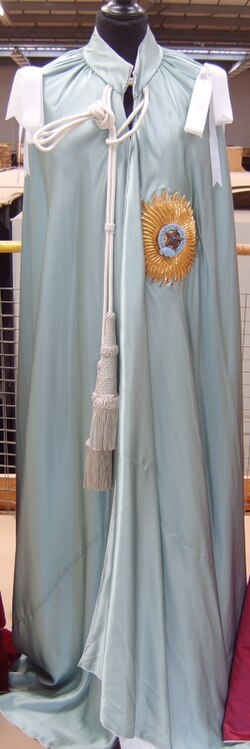
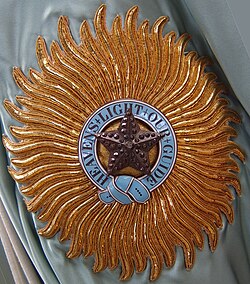
Badges and Stars
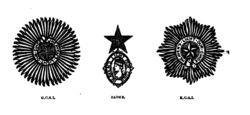
The star was worn by Grand Commanders (gold and circular) and Knight Commanders (silver and eight-pointed). It featured a sunburst with 52 rays and a central light blue ring containing the motto. The badge featured the effigy of the Sovereign surrounded by the motto, suspended from a five-pointed star.
Order Summary
| Feature | Details |
|---|---|
| Founder | Queen Victoria |
| Established | June 25, 1861 |
| Motto | Heaven's Light Our Guide |
| Highest Grade | Knight Grand Commander (GCSI) |
| Last Appointment | 1948 New Year Honours |
| Current Status | Dormant (since 2009) |
Frequently Asked Questions
Why did the order avoid using crosses in its insignia?
Crosses were omitted because they were deemed unacceptable to the many non-Christian Indian princes and chiefs who were appointed to the order.
When did the order become dormant?
The order became dormant in 2009 following the death of the last surviving member, Maharaja Sir Tej Singh Prabhakar of Alwar.
Who was the last Grand Master of the Order?
The last Grand Master was Admiral of the Fleet Lord Mountbatten of Burma, who was assassinated in 1979.
Could women be members of the Order of the Star of India?
Yes, but only princely rulers. Only three women were ever admitted: Nawab Sikander Begum, Shah Jahan Begum, and Queen Mary.
What was the difference between this order and the Order of the Indian Empire?
The Order of the Star of India was more senior and exclusive, whereas the Order of the Indian Empire (founded in 1877) was intended to be a less exclusive version of the honor.