The Lord's Prayer: History, Texts, and Theological Significance
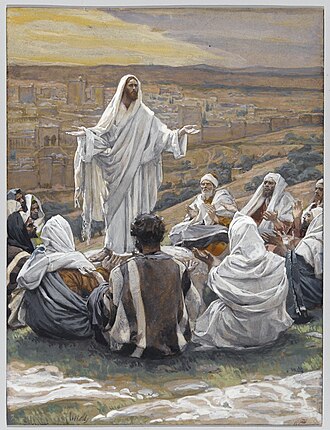
The Lord's Prayer, widely known by its opening words Our Father (Greek: Páter hēmôn; Latin: Pater Noster), stands as the central prayer of Christianity. Attributed directly to Jesus, it serves as both a petition to God and a spiritual model for believers, focusing on the holiness of God, the arrival of His kingdom, and the essential needs of humanity.
For centuries, this prayer has transcended linguistic and denominational boundaries, appearing in countless translations and musical settings. While it is a staple of daily devotion, its history is marked by scholarly debate regarding its original form and the relationship between the different versions found in the New Testament.
Key Facts
- Origin: Attributed to Jesus and recorded in the Gospels of Matthew and Luke.
- Core Focus: Petitions regarding God's will, holiness, and human needs (forgiveness and sustenance).
- Versions: Exists in two primary biblical forms (Matthean and Lukan), with the Matthean version being the standard for most liturgies.
- The Doxology: The concluding praise ("For thine is the kingdom...") is found in later manuscripts and the King James Bible but is absent from the oldest Greek texts.
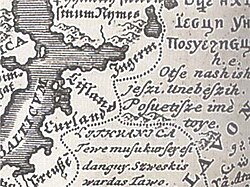
- Global Reach: Used across nearly all Christian denominations and translated into thousands of languages.
Biblical Origins and Historicity
Most scholars believe the Lord's Prayer derives authentically from the historical Jesus. However, the New Testament provides two distinct versions: one in the Gospel of Matthew (6:9-13) and a shorter version in the Gospel of Luke (11:2-4). The exact relationship between these two accounts remains a subject of academic discussion.
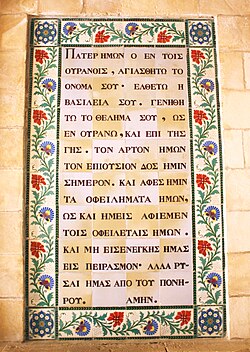
Beyond the Gospels, the first-century text known as the Didache (Chapter VIII) contains a version that closely mirrors the Matthean text and the modern prayer used today, concluding with the Minor Doxology.
Theological Structure and Analysis
Theologians view the prayer as a framework to align the human soul with the divine will, emphasizing trust, praise, and ethical conduct. Using the 1662 Book of Common Prayer (BCP) as a reference, the prayer is typically analyzed through seven petitions:
- First Petition: "Hallowed be thy Name" – A call for the recognition of God's holiness.
- Second Petition: "Thy kingdom come" – A longing for the manifestation of God's reign.
- Third Petition: "Thy will be done in earth, as it is in heaven" – A plea for divine purpose to be realized on earth.
- Fourth Petition: "Give us this day our daily bread" – A request for physical and spiritual sustenance (using the Greek term epiousion).
- Fifth Petition: "Forgive us our trespasses, as we forgive them that trespass against us" – A petition for mercy linked to the believer's willingness to forgive others.
- Sixth Petition: "And lead us not into temptation" – A request for guidance away from moral trial.
- Seventh Petition: "But deliver us from evil" – A plea for protection from the "evil one" or general harm.
The fifth petition highlights a critical ethical link: Matthew 6:14–15 teaches that God's forgiveness of a person's sins or "debts" is intrinsically tied to how that person forgives others.
Liturgical Use and Variations
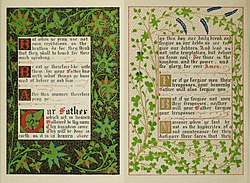
While the prayer is universal, its wording varies by tradition. In English, the 1611 King James Version uses the term "debts," whereas the 1549 Book of Common Prayer (influenced by William Tyndale) popularized "trespasses." This latter version became the official standard for Anglican congregations.
The Doxology ("For thine is the kingdom, the power, and the glory for ever") is a hymn-like conclusion. While common in liturgical practice and older English translations, it is not present in the earliest manuscripts of Matthew. Its inclusion in the King James Bible resulted from the translators' reliance on a Greek manuscript they believed to be ancient.
Beyond text, the prayer has been a cornerstone of musical composition. From 9th-century Gregorian chants (monophonic liturgical music) to works by Tchaikovsky, Rachmaninoff, and modern compositions like Christopher Tin's "Baba Yetu" (sung in Swahili), the prayer continues to inspire artists globally.

Comparative Summary of Texts
| Version | Key Characteristic | Notable Feature |
|---|---|---|
| Matthean (Matthew 6) | Liturgical Standard | More detailed; includes petitions for God's will. |
| Lukan (Luke 11) | Abridged Form | Shorter version focused on essential petitions. |
| Didache | Early Ritual Text | Closely resembles the Matthean version. |
| Vulgata Clementina | Latin Translation | Uses "panem nostrum supersubstantialem" for daily bread. |
| Book of Common Prayer | Anglican Tradition | Popularized the use of "trespasses" over "debts." |
Frequently Asked Questions
Why are there different versions of the Lord's Prayer?
The prayer appears in two different Gospels (Matthew and Luke), each with a slightly different wording. Additionally, variations have emerged over centuries due to different manuscript traditions and translation choices (such as "debts" vs. "trespasses").
Is the Doxology part of the original biblical text?
No. The concluding phrase "For thine is the kingdom, the power, and the glory" is absent from the oldest Greek manuscripts. It was likely added later as a liturgical addition and was included in the King James Bible based on later Byzantine manuscripts.
What does "daily bread" mean in the original Greek?
The Greek word used is epiousion. While commonly translated as "daily," it refers to the sustenance needed for the current day or the bread of the coming day.
How is the prayer used in the Catholic Church today?
It is used extensively in the Mass and private devotion. Notably, during the 2020–2021 jubilee of Saint Joseph, Pope Francis granted a plenary indulgence to those who contemplated the Lord's Prayer for at least 30 minutes.
What is the significance of the "forgiveness" petition?
The prayer emphasizes a reciprocal relationship with God: the request for divine forgiveness is conditioned upon the believer's own willingness to forgive those who have wronged them.