The Irish Times: A History of Ireland's Newspaper of Record
For over 160 years, The Irish Times has served as a cornerstone of Irish journalism. As a daily broadsheet based in Dublin, it has evolved from a conservative voice for the Protestant minority into a modern publication that describes itself as liberal and progressive, while maintaining a centre-right stance on economic issues.
From its early days as a thrice-weekly publication to its current status as a digital-first media group, the newspaper has mirrored the complex political and social transformations of the Irish state.
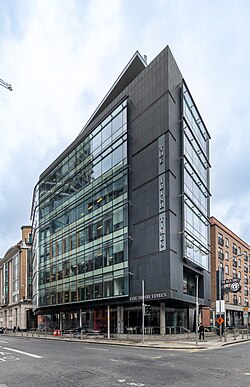
Key Facts
- Founded: 29 March 1859 by Lawrence E. Knox.
- Headquarters: 24–28 Tara Street, Dublin, Ireland.
- Ownership: The Irish Times Trust CLG and The Irish Times DAC.
- Current Editor: Ruadhán Mac Cormaic.
- Format: Broadsheet (Print) and Digital.
- Digital Pioneer: One of the first 30 newspapers globally to establish an online presence (1994).
Origins and Political Evolution
The 19th Century Foundation
While a publication by the same name existed briefly between 1823 and 1825, the modern iteration of The Irish Times was established in 1859 by Lawrence E. Knox, a 22-year-old army officer. Knox envisioned the paper as a "new conservative daily" for moderate Protestants, operating initially from 4 Lower Abbey Street in Dublin.
The paper's trajectory shifted significantly following its sale for £35,000 to Sir Lauriston John Arnott. Under Arnott, the headquarters moved to 31 Westmoreland Street, and the editorial line became predominantly Unionist, aligning closely with the Irish Unionist Alliance. This period was marked by strong political convictions, including calling for the execution of the leaders of the 1916 Easter Rising.
Transition in the 20th and 21st Centuries
For over a century, the editorship was controlled by the Anglo-Irish Protestant minority. It was not until 127 years after its founding that the paper appointed its first nominal Irish Catholic editor. In the modern era, the publication has transitioned toward a more inclusive, liberal identity.
Content and Literary Contributions
Prominent Columns
The Irish Times is renowned for its distinctive commentary. One of its most enduring features is An Irishman's Diary (now often titled An Irish Diary), a daily column written by various authors over the decades, including Patrick Campbell, Seamus Kelly, Kevin Myers, and Frank McNally. Other notable columns include:
- Backbencher: A political column by John Healy.
- Drapier: An anonymous weekly insider's view of politics.
- Rite and Reason: A religious column edited by Patsy McGarry.
- Another Life: A natural history column written and illustrated by Michael Viney since 1977.
The Irish Times Literature Prizes
Established in 1988, these prizes celebrate excellence in writing. The International Fiction Prize was inaugurated in 1989, while separate prizes for poetry and non-fiction in English were also introduced. In 1998, the paper expanded its reach by introducing a prize for works written in the Irish language.
| Year | Author | Winning Work |
|---|---|---|
| 1989 | Don DeLillo | Libra |
| 1990 | A. S. Byatt | Possession |
| 1993 | E. Annie Proulx | The Shipping News |
| 1995 | J. M. Coetzee | The Master of Petersburg |
| 2001 | Michael Ondaatje | Anil's Ghost |
Digital Transformation and Diversification
The Irish Times was a global pioneer in digital media, launching its web presence in 1994. It famously acquired the domain ireland.com in 1997, using it for its online edition until 2008. In 2012, the domain was sold to Tourism Ireland for €495,000.
Today, The Irish Times DAC has diversified its portfolio significantly. Beyond its flagship newspaper, the group owns several regional titles (including the Irish Examiner and the Echo) and digital assets such as BreakingNews.ie, Myhome.ie, and the death notice platform RIP.ie, acquired in 2024.
Frequently Asked Questions
Who currently edits The Irish Times?
The newspaper is currently edited by Ruadhán Mac Cormaic, who was appointed to the role in 2022.
What is the political leaning of The Irish Times?
In the 21st century, the publication presents itself as liberal and progressive, while remaining centre-right on economic issues.
When did The Irish Times move to Tara Street?
The newspaper moved to its current headquarters at 24–28 Tara Street in 2006, after having operated from Westmoreland Street since the late 19th century.
What other media outlets does The Irish Times DAC own?
The group owns several newspapers including the Irish Examiner and the Roscommon Herald, as well as digital platforms like Myhome.ie and RIP.ie, and radio station WLR FM.
How did the paper pioneer the internet in Ireland?
It was the first newspaper in Ireland and one of the first 30 in the world to establish an online presence, starting in 1994 on IEunet.ie.