The Guardian: A History of Journalism from Manchester to Global Influence
Founded in the industrial heart of England, The Guardian has evolved from a regional publication for non-conformist businessmen into one of the world's most influential news organizations. Its journey is marked by a commitment to liberal values, a willingness to challenge established power, and a complex relationship with the political currents of the 19th, 20th, and 21st centuries.
The Early Years: 1821 to 1972
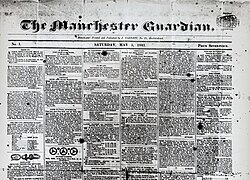
The publication began as the Manchester Guardian on May 5, 1821. It was established by cotton merchant John Edward Taylor and a group of non-conformist businessmen known as the "Little Circle." The paper launched on the same day as Napoleon Bonaparte's death, filling a void left by the police closure of the more radical Manchester Observer, which had supported the protesters of the Peterloo massacre.
Stances on Slavery and the American Civil War
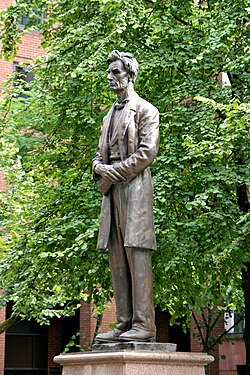
From its inception, the paper championed free trade and opposed slavery. While it welcomed the Slavery Abolition Act 1833, it maintained a nuanced and sometimes contradictory stance during the American Civil War. Initially, the paper suggested that freeing the Confederate States from trade monopolies would naturally lead to the end of slavery. However, it later criticized Abraham Lincoln's Emancipation Proclamation for not freeing all slaves.
This editorial line caused friction with local working-class citizens. In 1862, cotton workers in Manchester held a meeting to express their detestation of slavery and sent a letter to President Lincoln. Despite the paper's internal conflicts, it published the workers' letter, to which Lincoln replied with gratitude for their "sublime Christian heroism."
The Era of C. P. Scott
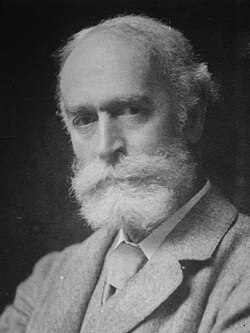
The newspaper achieved national recognition under the leadership of C. P. Scott, who served as editor for 57 years starting in 1872 and eventually became the owner in 1907. Scott shifted the paper toward a more radical editorial line, opposing the Second Boer War and supporting women's suffrage, though he remained critical of the militant tactics used by some suffragettes.
Global Conflict and National Expansion
During the Spanish Civil War (1936–1939), the paper earned significant respect from the left for its honest reporting and support of the Republican government against General Francisco Franco. Following World War II, the publication expanded its scope. On August 24, 1959, it officially changed its name to The Guardian to reflect its focus on national and international affairs. By 1961, it began printing in London, where Nesta Roberts became the first woman to serve as a news editor for a British national newspaper.
Key Facts
- Founded: May 5, 1821, in Manchester by John Edward Taylor.
- Name Change: Rebranded from Manchester Guardian to The Guardian in 1959.
- Key Figure: C. P. Scott edited the paper for 57 years, transforming it into a national voice.
- Expansion: Launched digital editions for Australia (2013), International (2015), and Europe (2023).
- The Observer: Acquired in 1993 and later sold to Tortoise Media in 2024/2025.
Modern Era: 1972 to the Present
The latter part of the 20th century saw The Guardian engage in high-stakes legal and political battles. In 1997, the paper successfully produced evidence in a libel case against cabinet minister Jonathan Aitken, who was subsequently jailed for perjury. The paper also gained a reputation for investigative rigor, exposing fabrications in the ITV documentary The Connection in 1998.
Digital Evolution and Global Reach
In the 21st century, The Guardian pivoted heavily toward digital growth. It expanded its global footprint with dedicated editions for Australia and Europe, the latter designed to maintain a European perspective following Brexit. However, this era also brought challenges, including a significant ransomware cyber-attack in December 2022 that compromised the personal details of UK staff.
Controversies and Investigative Triumphs
The paper has faced various controversies, including a flawed 2017 report regarding a WhatsApp "backdoor" and a failed 2004 letter-writing campaign in Clark County, Ohio. Despite these, it continues to lead in collaborative journalism, such as the 2023 "Cyprus Confidential" report, which exposed financial networks supporting Vladimir Putin's regime.
Summary of Major Milestones
| Year | Event | Significance |
|---|---|---|
| 1821 | Foundation | Launched as the Manchester Guardian. |
| 1872 | C. P. Scott's Editorship | Began a 57-year tenure that nationalized the paper. |
| 1959 | Rebranding | Renamed The Guardian to reflect global focus. |
| 1993 | Acquisition of The Observer | Expanded publishing to seven days a week. |
| 2023 | European Edition | Launched to strengthen post-Brexit European coverage. |
| 2025 | Sale of The Observer | Transferred ownership to Tortoise Media. |
Frequently Asked Questions
Why did the Manchester Guardian change its name?
The name was changed to The Guardian in 1959 to reflect the newspaper's growing prominence in national and international affairs, moving beyond its regional Manchester roots.
Who was C. P. Scott and why was he important?
C. P. Scott was the editor for 57 years and later the owner of the paper. He is credited with making the publication nationally recognized and shifting its editorial stance toward a more radical, liberal perspective.
What happened to The Observer?
The Guardian Media Group acquired The Observer in 1993. After decades of joint operation, it was sold to Tortoise Media in a deal closed in December 2024, with a new website and print edition launching in April 2025.
How did the paper handle the 2022 cyber-attack?
The paper suffered a ransomware attack that affected internal office systems. While publishing continued, the personal details of all UK staff were accessed by criminals, and the Information Commissioner's Office was notified under GDPR regulations.
What was the "Cyprus Confidential" report?
It was a massive 2023 collaborative investigation involving over 270 journalists across 55 countries. The report exposed the financial networks in Cyprus used to support the regime of Vladimir Putin.