The Dual Alliance: Germany and Austria-Hungary's Strategic Partnership
The Dual Alliance (known in German as Zweibund and in Hungarian as Kettős Szövetség) was a pivotal defensive treaty signed on October 7, 1879. Established between the German Empire and Austria-Hungary, this agreement was a cornerstone of the diplomatic system designed by German Chancellor Otto von Bismarck to maintain European stability and limit the scale of potential conflicts.
At its core, the alliance was a mutual security pact. The two powers pledged to support one another if either were attacked by Russia. Furthermore, they agreed to maintain benevolent neutrality if one of them were attacked by another European power—a clause primarily aimed at France, particularly after the formation of the Franco-Russian Alliance in 1894. For Bismarck, the alliance served a dual purpose: it prevented the diplomatic isolation of the newly founded German Empire and acted as a deterrent, as Russia would be unlikely to wage war against two major empires simultaneously.
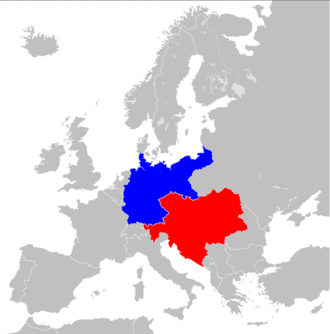
Key Facts
- Signed: October 7, 1879.
- Primary Goal: Mutual defense against the Russian Empire.
- Architect: Otto von Bismarck.
- Expansion: Became the Triple Alliance in 1882 when Italy joined.
- Outcome: Formed the core of the Central Powers during World War I.
- End Date: Dissolved following the defeat of the Central Powers in 1918.
The Complex Path to Formation
The union between Germany and Austria-Hungary was not an obvious choice. Despite sharing a common language and similar cultural roots, the two nations had a strained history, most notably marked by the Austro-Prussian War. Furthermore, the Habsburg rulers of Austria-Hungary feared that the promotion of nationalism—a force championed by Germany—could destabilize and destroy their own multinational empire.
Despite these frictions, a shared distrust of Russia eventually outweighed their internal differences. While the Habsburgs briefly considered a strategic alliance with the newly republican France, the geopolitical pressures of the time pushed them toward Berlin.
The Russian Threat and the Congress of Berlin
Following the unification of Germany in 1871, Otto von Bismarck sought to position the German Empire as a peacemaker and a preserver of the European status quo. However, regional tensions spiked in 1878 after the Russian Empire defeated the Ottoman Empire in the Russo-Turkish War. The resulting Treaty of San Stefano granted Russia significant influence in the Balkans, which outraged Austria-Hungary, Russia's primary rival in that region.
To resolve the crisis, Bismarck convened the Congress of Berlin in 1878. He acted as an "honest broker," facilitating the Treaty of Berlin, which reversed many of Russia's gains and provided Austria-Hungary with compensation in the form of Bosnia. While the conference settled immediate disputes, it severely damaged Russo-German relations. The League of the Three Emperors—a previous loose association between Germany, Austria-Hungary, and Russia—collapsed, leaving Germany and Austria-Hungary free to formalize their defensive bond.
The Limits of Diplomacy
The era was defined by complex calculations. For instance, while there were discussions regarding a potential British and Austro-Hungarian alliance, Great Britain remained wary of becoming entangled in continental rivalries. This caution highlighted the geographic and political constraints that ultimately made the German-Austrian partnership the most viable option for both parties.
Expansion into the Triple Alliance
The alliance grew in 1882 when Italy sought diplomatic support after losing a competition with France to establish a colony in Tunis (modern-day Tunisia). By joining Germany and Austria-Hungary, Italy helped transform the Dual Alliance into the Triple Alliance.
However, this expanded partnership proved fragile. When World War I broke out, Italy initially remained neutral. By 1915, Italy shifted its allegiance to the Entente powers, declaring war on Austria-Hungary, and later on Germany in 1916. Despite Italy's departure, the original Dual Alliance remained the bedrock of the Central Powers until their final defeat in 1918.
| Feature | Dual Alliance (1879) | Triple Alliance (1882) |
|---|---|---|
| Member States | Germany, Austria-Hungary | Germany, Austria-Hungary, Italy |
| Primary Target | Russian Empire | Russia and France |
| Key Driver | Balkan instability / Russian expansion | Italian colonial disputes with France |
| WWI Status | Core of Central Powers | Fragmented (Italy joined Entente) |
Frequently Asked Questions
What was the primary purpose of the Dual Alliance?
The primary purpose was defensive; Germany and Austria-Hungary promised to support each other if attacked by Russia and to remain neutral if attacked by any other European power.
Why did Germany and Austria-Hungary ally despite previous conflicts?
Although they had fought in the Austro-Prussian War and disagreed on nationalism, their mutual distrust of Russian influence in the Balkans created a strategic necessity for cooperation.
How did the Congress of Berlin contribute to the alliance?
The Congress of Berlin reversed Russian gains from the Russo-Turkish War. This caused a deterioration in Russo-German relations, leading to the collapse of the Three Emperors' League and paving the way for the Dual Alliance.
What happened to the alliance during World War I?
The Dual Alliance persisted as the foundation of the Central Powers. While Italy (part of the later Triple Alliance) defected to the Entente, Germany and Austria-Hungary remained allies until their defeat in 1918.
Who was the main architect of this alliance system?
German Chancellor Otto von Bismarck was the primary architect, using the alliance to prevent the isolation of the German Empire and maintain peace through a complex system of treaties.