The American Naturalist: A Legacy of Biological Research
For over a century and a half, The American Naturalist has served as a cornerstone of biological scholarship. As a monthly peer-reviewed scientific journal, its primary mission is to advance and diffuse knowledge regarding organic evolution and broad biological principles. By focusing on the conceptual unification of the biological sciences, the publication bridges the gap between various disciplines to provide a holistic understanding of the natural world.
The journal specializes in three primary pillars of biological study: ecology (the study of how organisms interact with one another and their environment), evolutionary biology (the study of the origins and changes in the diversity of life), and ethology (the scientific study of animal behavior).
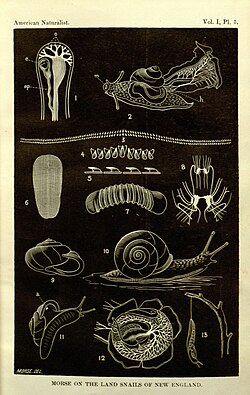
Key Facts
- Established: 1867
- Publisher: University of Chicago Press on behalf of the American Society of Naturalists
- Frequency: Monthly
- 2023 Impact Factor: 2.4
- Current Editor-in-Chief: Volker H. W. Rudolf
- Core Disciplines: Ecology, Evolution, and Ethology
A Detailed History of the Publication
Founding and Early Years
The journal was founded at the Essex Institute in Salem, Massachusetts, by a group of dedicated scientists: Alpheus Hyatt, Edward S. Morse, Alpheus S. Packard Jr., and Frederick W. Putnam. The inaugural issue was published in March 1867. By 1885, these founders established the American Naturalist Society, and two years later, in 1887, the journal became the official organ of the society.
Changes in Ownership and Leadership
The late 19th century saw significant shifts in the journal's management. In 1878, Edward Cope purchased half of the rights, relocating the publication to Philadelphia and co-editing it with Alpheus S. Packard Jr. Cope eventually became the editor-in-chief in 1887, a role he held until his death in 1897.
Following Cope's passing, a consortium of professors from Harvard University, Tufts University, and the Massachusetts Institute of Technology acquired the rights. They maintained the publication until 1907, when J. McKeen Cattell took control. The journal remained within the Cattell family for several decades, with Jacques Cattell joining his father as co-editor and publisher in 1939.
Modern Era and the University of Chicago Press
While the American Society of Naturalists (ASN) increased its involvement in the editing process during 1941 and 1951, the Cattell family retained ownership until 1968. Following the death of Jacques Cattell, the University of Chicago Press took over publication, ensuring the journal's continued stability and academic reach into the present day.
Journal Specifications
| Attribute | Detail |
|---|---|
| ISSN | 0003-0147 |
| LCCN | 00-227441 |
| ISO 4 Abbreviation | Am. Nat. |
| OCLC Number | 45446849 |
| JSTOR ID | 00030147 |
Frequently Asked Questions
What is the primary goal of The American Naturalist?
The journal aims to advance and spread knowledge of organic evolution and other broad biological principles to enhance the conceptual unification of the biological sciences.
Who currently edits the journal?
As of 2023, the editor-in-chief is Volker H. W. Rudolf.
Which scientific fields does the journal cover?
The publication focuses on research within the fields of ecology, evolutionary biology, and behavior (ethology).
Who publishes the journal today?
It is published by the University of Chicago Press on behalf of the American Society of Naturalists.
What is the journal's impact factor?
According to the Journal Citation Reports, the journal had an impact factor of 2.4 in 2023.