textfiles.com: Preserving the Digital Legacy of the BBS Era
Before the modern internet became a ubiquitous part of daily life, a vibrant ecosystem of Bulletin Board Systems (BBS) served as the primary hubs for digital communication and community. These systems fostered unique subcultures and a distinct form of digital expression. Today, textfiles.com serves as a comprehensive digital museum, preserving the documents that define this era.
Created and managed by Jason Scott, the website provides a window into the history of writers and artists who were limited by the 128 characters of ASCII (American Standard Code for Information Interchange), the character encoding standard used for electronic communication.
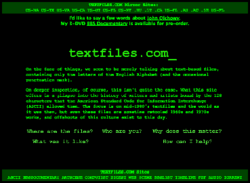
Key Facts
- Founder: Jason Scott.
- Launch Date: 1998.
- Content Scope: Thousands of text files primarily from the 1980s and 1990s.
- Collection Size: 58,227 files as of 2005.
- Traffic: Averaged 350,000 to 450,000 unique monthly visitors as of 2017.
- Philosophy: A "completionist" approach to gathering all available information within its scope.
A Vast Archive of Digital Subcultures
The archive at textfiles.com is not merely a collection of data but a sociological record of early computing. The site categorizes a broad spectrum of topics, reflecting the diverse interests of the early digital underground and mainstream hobbyists alike.
The stored documents cover a wide array of subjects, including:
- Technical and Counter-culture: Hacking, phreaking (the act of exploring or manipulating telephone systems), and computer piracy.
- Arts and Media: ASCII art, ezines, and general art.
- Societal and Political: Anarchy, politics, and freemasonry.
- Miscellaneous: UFOs, drugs, sex, computer games, and carding.
Specialized Sub-Projects
To manage the vast amount of data, textfiles.com utilizes several dedicated sub-projects, each with its own hostname to organize specific types of media and historical records.
Visual and Audio Archives
The site preserves more than just plain text. artscene.textfiles.com hosts a repository of computer art, including ANSI art (a more advanced character set than ASCII) and crack intros. For those interested in sound, audio.textfiles.com archives hacker radio shows, recorded telephone conferences with BBS owners, and prank calls.
Software and Web History
The transition from BBS to the World Wide Web is documented through web.textfiles.com, which contains files created after the web entered mainstream use around 1995. Additionally, cd.textfiles.com maintains an archive of shareware discs from the 1990s.
BBS Documentation
For historians of the medium, bbslist.textfiles.com strives to be a comprehensive directory of all historical BBSes, while timeline.textfiles.com tracks the most significant events in the evolution of these systems.
| Sub-Project Hostname | Primary Content Focus |
|---|---|
| artscene.textfiles.com | ASCII/ANSI art and crack intros |
| audio.textfiles.com | Prank calls, radio shows, and BBS conferences |
| cd.textfiles.com | 1990s shareware discs |
| web.textfiles.com | Post-1995 mainstream web files |
| bbslist.textfiles.com | Comprehensive list of historical BBSes |
| timeline.textfiles.com | Chronology of important BBS events |
Frequently Asked Questions
Who runs textfiles.com?
The website was created and is currently operated by Jason Scott.
What is the primary purpose of the site?
The site is dedicated to preserving the digital documents and history of the Bulletin Board System (BBS) world and its associated subcultures.
What time period does the archive cover?
While it contains some older files, the collection primarily focuses on the 1980s and extends well into the 1990s.
What is a "completionist" outlook in this context?
It refers to the site's goal of attempting to gather as much information as possible within the decided scope of its projects.
What is the difference between ASCII and ANSI art on the site?
ASCII art uses the basic 128-character American Standard Code for Information Interchange, while ANSI art (found on the artscene sub-project) utilizes an extended set of characters and colors.