Exploring Texas A&M University: A Legacy of Research and Tradition
Texas A&M University (TAMU) stands as a premier public land-grant research senior military university. Established in 1876, the institution has grown from its origins as the State Agricultural and Mechanical College of Texas into a global powerhouse of education and innovation. Today, it serves as a cornerstone of the Texas A&M University System, driven by a mission of academic excellence and a deep-rooted sense of community.
Key Facts

- Established: 1876
- Location: College Station, Texas
- Campus Size: 5,500 acres
- Total Enrollment: Over 78,000 students (including undergraduates and postgraduates)
- Endowment: $19.11 billion (Texas A&M only, FY 2024)
- Mascot: Reveille X
- Colors: Maroon and white
A Rich Institutional History

The university has undergone several name changes throughout its history, reflecting its evolving mission. It was originally founded as the State Agricultural and Mechanical College of Texas (1871–1887) and later became the Agricultural and Mechanical College of Texas (1887–1963) before adopting its current identity.

Over the decades, the university has transitioned from a specialized agricultural college to a comprehensive research institution. This evolution is visible in its technological advancements, from the early days of manual data processing to the modern, high-tech research facilities that define the campus today.

Campus and Global Reach

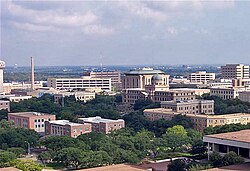
While the main campus is located in College Station, Texas A&M maintains a vast network of branch campuses and international presence. The university system includes locations in Bryan, Canyon, Dallas, Fort Worth, Galveston, Houston, Kingsville, McAllen, and Round Rock. Notably, the Texas A&M University at Galveston is a dedicated hub for marine research and home to the Texas A&M Maritime Academy.
The university also extends its influence internationally, though plans are in place to close the Qatar campus by 2028. The sheer scale of the institution is supported by a massive endowment and a diverse faculty and staff dedicated to supporting a large student body.
University Statistics at a Glance
| Category | Details |
|---|---|
| Total Students | 78,721 (61,442 Undergraduates; 17,279 Postgraduates) |
| Faculty | 4,300 |
| Total Staff | 11,114 |
| Endowment (System-wide) | $20.38 billion |
| Admit Rate (2024) | 54.2% |
Academic Excellence and Research

Texas A&M is recognized globally for its research capabilities. It holds prestigious affiliations, including membership in the Association of American Universities (AAU). The university is also a recipient of various grants, including sea-grant and space-grant designations, highlighting its leadership in marine and aerospace sciences.
The academic rigor is reflected in its national and global rankings. For instance, U.S. News & World Report ranks the university 51st nationally, while it holds significant positions in global rankings such as QS and THE.
Admissions Trends
The incoming class of 2024 showed high academic standards. Among students whose high school ranked, 66.57% were in the top 10% of their class, and 91.4% were in the top 25%. The middle 50% of admitted students typically scored between 587–682 on SAT Evidence-Based Reading and Writing (EBRW) and 574–701 on SAT Math.
Student Life and Traditions

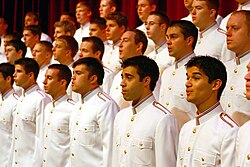
Life at Texas A&M is defined by unique traditions and a strong sense of identity. The Corps of Cadets provides a structured military experience for many students, contributing to the university's status as a senior military university.
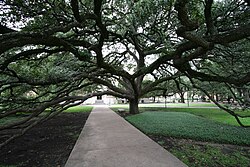
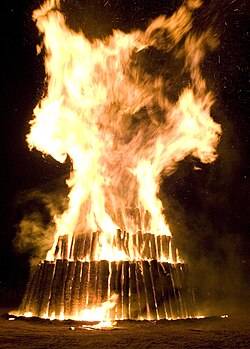
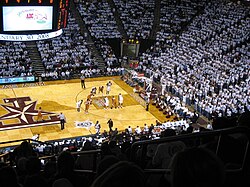
From the iconic Century Tree to the spirited atmosphere of Kyle Field, traditions are woven into the fabric of the campus. Athletics play a massive role in student life, with the Aggies competing in the NCAA Division I FBS – SEC.

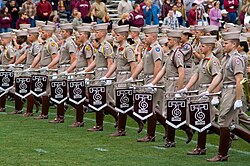
Musical traditions are also prominent, featuring groups like the Fightin' Texas Aggie Band and the Texas A&M University Singing Cadets.
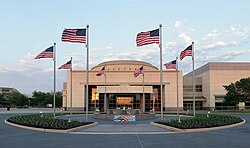
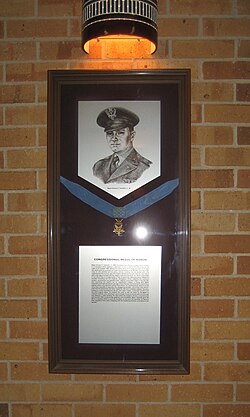
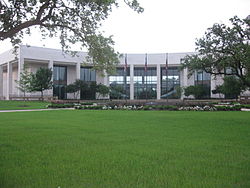
The university also honors its history and its people through various memorials and landmarks, such as the George H.W. Bush Presidential Library and Museum and the Memorial Student Center, which displays significant items like the Specimen Medal of Honor for Horace S. Carswell.
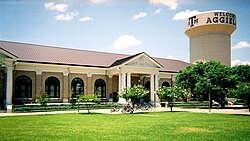
Even the dining experience is part of the Aggie identity, with locations like Sbisa Dining Hall welcoming students to "Aggieland."
Frequently Asked Questions
What are the official colors and mascot of Texas A&M?
The official colors of Texas A&M are maroon and white, and the university mascot is Reveille X.
Where is the main campus located?
The main campus is located in College Station, Texas, spanning approximately 5,500 acres.
What is the significance of the Corps of Cadets?
The Corps of Cadets is a key part of the university's identity as a senior military university, providing a structured leadership and military experience for students.
How does Texas A&M rank nationally?
Texas A&M is highly ranked, appearing 51st in the U.S. News & World Report national rankings and 61st in Forbes.
Does Texas A&M have international campuses?
Yes, the university has had an international presence, including a campus in Qatar, though it is scheduled to close by 2028.