Texaco: A Century of Petroleum Innovation and Corporate Evolution
From its humble beginnings in the oil fields of Texas to its current status as a global brand under the Chevron Corporation, Texaco has played a pivotal role in the development of the modern petroleum industry. Founded during the early 20th-century oil boom, the company evolved from a local fuel supplier into a worldwide powerhouse known for its gasoline, motor oils, and high-profile sports sponsorships.
Key Facts
- Founded: 1902 in Beaumont, Texas, following the Spindletop oil discovery.
- Founders: Joseph S. Cullinan, Thomas J. Donoghue, and Arnold Schlaet.
- Major Merger: Acquired by Chevron Corporation in October 2001 for $36 billion.
- Key Brands: Havoline (motor oil) and Techron (fuel additive).
- Industry Impact: First U.S. oil company to sell gasoline nationwide under a single brand name (1928).
The Early Years: From Spindletop to National Expansion
Texaco began as the "Texas Fuel Company" in 1902. Unlike many of its contemporaries, it was not initially designed to drill wells. To handle production, founder Joseph S. Cullinan organized the Producers Oil Company, attracting significant investment from figures like John W. "Bet A Million" Gates. Eventually, these two entities merged to form the Texas Company.
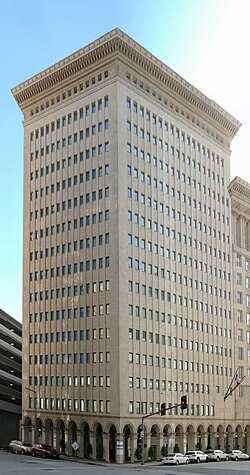
The company expanded rapidly, establishing operations in Antwerp, Belgium, in 1905. By 1915, it had moved into a prominent 13-story headquarters in Houston, Texas.
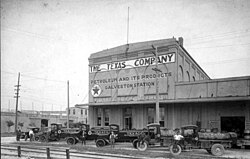
A landmark achievement occurred in 1928 when Texaco became the first American oil company to market its gasoline under one unified brand name across all 48 states of the time.
Global Ventures and Mid-Century Growth
During the 1930s, Texaco expanded its reach into South America, purchasing the Barco oil concession in Colombia. This venture involved immense engineering challenges, including building pipelines through uncharted jungles and mountains.
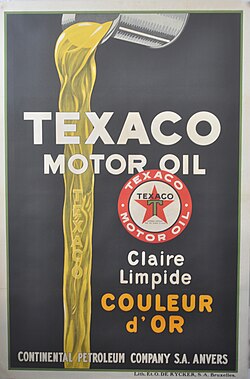
The company's history also includes controversial periods. During the Spanish Civil War, Texaco illegally supplied 3.5 million barrels of oil to Francisco Franco's Nationalist forces, resulting in a $20,000 fine for violating the Neutrality Act of 1937.
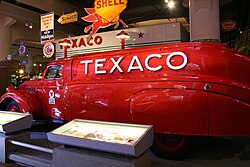
Post-World War II, the company focused on product innovation. In 1954, it introduced Petrox, a detergent additive for its "Sky Chief" gasoline, designed to meet the needs of high-compression engines.
Corporate Turmoil and Legal Challenges
The latter half of the 20th century brought significant legal and financial hurdles. In 1985, Pennzoil won a $10.53 billion verdict against Texaco—the largest civil verdict in U.S. history at that time—following a dispute over the acquisition of Getty Oil. This financial blow led Texaco to file for bankruptcy in 1987.
The company also faced severe public relations crises. In 1996, Texaco paid over $170 million to settle racial discrimination lawsuits filed by Black employees, a settlement that was further marred by the release of tapes showing executives discussing the destruction of evidence.
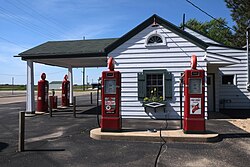
The Chevron Era and Modern Brand Status
In October 2001, Chevron Corporation completed a $36 billion acquisition of Texaco. The entity operated as "ChevronTexaco" until 2005, after which Texaco transitioned into a brand under the Chevron umbrella.
Modern updates to the brand include the introduction of the Techron additive in 2005 and a strategic shift in retail operations, including the closure of the Refineria Panamá in 2003 and the exit from several Mid-Atlantic U.S. markets in 2010.
Sports, Entertainment, and Diversification
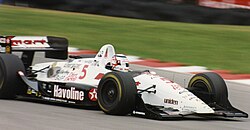
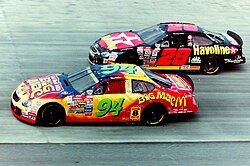
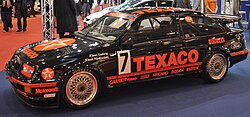
Texaco built a powerful image through sports and media. The Havoline brand became synonymous with NASCAR, sponsoring drivers like Dale Jarrett and Kenny Irwin Jr. for over two decades. The company also had a presence in Formula One, sponsoring Team Lotus and McLaren in the 1970s, and later Jaguar Racing.
In the realm of entertainment, Texaco was a pioneer in broadcasting. "The Texaco Fire Chief" radio show, hosted by Ed Wynn, eventually evolved into the Texaco Star Theater on television, hosted by Milton Berle.
Beyond petroleum, the company diversified into green technology. In 2001, Texaco purchased GM's share in GM Ovonics, which focused on Nickel-Metal Hydride (NiMH) battery chemistry for hybrid vehicles. This later became the joint venture Cobasys.
Corporate Summary
| Period | Entity Name | Status | Key Event |
|---|---|---|---|
| 1902–1959 | The Texas Company | Private | Founded in Beaumont, TX |
| 1959–2001 | Texaco | Private | National brand unification |
| 2001–2005 | ChevronTexaco | Subsidiary | Acquisition by Chevron |
| 2005–Present | Texaco | Brand | Operated by Chevron Corp |
Frequently Asked Questions
Who founded Texaco and why?
Texaco was founded in 1902 by Joseph S. Cullinan, Thomas J. Donoghue, and Arnold Schlaet in Beaumont, Texas, to capitalize on the oil discovery at Spindletop.
What was the significance of the Pennzoil lawsuit?
The lawsuit resulted in a $10.53 billion verdict against Texaco in 1985, which was the largest civil verdict in U.S. history at the time and led the company to file for bankruptcy in 1987.
What is the relationship between Texaco and Chevron?
Chevron Corporation acquired Texaco in 2001. While the companies merged to become ChevronTexaco, Texaco now exists as a retail brand owned and operated by Chevron.
What is Havoline?
Havoline is a brand of motor oil and automotive products associated with Texaco, well-known for its long-term sponsorship of NASCAR and other motorsports.
Did Texaco invest in alternative energy?
Yes, through the acquisition of GM Ovonics in 2001, Texaco entered the field of NiMH battery chemistry for hybrid vehicles, which later became the joint venture Cobasys.