Tennis: History, Rules, and the Evolution of the Modern Game
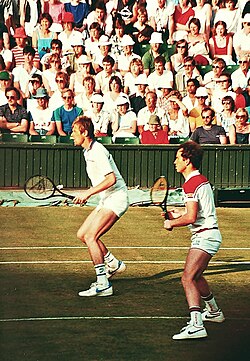
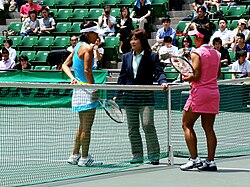
Tennis is a globally celebrated racket sport played individually in singles or in pairs in doubles. Whether played on the hallowed grass of Wimbledon or the fast hard courts of the Australian Open, the game combines athletic endurance with strategic precision. Governed by the International Tennis Federation (ITF), tennis has evolved from its early predecessors into a professional powerhouse featuring separate tours for men and women, as well as mixed-sex competition.
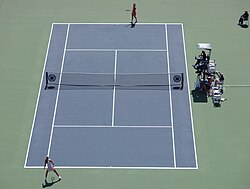
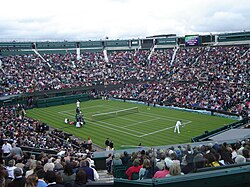
The sport is played on a rectangular court, divided by a net, where players use rackets to hit a ball over the net into the opponent's court. The objective is to win points by forcing the opponent to hit the ball out of bounds or fail to return it over the net.

Key Facts
- Governing Body: International Tennis Federation (ITF).
- Origins: The modern game of lawn tennis began in the 19th century in Birmingham, England.
- Format: Available as singles or doubles; mixed-sex tours and mixed doubles are common.
- Olympic Status: Part of the Summer Paralympic programme since 1992.
- Major Tournaments: The four Grand Slams (Australian Open, French Open, Wimbledon, and US Open).
The History and Evolution of Tennis
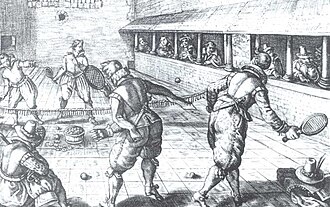
Before the modern era, the game had several predecessors. Evidence of early racket sports can be found in 17th-century paintings from Cremona and the jeu de paume (game of the palm) popular in France during the 17th century.
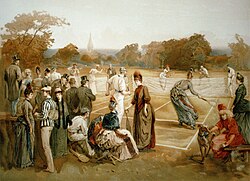
The transition to the modern game occurred in the 19th century. Harry Gem and Augurio Perera are credited with first playing the modern version of lawn tennis at Perera's house in Edgbaston, Birmingham, England.

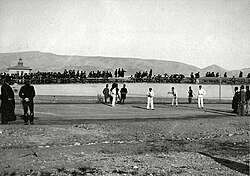
As the sport spread, it gained popularity in the United States and Europe, leading to the establishment of the major championships we recognize today. By the late 19th century, tennis had become a structured sport with standardized equipment and rules.
Equipment and Court Specifications
The Racket and Strings
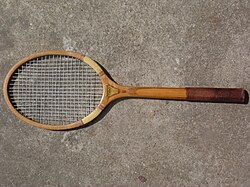
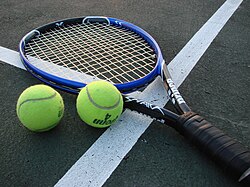
Modern rackets must adhere to strict guidelines regarding size and weight. The hitting surface consists of strings, which can be made from several materials:
- Natural gut: Traditional strings made from animal intestines.
- Synthetic: Man-made materials designed for durability and tension.
- Hybrid strings: A combination of different string materials to balance power and control.

The Ball and Court
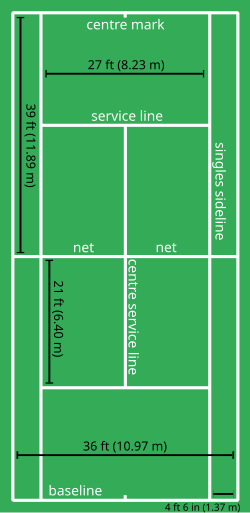
The game is played with a pressurized rubber ball covered in felt. The venue, known as a tennis court, varies by surface—most commonly grass, clay, or hard courts—and features specific boundary lines that determine whether a shot is "in" or "out."
How to Play: Rules and Scoring
A tennis match begins with a serve, where a player hits the ball into the diagonally opposite service box to start a point.
Scoring System
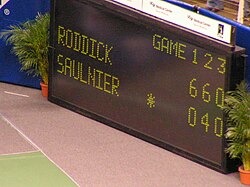
Tennis uses a unique scoring progression. Points progress from 15, 30, to 40, and then to the game. If both players reach 40, it is called a deuce. To win a game from deuce, a player must win two consecutive points (the advantage and the game point).
Games are grouped into sets, and sets are grouped into a match. Special terms include a break point, which occurs when the receiver is one point away from winning the game.
Match Play and Etiquette
Professional matches maintain continuity through strict rules regarding ball changes and on-court coaching. Tradition and sportsmanship are central to the game, and it is expected that players shake hands at the conclusion of a match.

Techniques and Shot Execution
Players employ various stances—open, semi-open, closed, or neutral—depending on the ball's position and their intended movement.
Primary Shots
- Serve: The overhead shot that initiates play.
- Forehand: A shot hit with the palm of the hand facing the direction of the stroke.
- Backhand: A shot hit with the back of the hand facing the direction of the stroke, often played with two hands for added stability.



Professional Tournaments and Rankings
The pinnacle of professional tennis is the Grand Slam, consisting of four major tournaments. These events are distinguished by their surfaces and historical prestige.
| Tournament | Location | Surface | Date | First Held |
|---|---|---|---|---|
| Australian Open | Melbourne | Hard | January–February | 1905 |
| French Open | Paris | Clay | May–June | 1891 |
| Wimbledon | London | Grass | June–July | 1877 |
| US Open | New York City | Hard | August–September | 1881 |
Beyond the Grand Slams, the men's professional circuit is organized by the ATP (Association of Tennis Professionals), featuring the 1000, 500, and 250 series. The women's circuit is managed by the WTA (Women's Tennis Association), with a similar structure of 1000, 500, and 250 series events.
Legendary Players
Tennis has produced iconic athletes who have dominated the Grand Slam circuit. In the men's game, Novak Djokovic holds the record for the most singles titles with 24, followed closely by Rafael Nadal (22) and Roger Federer (20). Among women, Margaret Court leads with 24 titles, followed by Serena Williams (23) and Steffi Graf (22).
Frequently Asked Questions
What is the difference between a game, a set, and a match?
A game is the smallest unit of scoring (15, 30, 40, game). A set is won by the first player to win a certain number of games (usually six). A match is won by the player who wins the majority of the sets.
What are the different types of tennis court surfaces?
The three primary surfaces are grass (fast and low bounce), clay (slower with higher bounce), and hard courts (a balanced medium between the two).
What is a "break point" in tennis?
A break point occurs when the player receiving the serve is one point away from winning the game, effectively "breaking" the server's advantage.
Who governs the rules of tennis worldwide?
The International Tennis Federation (ITF) is the highest governing body for tennis, overseeing the rules of the game and the Grand Slam tournaments.