Syrian Public Security Police
The Public Security Police (SPSP), also known as the Internal Security Forces (ISF), served as the primary civilian law enforcement agency of the Syrian Arab Republic for nearly eight decades. Operating under the Ministry of Interior, the force was tasked with maintaining public order, managing traffic, and conducting criminal investigations across the nation's 185,180 square kilometers.
Founded on May 29, 1945, the agency's history is deeply intertwined with the state's political evolution. Its anniversary, celebrated on May 29, commemorates the 1945 shelling of the Damascus Parliament building by French forces. The agency operated under the motto "Police is for the service of people" until its dissolution on December 8, 2024, following the collapse of the Assad regime. Currently, the Syrian Transitional Government is working to reorganize the nation's police force, with Hay'at Tahrir al-Sham providing interim security from Idlib.
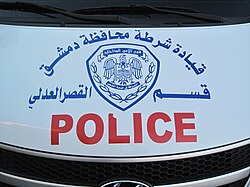
Key Facts
- Established: May 29, 1945.
- Dissolved: December 8, 2024.
- Personnel: Approximately 80,000 employees as of 2021.
- Parent Agency: Ministry of Interior.
- Primary Oversight: Criminal Security Directorate.
- International Status: Member of INTERPOL since 1953.
Organizational Structure
The Internal Security Forces were managed through the Criminal Security Directorate, which oversaw several specialized divisions. While the police handled civilian law enforcement, they remained distinct from other internal security agencies such as the Political Security Directorate and the General Intelligence Directorate.
Police Divisions
- Emergency Police: Responsible for roving patrols and emergency response (Emergency number: 112).
- Traffic Police: Managed road safety and traffic flow (Emergency number: 115).
- Riot Police: Specialized in crowd control and managing civil unrest.
- Criminal Security Department: Handled general investigative duties.
- Human Trafficking Department: Focused on combating the trafficking of persons.
- Electronic Criminal Branch: Addressed cybercrime and digital forensics.
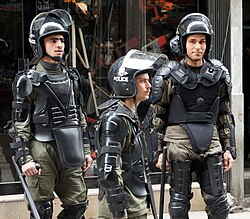
Specialized Directorates
Beyond the general police force, the Ministry of Interior operated the Anti-Narcotics Directorate. Originally part of the police, it became an independent directorate in 2002 to better handle drug law enforcement and intelligence. It was further subdivided into internal and international anti-drug divisions, as well as information and training branches.
Additionally, the state employed the Gendarmerie for rural control and the Border Guard for frontier security, particularly along the Syrian-Iraqi border. These two organizations maintained a more military character than the civilian police.
Equipment and Personnel
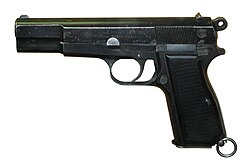
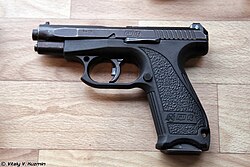
The Syrian police utilized a mix of domestic and imported equipment. Standard infantry weapons included AKM assault rifles and various pistols, such as the Browning Hi-Power and the Russian-made GSh-18. Elite units, specifically the Syrian Special Mission Forces (SMF), were equipped with more advanced weaponry, including AK-103 and AK-104 rifles, Kord machine guns, and the Fajr 224 (an Iranian copy of the M4 carbine).
Uniforms and Vehicles
Uniforms varied by role. Security personnel typically wore military olive green or camouflage. In 2009, traffic police transitioned to a distinct look featuring grey pants and white shirts with yellow shoulder patches. Anti-terrorism units were identified by dark blue uniforms.
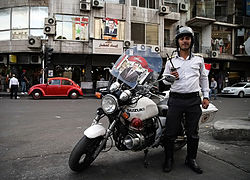
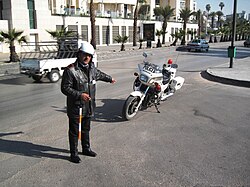
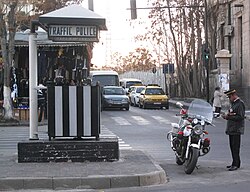
The vehicle fleet consisted of a variety of patrol cars, including the Opel Omega, Honda Accord, and Toyota Hilux. For high-risk operations, the force utilized armored personnel carriers such as the BTR-60, BTR-152, and BRDM-2, as well as MI-171SH helicopters provided by Russia.
Summary of Agency Specifications
| Category | Details |
|---|---|
| Jurisdiction | National (Syrian Arab Republic) |
| Budget | LS 7,825,000 |
| Key Equipment | AKM, Browning Hi-Power, GSh-18, BTR-60 |
| Headquarters | Damascus, Syria |
| Legal Framework | Criminal Code |
Frequently Asked Questions
When was the Syrian Public Security Police dissolved?
The agency was dissolved on December 8, 2024, following the fall of the Assad regime.
What was the role of the Anti-Narcotics Directorate?
The Anti-Narcotics Directorate was an independent body within the Ministry of Interior responsible for drug law enforcement, intelligence gathering, and rehabilitation.
How did the police interact with INTERPOL?
Syria has been a member of INTERPOL since 1953. After facing restrictive measures since 2011, the country was readmitted to the global police communications network in October 2021, allowing access to databases and the ability to issue red notices.
What were the Syrian Special Mission Forces?
The Syrian Special Mission Forces (SMF) were elite police units equipped with advanced weaponry, such as AK-104 rifles and Fajr 224 carbines, used for high-stakes security operations.
Who managed the police force's territorial organization?
The force was organized by governorates, with commanders appointed for regions such as Damascus, Aleppo, Hama, and Daraa to oversee local operations.