Syrian Desert: Geography, History, and Ecology of the Badiya
The Syrian Desert, known in Arabic as Bādiyat Ash-Shām, is a vast expanse of desert, semi-desert, and steppe located in West Asia. Spanning approximately 500,000 square kilometers (200,000 square miles), this region is a critical geographical feature that crosses the borders of Syria, Jordan, Iraq, and Saudi Arabia. It is so expansive that it accounts for roughly 55% of Syria's total land area and 85% of Jordan's.
Characterized by open, rocky, or gravelly desert pavement, the landscape is occasionally broken by wadis—dry riverbeds that only flow during rare periods of rainfall. To the south, the Syrian Desert merges seamlessly into the larger Arabian Desert.
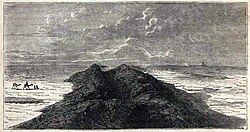
Key Facts
- Total Area: Approximately 500,000 square kilometers.
- Countries Involved: Syria, Jordan, Iraq, and Saudi Arabia.
- Highest Point: Khawr um Wual in Saudi Arabia (over 1,000 meters).
- Key Ancient Cities: Palmyra and Dura-Europos.
- Unique Wildlife: The ancestral origin of the golden hamster.
- Primary Land Use: Rangeland for sheep, goats, and camels.
Geography and Regional Divisions
The desert is naturally bounded by the Euphrates River to the east and the Orontes Valley and the volcanic field of Harrat al-Shamah to the west. While it transitions into fertile lands to the north, it blends into the Arabian Peninsula's deserts to the south.
The Hamad Plateau
At the heart of the region lies the Hamad Plateau, a flat, stony semi-desert sitting between 700 and 900 meters in elevation. This plateau consists of limestone bedrock covered in chert gravel. Because rainfall is minimal, most water that does fall collects in local salt flats. The plateau's highest elevations include Jebel Aneiza (960 meters) at the border tripoint of Jordan, Iraq, and Saudi Arabia, and Khawr um Wual in Saudi Arabia, which exceeds 1,000 meters.
Regional Naming
Depending on the perspective, different parts of the desert carry different names. The area surrounding Palmyra is often called the Palmyrene Desert, while the Homs Desert refers to another section. In Iraq, the eastern portion of the Syrian Desert is frequently referred to as the Western Desert.
Wildlife and Ecosystem
The Syrian Badia is home to specialized climax plants such as Caroxylon vermiculatum and Artemisia herba-alba. However, this ecosystem is currently under significant threat from over-grazing, hunting, and prolonged drought. These pressures have led to the disappearance of many native plant species, which have been replaced by grasses with lower nutritional value for livestock.
The region is famously the origin of the golden hamster. While larger mammals like the Asiatic cheetah, onager, and hartebeest are now locally extinct, the desert still attracts migratory birds—including storks, cranes, and herons—to its seasonal lakes. Small rodents, snakes, scorpions, and camel spiders remain common.
Historical Significance
Historically, the desert has been the domain of nomadic Aramean tribes and Bedouins. Evidence of their presence remains in the form of Safaitic inscriptions—proto-Arabic texts dating from the first century BC to the fourth century AD.
Ancient Trading Hubs
Palmyra stands as one of the most significant ancient settlements in the region. First mentioned in the second millennium BC, it became a wealthy Roman-era trading center. Its strategic location on the Silk Road allowed its merchants to tax caravans and trade rare commodities from the Far East, linking the Mediterranean to Asia.
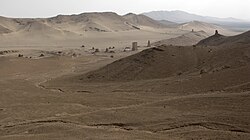
Another vital site was Dura-Europos on the Euphrates. Originally a Seleucid fortress (Dura meaning "fortress"), it served as a commercial and military bridge between Mesopotamia and the Mediterranean until it was raided by the Sasanian emperor Shapur I in the 250s AD and eventually abandoned.
Modern History and Conflict
The 20th and 21st centuries brought turmoil to the region. During the Ottoman Empire, the desert was a site of deportation for victims of the Armenian genocide. In more recent decades, the desert's rugged terrain made it a strategic asset during the Iraq War and the Syrian Civil War, serving as supply lines and strongholds for various insurgent groups, including ISIS between 2013 and 2015, before the region was retaken by coalition forces in 2017.
Economy and Environmental Recovery
Due to poor soil and low rainfall, the economy is primarily based on livestock. Bedouin herdsmen graze approximately twelve million sheep and goats, along with camels, across the rangelands.
To combat land degradation, the International Fund for Agricultural Development (IFAD) partnered with the Syrian government from 1995 to 2010. This project focused on rehabilitating over a million hectares of land through grazing restrictions and the planting of native fodder shrubs. The initiative was highly successful, with some herdsmen reporting a tenfold increase in livestock productivity.
| Feature | Details |
|---|---|
| Total Area | ~500,000 km² |
| Primary Terrain | Rocky pavement, Hamad Plateau, Wadis |
| Key Flora | Caroxylon vermiculatum, Artemisia herba-alba |
| Key Fauna | Golden hamster, migratory birds, scorpions |
| Major Ancient Cities | Palmyra, Dura-Europos |
| Economic Base | Nomadic livestock grazing (sheep, goats, camels) |
Frequently Asked Questions
Which countries does the Syrian Desert cover?
The Syrian Desert spans parts of Syria, Jordan, Iraq, and northern Saudi Arabia.
What is the Hamad Plateau?
The Hamad Plateau is a flat, stony semi-desert region in the middle of the Syrian Desert, characterized by limestone bedrock and chert gravel, with elevations between 700 and 900 meters.
Why was Palmyra historically important?
Palmyra was a strategic trading center on the Silk Road, allowing its inhabitants to amass wealth by taxing caravans and trading rare goods between the Far East and the Mediterranean.
What animal is native to the Syrian Desert?
The Syrian Desert is the ancestral origin of the golden hamster.
How is the land being rehabilitated?
Through projects led by the International Fund for Agricultural Development (IFAD), degraded land has been restored by restricting grazing and reseeding native fodder shrubs to improve livestock productivity.