Synapsida: The Evolutionary Journey from Ancient Reptiliomorphs to Modern Mammals
Long before the first dinosaur walked the Earth, a distinct lineage of animals was already shaping the terrestrial landscape. These were the synapsids, a clade of amniotes (animals with egg-laying membranes) that represents the ancestral line leading directly to all modern mammals. From the sprawling, sail-backed creatures of the Permian to the diverse mammals of today, the history of synapsids is a saga of resilience, adaptation, and dramatic evolutionary transformation.
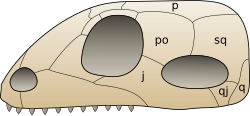
The synapsid lineage first appeared during the Late Carboniferous period, approximately 315 to 307 million years ago. While they are often colloquially referred to as "mammal-like reptiles," they are a distinct group separated from the sauropsids (the lineage leading to reptiles and birds) by a fundamental anatomical feature of the skull.
Key Facts
- Defining Feature: Synapsids are identified by a single temporal fenestra (an opening in the skull behind the eye socket).
- Temporal Range: They emerged in the Late Carboniferous and persist today as mammals.
- Permian Dominance: They were the largest terrestrial vertebrates and apex predators of the Permian period.
- Survival: Only the cynodont group (specifically Probainognathia) survived beyond the Triassic period.
- Modern Legacy: There are roughly 6,800 species of living synapsids, all of which are mammals.
The Early Era: "Pelycosaurs" and the Permian Peak
The earliest unambiguous synapsids, such as Archaeothyris and Echinerpeton, appeared in North America and Europe. These early forms, often grouped as "pelycosaurs," were sprawling, bulky animals with relatively small brains. Some, like the famous Dimetrodon, possessed large neural spines that formed sails, which scientists believe may have helped regulate their body temperature.
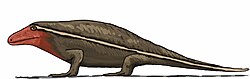
During the Permian period (299 to 251 million years ago), synapsids reached their first peak of dominance. They were the primary land predators, with eupelycosaurs serving as the apex hunters of their time. These animals could reach lengths of up to 6 meters (20 feet), dominating the ecosystem until the end of the Paleozoic era.
The Rise of the Therapsids
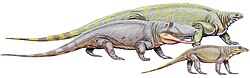
By the middle of the Late Permian, the primitive pelycosaur-grade synapsids were largely replaced by a more advanced group: the therapsids. This transition marked a significant shift in anatomy and physiology, moving toward the characteristics we associate with mammals.
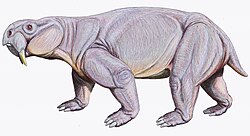
Therapsids faced severe challenges during the Capitanian and Permian-Triassic mass extinction events. However, two groups—the herbivorous dicynodonts and the eutheriodonts (including therocephalians and cynodonts)—survived into the Triassic. The dicynodont Lystrosaurus became a "disaster taxon," at one point accounting for as much as 95% of all land species.
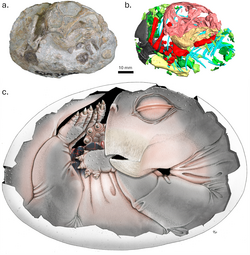
Despite this early Triassic success, therapsids eventually faced stiff competition from archosaurian sauropsids, including the ancestors of dinosaurs and pterosaurs. This pressure forced many synapsids into new ecological niches.
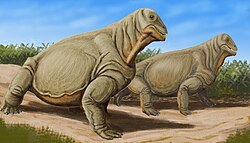
The Path to Mammaliaformes
The cynodonts, a subgroup of therapsids, were the most successful in adapting to the rise of the dinosaurs. During the Jurassic, many cynodonts adopted nocturnal lifestyles to avoid competition with the dominant dinosaurs. This period saw the evolution of complex teeth, improved hearing, and the gradual transformation of the jaw joint.
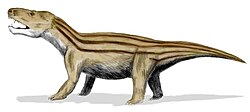
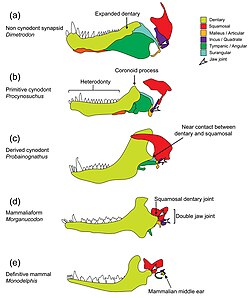
The transition from cynodont to mammal involved a complex reorganization of the skull. Specifically, bones from the ancestral jaw joint migrated to the middle ear, enhancing auditory capabilities. This evolutionary path led to the Mammaliaformes, the only synapsids to survive the Triassic.
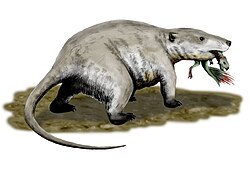
During the Mesozoic, mammals remained relatively small, though some exceptions existed. Repenomamus, for instance, was the largest mammal of the Mesozoic era. It wasn't until the Cretaceous-Paleogene extinction event, which wiped out non-avian dinosaurs, that synapsids—now fully evolved as mammals—rose to global dominance in the Cenozoic era.
Anatomical Evolution and Adaptation
The evolution of synapsids is characterized by a steady progression toward higher metabolic rates and specialized biology. Key developments included:
- Dentition: The shift from uniform teeth to heterodonty (different types of teeth, such as incisors, canines, and molars) for specialized feeding.
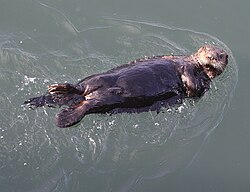
- Integument: The development of skin and eventually fur. Modern sea otters, for example, represent the pinnacle of this evolution with the densest fur of any living mammal.
- Metabolism: A transition from likely cold-blooded (ectothermic) states to warm-blooded (endothermic) systems, supported by increased aerobic capacity.
Other specialized adaptations appeared in various lineages, such as patagia (skin membranes for gliding) seen in some Jurassic mammaliaforms, and the development of mammary glands to provide nutrition to offspring.
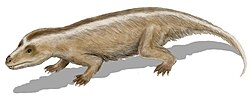
The following table summarizes the major stages of synapsid evolution:
| Group | Approximate Era | Key Characteristics | Example Genus |
|---|---|---|---|
| Early Synapsids ("Pelycosaurs") | Late Carboniferous - Early Permian | Sprawling gait, temporal fenestra, some with sails | Dimetrodon |
| Therapsids | Middle Permian - Triassic | More upright posture, improved metabolism | Lystrosaurus |
| Cynodonts | Late Permian - Jurassic | Heterodont teeth, nocturnal habits, mammal-like jaw | Cynognathus |
| Mammals | Triassic - Present | Endothermy, fur, mammary glands, complex middle ear | Homo sapiens |
Frequently Asked Questions
What is the main difference between a synapsid and a reptile?
The primary anatomical difference is the presence of a single temporal fenestra (opening) in the skull behind each eye in synapsids. Sauropsids (reptiles) typically have either no such opening (anapsids) or two openings (diapsids).
Were pelycosaurs actually dinosaurs?
No. Pelycosaurs were synapsids, which is a completely different lineage from the sauropsids that produced dinosaurs. They lived millions of years before the first dinosaurs appeared.
How did synapsids survive the age of dinosaurs?
Many synapsids, specifically the cynodonts and early mammals, survived by occupying ecological niches that dinosaurs did not, such as becoming small, nocturnal insectivores.
What is a "disaster taxon" in the context of synapsids?
A disaster taxon is a species that thrives in the immediate aftermath of a mass extinction. Lystrosaurus is a prime example, as it dominated the land species composition after the Permian-Triassic extinction.
When did synapsids develop fur?
While the exact timing is debated, the transition toward fur began with the therapsids and cynodonts as they evolved endothermy (warm-bloodedness) to maintain body temperature, eventually leading to the dense coats seen in modern mammals.