Sylvanshine: The Optical Phenomenon That Makes Summer Trees Look Like Snow
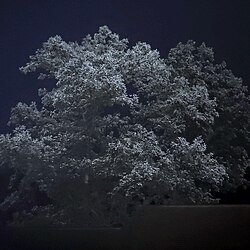
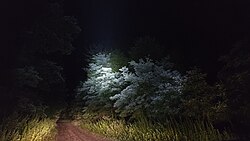
Imagine driving through a forest on a humid summer night, only to see the trees shimmering with a brilliant white glow, as if they were covered in a fresh layer of winter snow. This striking visual effect is not a trick of the mind, but a specific optical phenomenon known as Sylvanshine.
Sylvanshine occurs when light beams, such as those from vehicle headlights or spotlights, strike dew-covered foliage. The result is a powerful retroreflection—a process where light is sent back toward its source—creating a luminous glow that can transform the appearance of a woodland landscape.
The Science Behind the Glow
The phenomenon was formally named and explained in 1994 by Alistair Fraser, an expert in meteorological optics from Pennsylvania State University. Fraser identified that the secret to this glow lies in the interaction between water and the leaf's surface.
The Role of Epicuticular Wax
Many leaves are coated in epicuticular wax, a protective layer that makes the surface hydrophobic (water-repellent). Because of this wax, dew does not spread evenly across the leaf; instead, it forms tight, spherical beads.
How the "Lens Effect" Works
These tiny water beads act as miniature lenses. When a beam of light hits a dewdrop, the lens focuses the light into a concentrated spot on the leaf's surface. This spot then reflects the image of the light back as rays in the opposite direction, directly toward the observer or the light source.
Key Facts
- Definition: An optical effect where dew-covered, wax-coated leaves retroreflect light.
- Visual Effect: Can make summer trees appear as though they are covered in snow at night.
- Discovery: Named and explained in 1994 by Alistair Fraser of Pennsylvania State University.
- Mechanism: Epicuticular wax causes dew to bead, creating lenses that focus and reflect light.
- Light Sources: Commonly triggered by vehicle headlights or spotlights.
Sylvanshine Summary
| Feature | Detail |
|---|---|
| Primary Cause | Dew beads on wax-coated leaves |
| Optical Process | Retroreflection via lens-like water droplets |
| Key Researcher | Alistair Fraser (Penn State) |
| Typical Appearance | Bright, snow-like white glow |
Frequently Asked Questions
What exactly is Sylvanshine?
Sylvanshine is an optical phenomenon where light from a source, like headlights, is reflected back by dew-covered leaves that have a waxy coating, making the foliage appear to glow.
Why does it make trees look like they are covered in snow?
The intense retroreflection of light from thousands of tiny dew droplets creates a bright white luminosity that mimics the visual appearance of snow-covered branches.
What is epicuticular wax?
Epicuticular wax is a natural coating on the surface of many leaves that repels water, forcing dew to form into beads rather than a flat film.
Who discovered the cause of Sylvanshine?
The phenomenon was explained and named in 1994 by Alistair Fraser, a specialist in meteorological optics at Pennsylvania State University.
Does Sylvanshine happen during the day?
While the physics of reflection occur, the effect is most prominent and visible at night when a concentrated artificial light source, such as a spotlight or headlight, contrasts with the dark environment.