Sword History and Evolution: From Bronze Age Blades to Modern Ceremonial Arms
A sword is an edged, bladed weapon designed for manual cutting or thrusting. Distinguished from knives or daggers by its longer blade, a sword consists of a blade attached to a hilt. These weapons generally fall into two functional categories: thrusting swords, which typically feature straight blades with pointed tips, and slashing swords, which are often curved with sharpened edges on one or both sides. Many designs are versatile, engineered for both techniques.
The definition of a sword has shifted across different historical epochs and geographic regions, reflecting the materials available and the tactical needs of the era. The art of using these weapons is known as swordsmanship, or in a modern sporting context, fencing.
Key Facts
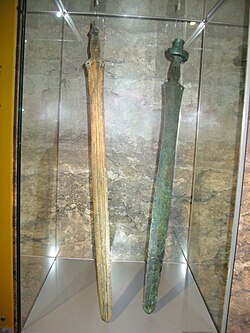
- Origins: Developed during the Bronze Age, evolving from the dagger around 1600 BC.
- Material Constraints: Early bronze blades were rarely longer than 60 cm due to low stiffness (Young's modulus), which caused longer blades to bend.
- Regional Diversity: Designs range from the Japanese katana and Indian khanda to the European longsword and Mesoamerican macuahuitl.
- Military Transition: Swords shifted from primary battlefield weapons to secondary sidearms and ceremonial objects by the 20th century.
- Specialization: Early modern Western designs diverged into specialized thrusting swords and heavy slashing sabres.
The Evolution of Ancient Swords
The Bronze Age
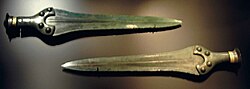
The transition from dagger to sword was gradual. Some of the first unambiguous swords appeared in Minoan Crete around 1700 BC, known as "type A" swords, which could exceed 100 cm in length.
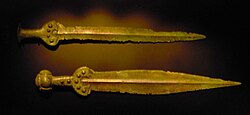
By approximately 1200 BC, Naue II swords began spreading from Europe to the Aegean and as far as Ugarit. These blades typically ranged from 60 to 70 cm, though some reached 85 cm. Some historians link the spread of these functional yet aesthetically crafted weapons to the Bronze Age collapse.
Iron Age and Antiquity
As metallurgy advanced, swords became more durable. In the Greco-Roman world, the spatha developed within the Late Roman army, serving as a critical predecessor to the European swords of the Middle Ages.
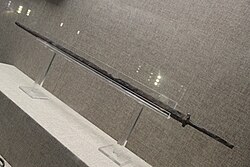
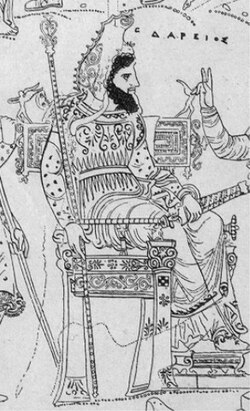
Other ancient civilizations developed distinct styles, such as the Persian acinaces, a short sword often depicted in royal imagery.
Medieval Developments
European Swords
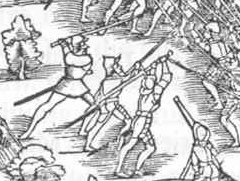
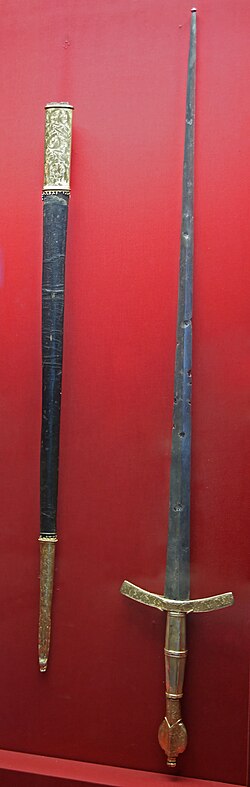
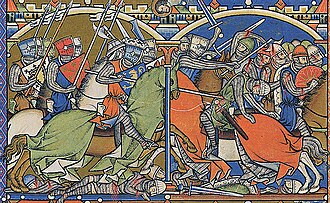
During the High Middle Ages, the classical arming sword with a crossguard became standard. However, between 1300 and 1500, the rise of improved armor spurred rapid innovation. This led to the longsword (or langes Schwert / spadone), which featured a lengthened grip for two-handed use and increased reach.
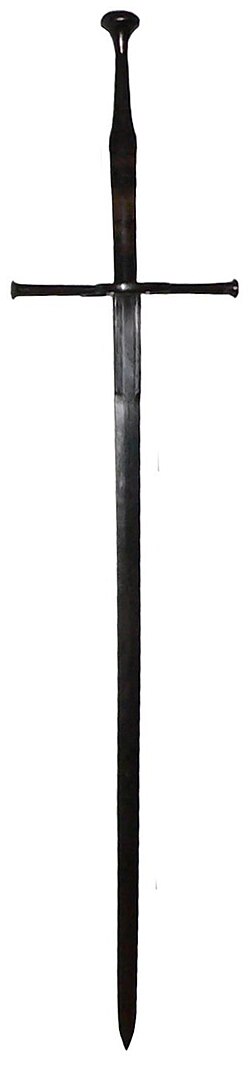
Specialized variants also emerged, such as the estoc, a sword specifically designed to pierce heavy armor.
East Asian Mastery
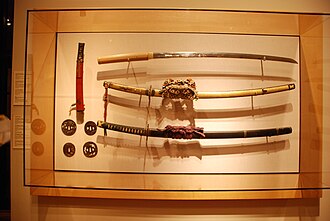
Japan became world-renowned for its sword forging, particularly for the Samurai class. Early straight blades like the tsurugi (double-edged) and chokutō (single-edged) eventually gave way to the katana, which reached its peak development in the 15th and 16th centuries for close-quarters combat.
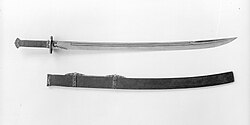
Other notable Asian weapons included the Chinese dao and the Vietnamese gươm.
Early Modern and Late Military Use
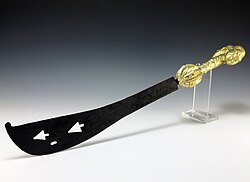
The Divergence of Design
In the early modern period, Western swords split into two primary forms: the thrusting sword and the sabre. The sabre and cutlass were heavier, curved blades designed for slashing from horseback or in naval combat. These remained in use until the early 20th century.
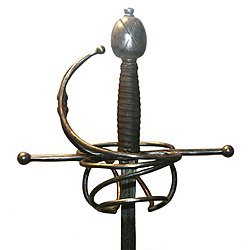
The walloon sword (épée wallone) was common during the Thirty Years' War, featuring an ambidextrous hilt with shell-guards. Later, the mortuary sword was utilized by cavalry during the English Civil War.
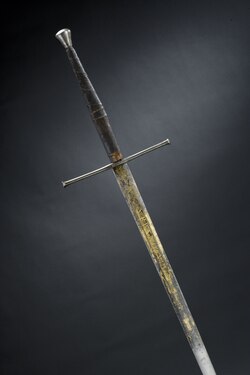
The Transition to Sidearms
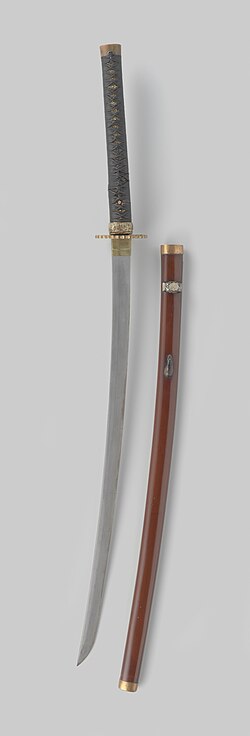
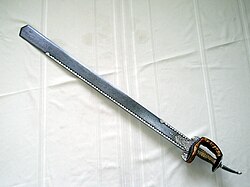
By the 19th and 20th centuries, swords were primarily carried by officers and cavalry. In the Aceh War, the Dutch adopted the klewang (a heavy cutlass) to counter the effective local machete-like swords. In Japan, the Imperial Army's officers carried the shin-gunto ("new military sword") until 1945.
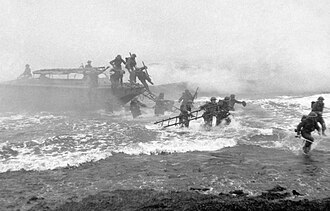
Global Sword Variations
| Region | Sword Type | Primary Characteristic |
|---|---|---|
| Japan | Katana | Curved, single-edged, high-quality steel |
| Europe | Longsword | Two-handed grip, versatile cutting/thrusting |
| India | Khanda | Broad, double-edged blade |
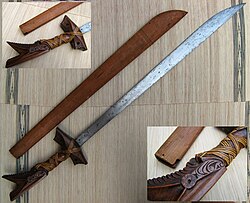
| Philippines | Kampilan | Long blade with mythological hilt designs |
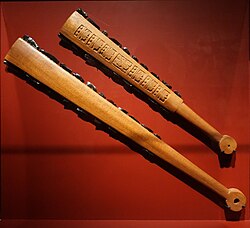
| Mesoamerica | Macuahuitl | Broadsword with obsidian edges |
Frequently Asked Questions
What is the difference between a thrusting sword and a slashing sword?
A thrusting sword typically has a straight blade and a pointed tip designed for piercing. A slashing sword is more likely to be curved with a sharpened edge on one or both sides, optimized for chopping and cutting.
Why were early Bronze Age swords relatively short?
Bronze has a relatively low Young's modulus (stiffness), meaning that blades longer than 60 cm would bend too easily to be practical in combat.
What was the purpose of the Japanese katana?
While the Samurai used various swords like the tachi for cavalry, the katana was developed specifically for use in closer quarters, becoming one of the finest cutting weapons in military history.
When did swords stop being primary battlefield weapons?
Swords were gradually outclassed by firearms. By World War II, they were typically secondary weapons, though some nations, like Imperial Japan, maintained them for cultural and officer-status reasons until 1945.
What is a longsword?
A longsword (or langes Schwert) is a European sword from the late Middle Ages featuring a lengthened grip that allows for two-handed use, providing greater reach and power for both cutting and thrusting.