Swiss Scientific Excellence: From Classical Mathematics to Artificial Intelligence
Switzerland has long been a global powerhouse of intellectual achievement, blending a rich history of theoretical discovery with cutting-edge technological innovation. From the foundational laws of physics and mathematics to the modern frontier of artificial intelligence, the nation continues to punch far above its weight in the global scientific community.
Key Facts
- Space: A founding member of the European Space Agency (ESA) and home to key suppliers like Oerlikon Space and Maxon Motors.
- Physics: Birthplace of the theory of relativity (Albert Einstein) and host to CERN, the world's leading particle physics laboratory.
- AI Leadership: Home to 4 of the world's top 20 AI labs and the high-performance "Alps" supercomputer.
- Robotics: Nearly 25% of the top 20 global robotics labs are located in Switzerland.
- Mathematics: Legacy of Leonhard Euler, one of history's most influential mathematicians.
Astronomy and Space Exploration
Switzerland maintains a strategic presence in space through the Swiss Space Office, the national agency coordinating space activities. As one of the 10 founding members of the European Space Agency (ESA) in 1975, Switzerland is currently the seventh largest contributor to the ESA budget.
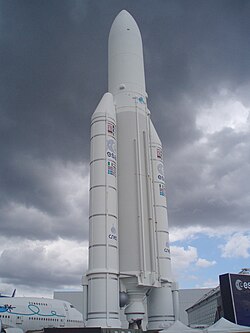
The private sector plays a critical role in this ecosystem. Companies such as RUAG Space and Oerlikon Space provide essential hardware, including payload fairings—the protective nose cones used during launch—for the Ariane 5 launcher. Additionally, Maxon Motors provides critical components for Mars rovers. On the human side, astronaut Claude Nicollier has represented the nation through several missions with the United States space program.
In the realm of astronomy, Swiss research achieved a historic milestone in 1995 when Michel Mayor discovered 51 Pegasi b, the first extrasolar planet (a planet orbiting a star other than our Sun) found orbiting a sun-like star.
Foundations of Mathematics and Physics
The Swiss contribution to theoretical science is legendary. In mathematics, Leonhard Euler stands as a preeminent figure of the 18th century. His work in calculus and graph theory, along with his introduction of modern mathematical notation—such as the concept of a mathematical function—shaped the field for centuries. The Bernoulli family further cemented this legacy through the development of Bernoulli numbers, Bernoulli's principle, and Bernoulli's rule.
In physics, Albert Einstein, who became a naturalized citizen in 1901, revolutionized our understanding of the universe with his theory of relativity and the mass–energy equivalence formula, E = mc2. His influence extended into cosmology and solid state physics, earning him the title of "Person of the Century" by Time. More recently, Karl Alexander Müller was awarded the Nobel Prize in 1987 for his pioneering work on high-temperature superconductivity.
Switzerland also hosts CERN (the European Organization for Nuclear Research) near Geneva, serving as the global hub for particle physics research.
Engineering and High-Performance Computing
Switzerland's commitment to engineering is evident in its robotics and computing sectors. According to EPFL professor Aude Billard, nearly a quarter of the world's top 20 robotics labs are located in Switzerland, a remarkable feat for a country of eight million people.
To power these innovations, Switzerland utilizes the "Alps" supercomputer, which was ranked 6th globally for performance in 2024. This infrastructure is pivotal for the next generation of scientific breakthroughs.
The Artificial Intelligence Frontier
Artificial Intelligence (AI) is now a primary focus for Swiss education and research, designated as an "enabling technology" by the State Secretariat for Education, Research and Innovation (SERI). The Swiss Federal Institute of Technology in Lausanne (EPFL) and ETH Zurich lead these efforts, with over 150 linked professorships.
Institutional Coordination and the SNAI
In 2017, ETH Zurich and EPFL established the Swiss Data Science Center (SDSC), later joined by the Paul Scherrer Institute in 2021. This collaboration culminated in the December 2023 launch of the Swiss AI Initiative, coordinated by the Swiss National AI Institute (SNAI). Announced in October 2024, the SNAI involves over 70 professors aiming to develop Switzerland's first large national AI model while emphasizing open science and transparency.
Policy, Regulation, and Strategy
The Swiss government is actively shaping the legal landscape of AI. The 2025 Digital Switzerland Strategy prioritizes cybersecurity, open-source software in public administration, and the legal context of AI. By February 2025, the Federal Council announced plans to ratify the Council of Europe’s Convention on Artificial Intelligence, with a full implementation plan expected by the end of 2026.
Practical applications are already emerging: as of March 1, 2025, limited deployment of autonomous vehicles has been approved on specific road segments in certain cantons. Additionally, the government is developing domain-specific large language models (LLMs) for healthcare, education, and science.
Emerging Hubs: Lab42
Beyond institutional frameworks, private initiatives like Lab42 in Davos are pushing boundaries. Founded by neuroscientist Pascal Kaufmann in 2022, Lab42 focuses on human-level AI, using challenges like the ARCathon to study reasoning and abstraction.
Contributions to Chemistry, Biology, and Psychology
Switzerland's scientific impact extends deep into the life sciences and chemistry:
- Chemistry: Germain Henri Hess discovered Hess's law, Albert Hofmann discovered LSD, and Paul Hermann Müller won a Nobel Prize for the insecticidal properties of DDT.
- Biology: Friedrich Miescher was the first to isolate DNA. Other Nobel laureates include Emil Theodor Kocher (thyroid research), Walter Rudolf Hess (brain mapping), Werner Arber (restriction endonucleases), Edmond H. Fischer (protein phosphorylation), and Rolf M. Zinkernagel (immune system).
- Psychology: Carl Jung founded Analytical Psychology, pioneering the exploration of the human psyche as inherently religious.
| Field | Key Figure/Entity | Major Contribution/Achievement |
|---|---|---|
| Mathematics | Leonhard Euler | Calculus, graph theory, and mathematical notation |
| Physics | Albert Einstein | Theory of Relativity and E = mc2 |
| Space | Swiss Space Office / ESA | 7th largest contributor to ESA budget |
| AI | SNAI / Alps Supercomputer | National AI model and 6th ranked global supercomputer |
| Biology | Friedrich Miescher | First isolation and characterization of DNA |
Frequently Asked Questions
What is the role of the Swiss National AI Institute (SNAI)?
The SNAI, announced in October 2024, aims to strengthen national collaboration in AI research, education, and innovation. It focuses on transparency, open-source development, and the creation of Switzerland's first large national AI model.
How does Switzerland contribute to the European Space Agency?
Switzerland was one of the 10 founding members of the ESA in 1975 and is currently the seventh largest contributor to its budget.
What is the "Alps" supercomputer?
The Alps is a Swiss supercomputer ranked 6th in the world for performance as of 2024. It is used by institutions like ETH Zurich and EPFL to provide an open-source platform for AI LLM development.
Who was the first person to isolate DNA?
The Swiss physician Friedrich Miescher was the first researcher to isolate and characterize nucleic acid, now known as DNA.
What are the goals of the Digital Switzerland Strategy 2025?
The strategy focuses on digital transformation, specifically emphasizing artificial intelligence, its legal framework, cybersecurity, and the promotion of open-source software within public administration.