Sustainable Development Goals: A Global Blueprint for 2030
The Sustainable Development Goals (SDGs) serve as a shared blueprint for peace and prosperity for people and the planet, now and into the future. Established by the United Nations in 2015, this global initiative provides a comprehensive framework to address the world's most pressing social, economic, and environmental challenges by the year 2030.
The SDGs were the result of the Post-2015 Development Agenda, a process led by the UN from 2012 to 2015 to define a successor to the Millennium Development Goals. On September 25, 2015, 193 member states of the UN General Assembly adopted the resolution titled "Transforming our world: the 2030 Agenda for Sustainable Development."
Key Facts
- Founder: United Nations
- Timeline: Established in 2015; target completion by 2030
- Scope: 17 interconnected goals, 169 targets, and 232 indicators
- Adoption: Agreed upon by 193 UN member countries
- Purpose: To create a sustainable future through global cooperation and targeted action
The 17 Sustainable Development Goals
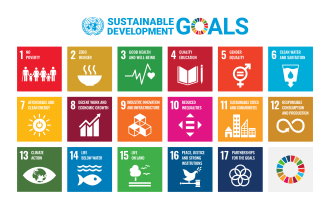
The SDGs are designed to be integrated and indivisible, meaning that progress in one area often depends on or supports progress in another. These goals cover a vast spectrum of human and planetary needs.
Social and Economic Goals
- No poverty and Zero hunger: Eradicating extreme poverty and food insecurity.
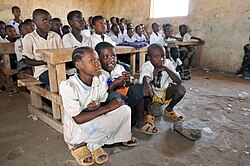
- Good health and well-being and Quality education: Ensuring healthy lives and inclusive, equitable education for all.
- Gender equality and Reduced inequalities: Ending discrimination and reducing disparities within and among countries.
- Decent work and economic growth: Promoting sustainable economic productivity and fair employment.
Environmental and Infrastructure Goals
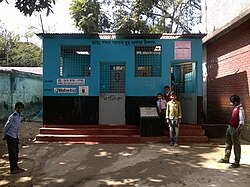
- Clean water and sanitation: Ensuring availability and sustainable management of water.
- Affordable and clean energy: Transitioning to sustainable energy sources.
- Industry, innovation and infrastructure: Building resilient infrastructure and fostering innovation.
- Sustainable cities and communities: Making urban centers inclusive, safe, and sustainable.
- Responsible consumption and production: Ensuring sustainable patterns of use.
Planetary and Institutional Goals
- Climate action: Taking urgent action to combat climate change and its impacts.
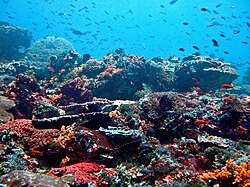
- Life below water: Conserving and sustainably using oceans and marine resources.
- Life on land: Protecting forests, combating desertification, and halting biodiversity loss.
- Peace, justice, and strong institutions: Promoting peaceful societies and providing access to justice for all.
- Partnerships for the goals: Strengthening global partnerships to achieve all the above objectives.
Implementation and Monitoring
To track progress, the UN utilizes a complex system of indicators—specific metrics used to measure whether a target is being met. These are monitored by custodian agencies and reported through Voluntary National Reviews (VNRs).
The High-level Political Forum on Sustainable Development (HLPF) serves as the primary platform for following up and reviewing the 2030 Agenda. However, monitoring is not without challenges. Data shows that while some targets are measured by multiple indicators, an average of 62% of targets rely on a single indicator, with an average of 1.5 indicators used per target overall.
![The percentage of SDG targets measured using a single indicator (represented by bars, with an average of 62%) and the average number of indicators used per target (represented by markers, with an average of 1.5). For example, the progress towards SDG 6 is measured using 1.4 indicators per target, with 63% of targets having a single indicator.[17]](/images/8d/ef/8def6751f547101c86530cb3e94514884c0b08b6be0eb4d5ade3ea8f0f7ee7ee.jpg)
Funding and Investment
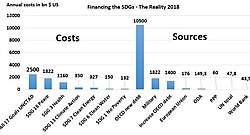
Achieving the SDGs requires massive financial mobilization. Funding sources include government budgets, SDG-driven investments, and Public-Private Partnerships. The transition from "billions to trillions" in funding is often cited as necessary to close the gap in sustainable development financing.
Analysis of Impact and Criticism
While the SDGs have galvanized global action, they have faced criticism from scientists and policymakers. Some argue that the framework contains too many goals, leading to a lack of focus. Others point out a weakness in environmental sustainability, suggesting a contradiction between the goal of continuous economic growth and the ecological limits of a finite planet.
The COVID-19 pandemic also significantly impacted progress, creating uneven priorities and stalling achievements in several key areas. Despite this, different regions show varying levels of success, with some countries closer to meeting their targets than others.
![Countries that are closest to meeting the SDGs (in dark blue) and those with the greatest remaining challenges (in the lightest shade of blue) in 2018[136]](/images/df/88/df88aa6e4c246d0fb103f468257e42e970da7b746dc38109140ac8fdc70b0dc3.jpg)
Summary of SDG Framework

| Component | Quantity | Description |
|---|---|---|
| Goals | 17 | Broad objectives for global sustainability |
| Targets | 169 | Specific milestones to achieve the goals |
| Indicators | 232 | Metrics used to track progress |
| Member States | 193 | Countries that adopted the agenda |
Frequently Asked Questions
What are the Sustainable Development Goals?
The SDGs are a collection of 17 global goals established by the United Nations in 2015. They are designed to be a "shared blueprint" to end poverty, protect the planet, and ensure peace and prosperity for all by 2030.
How is progress toward the SDGs measured?
Progress is measured using 232 specific indicators. These metrics are tracked by custodian agencies, and member nations provide updates through Voluntary National Reviews (VNRs) presented at the High-level Political Forum on Sustainable Development.
Who is responsible for implementing the SDGs?
While the UN provides the framework and coordination, the responsibility for implementation lies with the 193 member states, as well as international organizations, private sector partners, and civil society.
What are the main criticisms of the SDGs?
Critics often argue that the 17 goals are too numerous to be manageable and that the framework does not sufficiently prioritize environmental sustainability over economic growth.
How did the COVID-19 pandemic affect the goals?
The pandemic caused significant disruptions, leading to uneven progress across different goals and, in many cases, reversing gains made in health, poverty reduction, and education.