Supermarket Evolution: From Traditional Grocers to Modern Retail Giants
A supermarket is a self-service retail format that offers a vast array of food, beverages, and household products organized into specialized sections under a single roof. While the term "grocery store" is often used interchangeably with "supermarket" in American English, the two can differ in scale. In many regions, a supermarket is distinguished by its larger size and wider selection compared to a standard grocery store, though it remains smaller than a hypermarket or megastore.
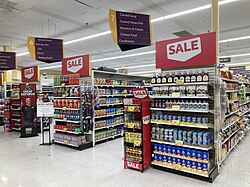
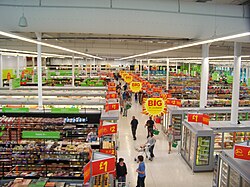
Today, these retail hubs are essential to global food distribution. They typically feature dedicated areas for fresh produce, meat, dairy, deli items, and baked goods. Beyond food, modern supermarkets serve as one-stop shops for household essentials, including cleaning supplies, pharmacy products, pet supplies, and even seasonal items like school uniforms or holiday decorations.
Key Facts
- Origin: The modern supermarket format emerged around 1930 in the United States.
- Core Innovation: The shift from clerk-assisted service to self-service revolutionized retail efficiency.
- Economic Impact: The rise of supermarkets helped reduce the percentage of American disposable income spent on food from 21% in 1930 to 16% by 1940.
- Global Spread: Extensive international publicity in 1956 helped the format expand beyond North America.
- Scale: By 1950, there were over 15,000 supermarkets in the United States.
The History of Retail Food Sales
Early Grocery Chains and Combination Stores
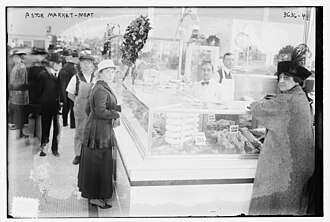
Before the supermarket era, the retail landscape was dominated by traditional grocery stores. The Great Atlantic & Pacific Tea Company (A&P), established in 1859, was a major player in North America during the 1920s. Initially, these chains did not offer fresh meats or produce. To improve convenience, many introduced the combination store—a model that brought several departments under one roof but still relied on clerks to retrieve items from shelves upon customer request.
The Birth of Self-Service
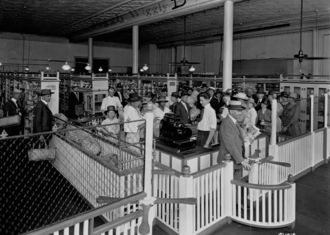
The transition to true supermarkets was marked by the introduction of self-service, where customers could select their own items. While there is historical debate regarding which chain was truly first, Southern California's Alpha Beta and Ralphs were operating large 12,000-square-foot self-service stores by 1930. Other notable contenders included Weingarten's and Henke & Pillot in Texas.
The Rise of the Modern Supermarket Model
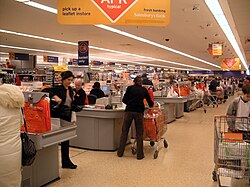
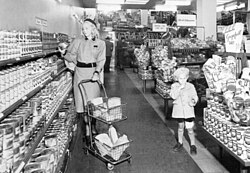
The shift to the supermarket model significantly altered the retail workforce. The traditional, social interaction with a clerk was replaced by specialized roles: stock clerks managed inventory and shelf replenishment, while cashiers handled transactions at the checkout. This specialization allowed large chains like A&P to drastically reduce overhead. For instance, A&P found that while traditional stores saw wages and overhead consume 18% of sales, their new supermarkets reduced that figure to less than 12%.
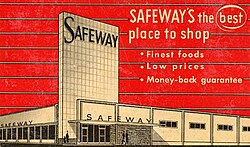
This efficiency led to an explosion in the number of stores. In the U.S., the count of supermarkets jumped from 1,200 in 1936 to over 3,000 in 1937, eventually exceeding 15,000 by 1950. This era ushered in the age of "cheap food," making essential goods more accessible to the general public.
International Expansion and the Cold War
For decades, the supermarket remained a uniquely American phenomenon. This changed in 1956 when the U.S. Department of Agriculture presented an "American Way exhibit" at the International Food Congress in Rome. This exhibit featured the first fully stocked supermarket outside the United States, stunning international visitors with its "mountains of food."
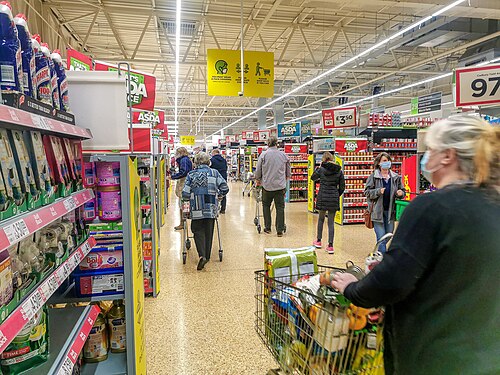
In 1957, the concept was used as a tool of cultural diplomacy. The "Supermarket USA" exhibit at the Zagreb International Trade Fair in Yugoslavia was the first fully operational American-style supermarket in a communist country. These displays were often used during the Cold War to demonstrate the perceived economic superiority of Western capitalism.

Supermarket Merchandise and Categories
Modern supermarkets are categorized by their assortment and service levels. In the United States, the Food Industry Association (FMI) recognizes several types, including:
- Traditional Grocery: Full-line stores offering groceries, meat, and produce with significant general merchandise sales.
- Supercenters: Large-scale stores combining a supermarket with a department store.
- Wholesale Clubs: Bulk-focused retail formats.
- Convenience Grocery: Smaller, limited-assortment stores.
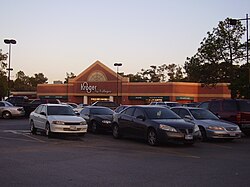
Common Product Sections
To maximize efficiency and customer experience, stores are organized into logical departments:
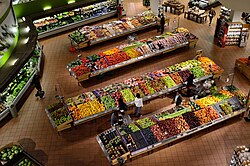
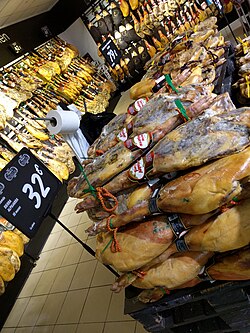
- Fresh Departments: Produce, meat, seafood, and dairy.
- Prepared & Deli: Bakery, deli items, and prepared frozen foods.
- Center Store: Canned goods, packaged goods, beverages, and household cleaning supplies.
- Non-Food: Personal care, floral, pet supplies, and seasonal items.
The 21st Century Retail Landscape
In the modern era, the industry has reached incredible levels of efficiency. In the United States, as of 2018, approximately 38,000 supermarkets existed, with consumers spending $701 billion annually. The food production system is so optimized that less than 3% of the U.S. population produces enough food to feed the entire nation.

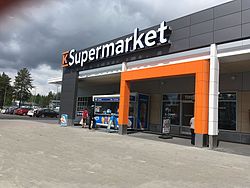
The digital revolution has also introduced e-commerce and online-only supermarkets, changing how consumers interact with food retail through home delivery and micro-fulfillment centers.
Summary of Supermarket Evolution
| Feature | Traditional Grocery (Pre-1930) | Modern Supermarket (Post-1930) |
|---|---|---|
| Service Model | Clerk-assisted (customer requests items) | Self-service (customer selects items) |
| Product Range | Limited (often no fresh meat/produce) | Wide (food, household, pharmacy, etc.) |
| Labor Focus | Social interaction/service clerks | Specialized stock and checkout clerks |
| Price Trend | Higher overhead/higher food costs | Lower overhead/"cheap food" model |
Frequently Asked Questions
What is the difference between a supermarket and a hypermarket?
A supermarket is a large retail store focused on food and household goods. A hypermarket is even larger, functioning as a combination of a supermarket and a full-scale department store.
Why did the supermarket format become so popular?
The format became popular because it significantly reduced labor and overhead costs, which allowed retailers to pass those savings on to consumers through lower food prices.
What was the significance of the "American Way" exhibit in Rome?
The 1956 exhibit was significant because it introduced the concept of the fully stocked supermarket to the international community, showcasing the scale of American food distribution.
How has technology changed supermarkets in the 21st century?
Technology has introduced e-commerce, online ordering, and micro-fulfillment centers, allowing for more efficient home delivery and digital shopping experiences.
What are "combination stores"?
Combination stores were an intermediate step in retail history where multiple departments (like grocery and meat) were housed under one roof, but customers still relied on clerks to fetch items.