Sucre: The Historic White City and Capital of Bolivia
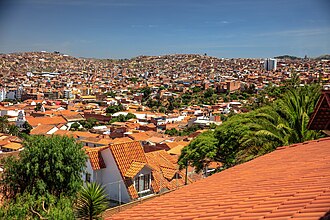
Perched in the south-central highlands of Bolivia, Sucre serves as the nation's de jure capital and the heart of the Chuquisaca Department. Known as the "White City of America" (Ciudad Blanca de América), Sucre is a place where colonial elegance meets revolutionary history. Situated at an elevation of 2,790 meters (9,150 ft), it stands as the second-highest capital city in the world, trailing only Quito.
The city is a cultural crossroads, predominantly influenced by Quechua heritage with significant Aymara contributions. Its unique atmosphere is defined by a subtropical highland climate, ensuring cool temperatures throughout the year, and an architectural landscape that earned it a place as a UNESCO World Heritage Site in 1991.
Key Facts
- Official Name: La Ilustre y Heroica Sucre (The Illustrious and Heroic Sucre).
- Elevation: 2,790 meters (9,150 ft).
- Population: 296,125 (2024 census).
- UNESCO Status: Designated as a World Heritage Site in 1991.
- Motto: "Aqui nació la Libertad" (Freedom was born here).
- Nicknames: The City of the Four Names, White City of America, and Illustrious City.
The City of Four Names: A Journey Through History
Sucre's identity is mirrored in its various names, each representing a distinct era of its evolution. From its pre-Hispanic roots as Charcas to its colonial foundation, the city has been a center of power and culture for centuries.
Colonial Foundation and Growth
The Spanish officially founded the city on November 30, 1538, as La Plata de la Nueva Toledo (City of Silver of New Toledo), established by Pedro Anzures. The region's wealth was driven by the discovery of silver, gold, copper, and tin mines in the surrounding areas. By 1559, King Philip II established the Audiencia de Charcas, granting the city judicial authority over vast territories including parts of modern-day Paraguay, Argentina, Chile, and Peru.
![Chuquisaca -as was its colonial name- in 1615 by the Inca painter Guamán Poma in his work "Nueva corónica y buen gobierno". Royal Library, Denmark.[13]](/images/31/d8/31d8493e68d06d2e1882763addb2090bead0d90f8a892007050617f6c3f087d5.jpg)
The Cradle of Independence
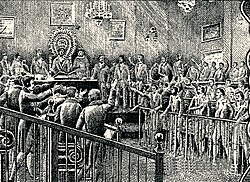
Sucre is often regarded as the birthplace of the Latin American independence movement. On May 25, 1809, the movement began with the ringing of the bell at the Basilica of Saint Francisco—a bell that was rung so vigorously it eventually broke. In July 1826, the city became the provisional capital of the newly independent Upper Peru, later renamed Bolivia. In 1839, it was officially named Sucre in honor of the revolutionary leader Antonio José de Sucre.
Geography and Climate
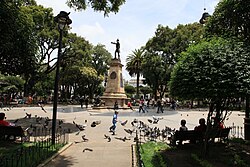
Located in the Oropeza Province, Sucre's geography is defined by its high altitude. This results in a Cwb climate (subtropical highland), characterized by mild days and cool nights. Precipitation is highest from November to January, while the winter months (June to August) are notably dry.
| Metric | Value / Range |
|---|---|
| Elevation | 2,790 m (9,150 ft) |
| Record High Temperature | 34.7 °C (94.5 °F) |
| Record Low Temperature | −6 °C (21 °F) |
| Annual Average Precipitation | 646.1 mm (25.43 in) |
| Average Relative Humidity | 54.8% |
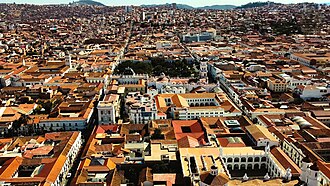
Architecture and Cultural Landmarks
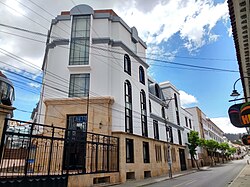
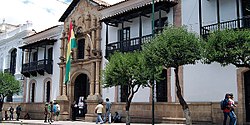
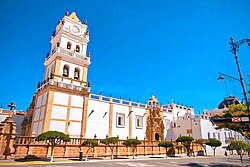
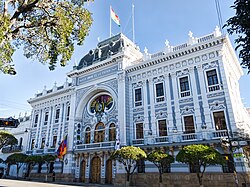
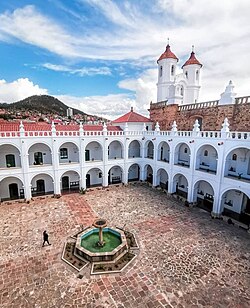
The city's architecture is a testament to its colonial past and its role as a judicial and religious hub. The House of Freedom (Casa de la Libertad) stands as a primary symbol of the nation's birth, while the Metropolitan Cathedral and the Convent of San Felipe de Neri showcase the city's religious heritage.
Education has also played a pivotal role in Sucre's identity. The Royal and Pontifical University of San Francisco Xavier de Chuquisaca, founded in 1624, remains one of the most prestigious institutions in the region.
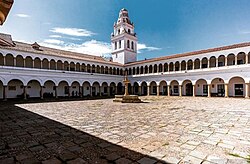
Notable Sites
- Supreme Court of Justice: A neoclassical building inaugurated in 1945.
- National Archives and Libraries: Preserving the historical records of the state.
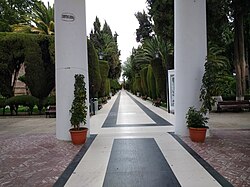
- General Cemetery: A significant site of local history and art.
- San Lazaro Church: The oldest church in the country and former cathedral.
Economy and Local Life
Sucre's economy is diverse, blending traditional manufacturing with modern services. The city is particularly famous for its chocolate production, with brands like Chocolates Para Ti and Chocolates Taboada leading the industry. Other key economic drivers include cement manufacturing (FANCESA), dairy production (PIL Chuquisaca), and tourism.
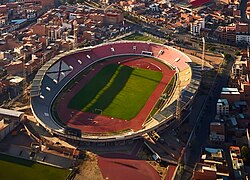
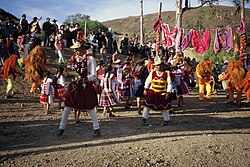
Culturally, the city is vibrant, featuring traditional dances such as the Cueca, Bailecito, and the Thanta Morenos. In sports, football is the dominant passion, with teams like Independiente Petrolero and Universitario de Sucre representing the city's competitive spirit.
Frequently Asked Questions
Why is Sucre called the "White City"?
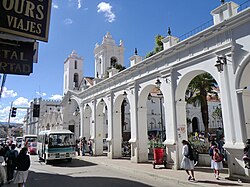
Sucre is known as the "White City of America" due to the predominantly white-washed facades of its colonial buildings, which create a bright, uniform aesthetic throughout the historic center.
Is Sucre still the capital of Bolivia?
Yes, Sucre remains the de jure (legal) capital of Bolivia. However, the seat of government was moved to La Paz in 1898, which serves as the administrative capital.
What is the significance of the House of Freedom?
The House of Freedom is where the Bolivian Declaration of Independence was signed, making it one of the most important historical landmarks in the country.
What is the weather like in Sucre?
Sucre has a subtropical highland climate. It is generally cool year-round, with record highs around 34.7 °C and record lows reaching −6 °C.
Which university is most famous in Sucre?
The Royal and Pontifical University of San Francisco Xavier de Chuquisaca, founded in 1624, is the city's most renowned educational institution.