Studio Types and Their Roles Across Art and Media
The term studio describes a wide variety of spaces, ranging from intimate creative sanctuaries to massive industrial complexes. While the core purpose of a studio is to provide a controlled environment for the creation of work, the specific requirements and functions vary drastically depending on whether the focus is on fine art, digital media, performance, or education.
Key Facts
- Ateliers are traditional art studios, often associated with the Atelier Method of rigorous training.
- Production studios can serve as both physical workspaces and the financial entities behind a project.
- Mastering studios specialize in the final technical polish of audio or video before distribution.
- Educational studios emphasize a blend of open collaborative workspaces and instructor-led criticism.
- Specialized environments like radio and recording studios require acoustic isolation and soundproofing.
Art and Creative Studios
Historically, from the 15th to the 19th centuries, the art studio was the center of a master's operation, often including several assistants. This is why many historical works are attributed as being "from the studio of" a specific artist. These spaces are sometimes called ateliers.
In modern contexts, the Atelier Method refers to a specific training approach where students learn within a professional studio. This method emphasizes a commitment to formal discipline and continuous practice, elevating the studio from a simple production facility to a place of higher education and innovation.
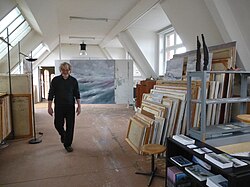
Beyond painting, other creative disciplines utilize the studio model. Studio pottery refers to ceramics created by an individual potter in their own space rather than in a factory setting. Similarly, photographic studios serve as both a corporate entity and a physical workspace for taking, developing, and printing photographs.
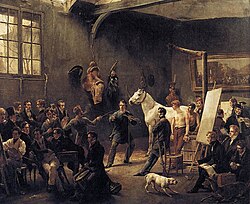
Safety is a critical consideration in art studios, as many materials can cause chemical burns, poisoning, or fire if not stored and handled correctly.

Media and Production Studios
Production studios act as hubs for creating art and entertainment, often functioning as the financial engine behind the work. This is particularly evident in the following sectors:
Animation and Comics
Animation studios, such as Pixar and Walt Disney, may be production facilities or financial entities. In some traditions, such as anime, a master oversees the work of less experienced artists. Comics studios operate similarly; creators like Frank Hampson and Eddie Campbell have used small teams of staff to assist in the production of graphic novels and comic strips. In some regions, such as Spain, studios may produce work-for-hire on license for existing franchises.
Film and Television
A movie studio provides a controlled environment for filmmaking, utilizing interior sound stages and exterior backlots. Television studios are derived from the movie studio model but are adapted for live broadcasts, video tape recording, or raw footage acquisition, typically featuring separate rooms for noise control.
Audio and Radio
A radio studio is a soundproofed room designed for live or recorded broadcasts. Recording studios generally consist of two primary areas: the live room (where sound is captured) and the control room (where sound is manipulated), separated by acoustic isolation.
Technical Mastering Studios
Mastering is the final stage of production, ensuring a project is ready for its intended destination.
- Audio Mastering: These facilities use high-end analogue equipment and digital plug-ins for tasks like audio restoration, EQ shaping, and vinyl cutting. The engineer prepares the file for radio, CD, vinyl, or digital distribution.
- Video Mastering: These studios focus on post-production tasks, including color grading, video editing, mixing, and DVD authoring.
Educational and Instructional Studios
In higher education, studios are used for design-heavy disciplines like architecture and product design. These environments are often split into two categories:
- The Workspace: An open environment where students work independently of faculty guidance, fostering peer-to-peer inspiration and collaboration.
- The Studio Class: An instructor-led session focused on a specific topic and directed criticism.

Universities are also expanding this model to non-art courses. An example is the SCALE-UP (Student-Centered Active Learning Environment for Undergraduate Programs) initiative at NC State.
Performance and Wellness Studios
Studios are also essential for the physical and performing arts. Acting studios, such as the Actors Studio or the Neighborhood Playhouse in New York, provide spaces for actors to rehearse and refine their craft.
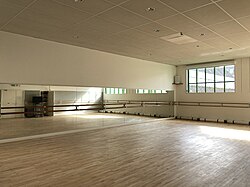
Additionally, the term is used for healing and martial arts. Yoga, Zen, judo, and karate are often practiced in studios. Unlike traditional gyms or recreation centers, these are viewed as places where students study and practice their specific art.
Studio Comparison Summary
| Studio Type | Primary Focus | Key Characteristic |
|---|---|---|
| Atelier | Fine Art | Master-apprentice training |
| Mastering | Audio/Video | Final technical optimization |
| Production | Media/Animation | Financial and creative hub |
| Educational | Design/Academic | Collaborative open workspaces |
| Recording | Sound | Acoustic isolation (Live vs. Control) |
| Wellness | Yoga/Martial Arts | Disciplined practice of a physical art |
Frequently Asked Questions
What is the difference between a recording studio and a mastering studio?
A recording studio is used to capture the initial sound in a live room and manipulate it in a control room. A mastering studio is a specialized facility used for the final polish—such as EQ shaping and audio restoration—to prepare the track for distribution on platforms like vinyl or digital streaming.
What is the Atelier Method?
The Atelier Method is a training approach for artists that takes place in a professional studio. It emphasizes rigorous study, formal discipline, and continuous practice to help the artist achieve mastery of their expression.
How do educational studios differ from traditional classrooms?
Educational studios provide an open, visually-centered workspace that encourages student collaboration and peer support outside of formal instructional hours, alongside directed, instructor-led criticism sessions.
What defines a movie studio compared to a television studio?
While both provide controlled environments, movie studios often utilize a combination of sound stages and exterior backlots. Television studios are adapted for the specific needs of TV production, such as live broadcasting and the use of separate rooms for noise management.
Are yoga and martial arts studios considered gyms?
No, they are generally not viewed as traditional recreational centers or gyms, but rather as dedicated spaces where students study and practice a specific art or healing discipline.