Stiga Table Hockey Official Game Rules
Competitive table hockey requires precision, speed, and a strict adherence to a standardized set of regulations to ensure fair play. Whether you are preparing for a tournament or a casual match, understanding the technical requirements and gameplay mechanics is essential for any player.
Game Setup and Equipment
To maintain a level playing field, specific equipment standards must be met. Only Stiga games are permitted for official play. To ensure the game functions correctly, goal cups must be removed, and the game must be securely fastened to the table to prevent shifting during intense play.
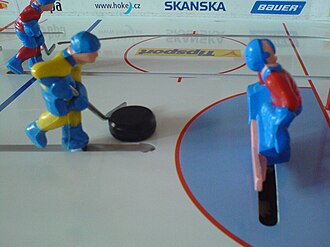
The surface speed of the game must remain consistent with the original factory specifications. Additionally, players must use figures from the Stiga Play-off versions, characterized by all figures having their sticks on the same side.
Match Structure and Timing
Standard matches last for five minutes. It is mandatory to use an audio timer, and the clock continues to run even when the puck is out of play. In the event of a draw during play-off matches, the game enters a sudden death overtime period; the first player to score a goal wins the match.
Player conduct regarding match completion is strictly enforced. If a player retires while their opponent wishes to continue, the retiring player forfeits all goals scored during that game, and the opponent is awarded an additional five goals.
The Face-Off
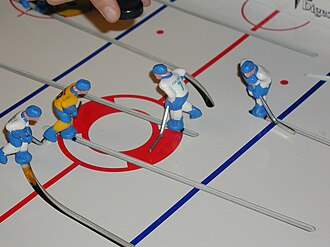
Every match begins with a face-off, where the puck is dropped onto the center spot following an opening signal. If a player moves the puck before the signal, a new face-off is required.
During the face-off, center forwards and left defenders must remain on their respective sides of the center red line. The player performing the drop must ensure the opponent is ready. If a player repeatedly fails to execute a proper drop during play-offs, a neutral dropper may be requested.
To prevent immediate scoring, a three-second delay must pass after a face-off before a goal can be counted. Furthermore, the puck must either hit the sideboards or be controlled by a figure other than the center forward before a goal is valid.
Scoring Regulations
For a goal to be officially counted, the puck must remain inside the goal cage; "in and out" movements do not count. If the puck exits the cage, play continues without interruption.
Certain scoring scenarios are prohibited:
- Goals scored by pressing a motionless puck directly against the cage or goalie are invalid (unless the puck deflects off another figure or the bank first).
- Goals scored while the final buzzer is sounding are not valid.
- Goals resulting from moving the entire game unit are invalid.
If a player wishes to stop a goal from entering their cage, they may call out a short phrase to interrupt the game, provided they have held the puck long enough for the opponent to react. In this case, the puck is reset to the middle of the board for a new face-off.
The Goal Crease Rule
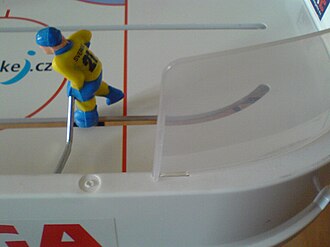
The goal crease (the area immediately in front of the goal) has specific rules regarding puck movement. If the puck is at a full rest in the crease and touching the goal line, the defender may call "block" to trigger a new face-off. If the puck is at rest in the crease but not touching the goal line, the defender must continue to play the puck.
Gameplay Mechanics and Interference
Players are only permitted to "tap down" (adjust the height/position of) their figures when they have complete possession of the puck. However, if a goal is scored while the opponent is tapping their figures, the goal still counts.
Possession and Passive Play
To keep the game moving, passive play is forbidden. This occurs when a player retains possession without making a recognizable attempt to score. If a single figure holds the puck for five seconds without passing or shooting, the opponent may issue a warning.
Interference and Rough Play
Shaking the game to move the puck is strictly prohibited. If a player loses possession specifically because the opponent shook the game, the puck must be returned to the original figure.
Match Interruptions
Matches must be suspended immediately for unusual situations, such as broken gear, power outages, or external interference. A player may call "stop" to alert the opponent to such issues. If significant time is lost, that time is added back to the remaining match clock.
Resumption depends on puck control: if a player had indisputable control before the stop, the puck remains in place; otherwise, a new face-off is conducted.
Key Facts
- Match Duration: 5 minutes of continuous play.
- Equipment: Stiga games with Play-off version figures.
- Overtime: Sudden death (first goal wins) for play-off draws.
- Face-off Rule: 3-second delay required before a goal can be scored.
- Passive Play: Warning issued after 5 seconds of stagnant possession.
- Goal Validity: Puck must stay in the cage; no goals from moving the game.
| Category | Rule/Requirement | Condition/Penalty |
|---|---|---|
| Equipment | Stiga Play-off figures | Sticks must be on the same side |
| Timing | 5-minute matches | Audio timer required |
| Face-off | Center spot drop | 3-second wait before scoring |
| Possession | Active play required | Warning after 5 seconds of inactivity |
| Scoring | Puck must stay in cage | "In and outs" do not count |
Frequently Asked Questions
What happens if a player retires mid-match?
If a player retires and the opponent continues, the retiring player loses all goals they scored, and the opponent is awarded an extra five goals.
Can I score immediately after a face-off?
No. Three seconds must elapse after the face-off, and the puck must either hit the sideboards or be touched by a figure other than the center forward before a goal is valid.
What is the "block" call in the goal crease?
A defending player can call "block" if the puck is at a full rest in the goal crease and touching the goal line, resulting in a new face-off.
Is it legal to adjust figures during play?
You may only tap down your figures when you have complete possession of the puck.
How is a draw handled in play-off matches?
Draws are settled via sudden death overtime, starting with a new face-off; the first player to score wins.
What constitutes passive play?
Passive play is retaining possession without attempting to score. A warning is given if one figure holds the puck for five seconds without passing or shooting.