Steven H. D. Haddock and the Science of Marine Bioluminescence
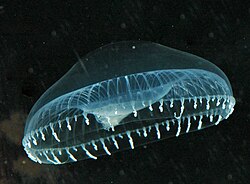
The deep ocean is a world of perpetual darkness, yet it is filled with light. This phenomenon, known as bioluminescence—the production and emission of light by a living organism—is a primary focus of the work of Steven H. D. Haddock. As a leading marine biologist, Haddock has dedicated his career to studying the jellylike creatures of the open ocean and the deep sea, uncovering the chemical secrets behind their glow.
Haddock's research delves into the molecular machinery of light, specifically photoproteins (proteins that store energy to produce light) and fluorescent proteins (proteins that absorb light at one wavelength and emit it at another). His work provides critical insights into how these animals survive and communicate in the most extreme environments on Earth.
Academic Background and Professional Roles
Steven Haddock's journey into marine science began with a strong foundation in the liberal arts and sciences. He earned his bachelor's degree from Harvey Mudd College before pursuing advanced research at the University of California, Santa Barbara, where he completed his doctorate.
Today, Haddock holds dual roles that bridge academia and active field research. He serves as a professor of ecology and evolutionary biology at the University of California, Santa Cruz, and as a senior scientist at the Monterey Bay Aquarium Research Institute (MBARI), an organization dedicated to exploring the deep sea.
Contributions to Marine Science
With a prolific career spanning over 100 research papers, Haddock has expanded our understanding of bioluminescence across various taxa. His research focuses on several groups of gelatinous zooplankton, including:
- Ctenophora: Comb jellies.
- Siphonophorae: Colonial hydrozoans.
- Radiolaria: Protozoa with mineral skeletons.
- Medusae: The umbrella-shaped stage of jellyfish.
Beyond his research papers, Haddock has contributed to the education of other scientists as the lead author of Practical computing for biologists (Sinauer, 2011), a resource designed to help researchers apply computational tools to biological data.
Impact and Citations
The influence of Haddock's work is evident in the high citation rates of his publications. His co-authored paper, "Broad phylogenomic sampling improves resolution of the animal tree of life," which utilizes phylogenomics (the intersection of evolution and genomics) to map animal relationships, has been cited over 1,675 times. Additionally, his comprehensive review article, "Bioluminescence in the sea," has garnered over 475 citations, establishing it as a foundational text in the field.
Key Facts
- Specialization: Bioluminescence, photoproteins, and fluorescent proteins in deep-sea gelatinous animals.
- Academic Affiliation: Professor at UC Santa Cruz.
- Research Affiliation: Senior Scientist at the Monterey Bay Aquarium Research Institute (MBARI).
- Major Publication: Lead author of Practical computing for biologists (2011).
- High-Impact Work: Co-authored a phylogenomic study on the animal tree of life with over 1,675 citations.
| Category | Details |
|---|---|
| Education | B.A. Harvey Mudd College; PhD University of California, Santa Barbara |
| Primary Research Focus | Bioluminescence in open ocean and deep sea animals |
| Key Taxa Studied | Ctenophora, Siphonophorae, Radiolaria, Medusae |
| Notable Roles | Professor (UC Santa Cruz), Senior Scientist (MBARI) |
Frequently Asked Questions
What is the primary focus of Steven Haddock's research?
Steven Haddock focuses on the bioluminescence of jellylike animals in the open ocean and deep sea, specifically studying the photoproteins and fluorescent proteins that allow these animals to produce light.
Which institutions is Steven Haddock affiliated with?
He is a professor of ecology and evolutionary biology at the University of California, Santa Cruz, and a senior scientist at the Monterey Bay Aquarium Research Institute (MBARI).
What are some of the animal groups Haddock has studied?
His research includes studies on Ctenophora (comb jellies), Siphonophorae, Radiolaria, and Medusae (jellyfish).
Has Steven Haddock written any books?
Yes, he is the lead author of the book Practical computing for biologists, published by Sinauer in 2011.
How influential is his work on the animal tree of life?
His co-written paper, "Broad phylogenomic sampling improves resolution of the animal tree of life," is highly influential, with over 1,675 citations.