Understanding State Religions and Confessional States
Throughout human history, the relationship between governance and faith has been a defining feature of many civilizations. A state religion, also known as an official religion, is a creed or faith officially endorsed by a sovereign state. When a country maintains such an endorsement, it is referred to as a confessional state.
While a confessional state is not a secular state (one that remains neutral regarding religion), it is not necessarily a theocracy. In a theocracy, the state is under the direct legislative control of religious clergy. In contrast, a state religion may simply receive advantageous treatment, such as government endorsement to encourage practice or unrestricted public spending on the maintenance of clergy and religious properties.
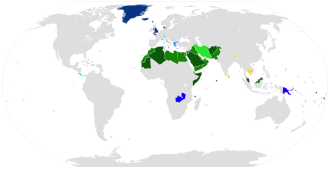
Key Facts
- Confessional States: Countries where a specific religion is officially endorsed by the government.
- Theocracy vs. State Religion: A state religion does not require the clergy to hold legislative power, whereas a theocracy does.
- Historical Precedent: The Armenian Apostolic Church was the first state-sponsored Christian denomination, established in 301 CE.
- Disestablishment: The process by which a state removes its official status or support for a religion.
- Secularism: Some Muslim-majority countries, like Turkey, have transitioned to secularism through reform.
The Historical Evolution of Official Religions
The connection between religious cults and the state is an ancient concept. The Latin scholar Marcus Terentius Varro explored this relationship under the term theologia civilis, or "civic theology." From the Ancient Near East to prehistory, official religions have been a constant in various cultures.
In the context of Christianity, the term "state church" is often used to describe denominations sanctioned by a government. This was notably seen in the final centuries of the Roman Empire. Today, the term can also refer to specific modern national branches of the faith. A closely related, though slightly different, term is ecclesiae.
Global Variations in State Religions
The implementation of state religions varies significantly depending on the region and the faith involved.
Islam in the Middle East
In many Middle Eastern nations with predominantly Muslim populations, Islam serves as the official religion. However, the impact on daily life varies. For example, in Saudi Arabia, rulers utilize religious power, whereas in Iran, secular presidents are expected to follow the decisions of religious authorities following the 1979 Islamic Revolution.
Buddhism and Special Status
In several countries, Buddhism may not be formally recognized as a state religion but is granted a special status. This is observed in various Southeast Asian nations where religious bodies hold significant influence.
Christianity and Denominational Differences
Christianity manifests in various official forms across the globe:
- Catholicism: Recognized as an official or state religion in jurisdictions such as Argentina, Costa Rica, Liechtenstein, Malta, and Vatican City.
- Eastern Orthodoxy: Recognized in countries like Georgia and Greece.
- Protestantism: Various forms are recognized, including Lutheranism in Denmark, Iceland, and Norway.
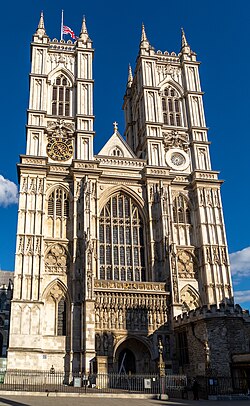
- Anglicanism: The Church of England serves as the established church in England and all three Crown Dependencies.
Summary of Current State-Sanctioned Religious Bodies
The following table provides examples of various religious bodies and their leadership structures in countries where they hold official or state-sanctioned status.
| Religion | Country | Religious Body | Effective Head |
|---|---|---|---|
| Buddhism | Bhutan | Dratshang Lhentshog | Je Khenpo |
| Buddhism | Thailand | Sangha Supreme Council | Supreme Patriarch |
| Catholicism | Vatican City | Diocese of Rome | Pope |
| Catholicism | Argentina | Archdiocese of Buenos Aires | Pope |
| Anglicanism | England | Church of England | Archbishop |
| Islam | Saudi Arabia | Council of Senior Scholars | Grand Mufti |
| Islam | Malaysia | Conference of Rulers | King (Yang di-Pertuan Agong) |
| Eastern Orthodoxy | Greece | Church of Greece | Archbishop |
| Judaism | Israel | Chief Rabbinate of Israel | Chief Rabbi(s) |
The Process of Disestablishment
Disestablishment refers to the withdrawal of official state support for a religion. Many nations have moved away from having a state religion to adopt more secular frameworks. For instance, the United States federal government has had no state religion since 1776, a principle made explicit in the Bill of Rights in 1792.
Historically, many countries have undergone this transition. In the United States, several states once had established churches—such as the Church of England in Virginia or Congregational churches in Massachusetts—before they were disestablished. Similarly, many Latin American nations, such as Brazil and Mexico, have moved away from the official status of the Roman Catholic Church.
Frequently Asked Questions
What is the difference between a state religion and a theocracy?
A state religion is an officially endorsed faith that may receive government support or privileges, but the government is not necessarily ruled by religious leaders. In a theocracy, the state is under the direct legislative and political control of the clergy.
Is a country with a state religion always non-secular?
Yes, a state with an official religion is considered a confessional state rather than a secular state, as it provides official endorsement to a specific creed.
What does "disestablishment" mean?
Disestablishment is the formal process of ending the official status of a religion within a state, often resulting in the separation of church and state.
Does a state religion mean all citizens must practice that faith?
While state religions often enjoy more rights and fewer restrictions than other faiths, the degree of restriction on citizens' everyday lives varies significantly by country.
Has Turkey always been a secular country?
No. While Turkey has a Muslim-majority population, it became a secular country following the reforms led by Atatürk.