St. John's: The Historic Capital of Newfoundland and Labrador
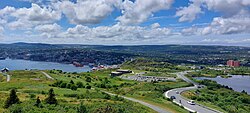
Perched on the edge of the Atlantic coast, St. John's serves as the vibrant provincial capital of Newfoundland and Labrador. Known for its colorful architecture, deep maritime roots, and strategic importance in North American history, the city blends a rugged natural environment with a sophisticated urban center. From its role as a historic fishing ground to its modern status as a hub for offshore oil and education, St. John's remains one of the most distinctive cities in Canada.
Key Facts
- Established: August 5, 1583, by Royal Charter of Queen Elizabeth I.
- Population: 110,525 (City), with a metropolitan population of 212,579 (2021 Census).
- Geography: Located at 47°33′41″N 52°42′43″W, featuring elevations from 0 to 192 meters.
- Economy: A diverse economy supported by offshore oil developments and a GDP of CA$ 13.2 billion (2016 CMA).
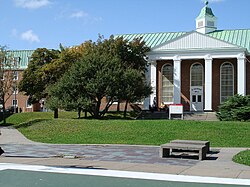
- Education: Home to Memorial University of Newfoundland, the largest university in Atlantic Canada by enrolment.
A Legacy of Exploration and Conflict
The history of St. John's is inextricably linked to the sea. While not established as a permanent settlement immediately, the area was discovered as fishing grounds on June 24, 1497. It was formally established in 1583, making it a focal point of early European presence in Anglophone North America.
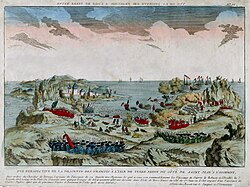
The city's strategic location made it a site of significant military conflict. One of the most notable events was the Battle of Signal Hill in 1762, where British and French forces clashed in the final battle of the North American theatre of the Seven Years' War.
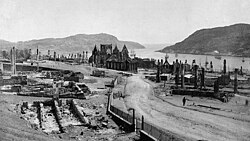
Throughout its history, St. John's has faced devastating challenges, most notably the Great Fire of 1892, which destroyed a significant portion of the city and forced a massive rebuilding effort.
City Geography and Climate
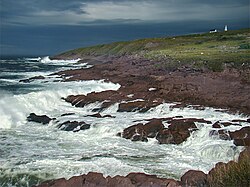
St. John's is characterized by its coastal terrain and a maritime climate. The city is known for significant precipitation, with an annual average of 1,538.9 mm. Winters are cold and snowy, while summers are mild. The city's most easterly point, Cape Spear, is a popular destination for hikers and marks the easternmost point of North America.
Climate Summary Table
| Metric | Winter (Jan/Feb) | Summer (Jul/Aug) | Annual Average |
|---|---|---|---|
| Mean Max Temp (°C) | ~8.6 | ~27.4 | 28.3 (Record High) |
| Mean Min Temp (°C) | ~-8.1 | ~11.6 | 1.3 |
| Avg Precipitation (mm) | ~137.9 | ~99.9 | 1,538.9 |
Urban Life and Architecture
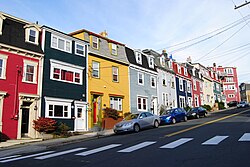
The downtown core of St. John's is world-renowned for its aesthetic charm. The city is famous for its row houses painted in bright, vivid colors, which contrast beautifully with the grey Atlantic skies.
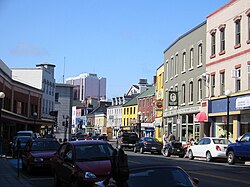
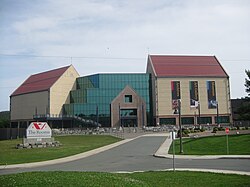
Water Street serves as the commercial heart of the city, featuring a variety of boutiques and restaurants. For those seeking culture, The Rooms houses the provincial art gallery and museum, offering a deep dive into the region's heritage.
Landmarks and Institutions
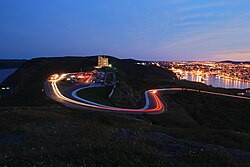
- Cabot Tower: Overlooking the city from Signal Hill, this tower commemorates the site's importance to Canada's defense and communication history.
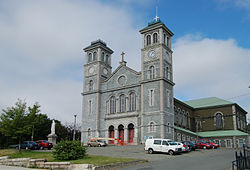
- Basilica of St. John the Baptist: The seat of the Roman Catholic Archdiocese and the city's largest religious institution.
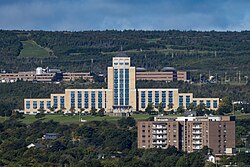
- Confederation Building: The meeting place of the province's House of Assembly.
Economy, Infrastructure, and Sport
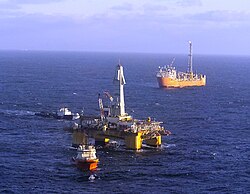
The modern economy of St. John's is heavily influenced by the energy sector, with several offshore oil developments, such as the Terra Nova oil field, located off the coast.
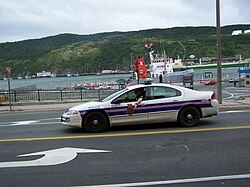
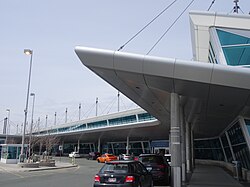
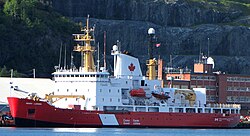
Transportation is anchored by the St. John's International Airport, the second busiest in Atlantic Canada, and the St. John's Harbour, which serves as a home port for Canadian Coast Guard vessels.
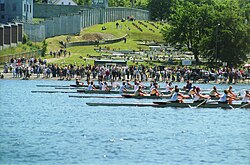
Sports are a central part of the community. The city hosts the Royal St. John's Regatta, North America's oldest annual sporting event. Additionally, the Mary Brown's Centre serves as a multi-purpose arena for the St. John's Edge (NBLC) and the Newfoundland Growlers (ECHL).

Demographics and Society
The population of St. John's is predominantly of European descent, with strong English, Irish, and Scottish roots. According to 2016 data, the largest ethnic origins identified were Canadian (42.3%), English (40.4%), and Irish (32.7%).
English is the primary language spoken by over 91% of the population. Religiously, Christianity remains the most prominent faith, with Roman Catholicism being the largest denomination.
Frequently Asked Questions
What is the historical significance of Signal Hill?
Signal Hill is a National Historic Site known for its association with Canada's defense and communication history, and it was the site of the final battle of the North American theatre in the Seven Years' War in 1762.
What is the largest university in Atlantic Canada by enrolment?
Memorial University of Newfoundland, located in St. John's, is the largest university in the Atlantic Canada region by enrolment.
What is the Royal St. John's Regatta?
The Royal St. John's Regatta is recognized as the oldest annual sporting event in North America and is hosted by the city of St. John's.
How does the offshore oil industry impact St. John's?
The city serves as a hub for offshore oil developments, including the Terra Nova oil field, which contributes significantly to the regional GDP.
What is the significance of Cape Spear?
Cape Spear is the easternmost point of North America and is a popular destination featuring two hiking routes.