Sprint History: From Local Kansas Lines to Global Telecommunications
The evolution of Sprint is a complex saga of mergers, acquisitions, and strategic pivots. What began as a small-town telephone operation in Kansas eventually transformed into a global telecommunications powerhouse, challenging the long-standing monopolies of the 20th century through innovation in data services and wireless technology.
The Foundations: Brown Telephone and United Telecom
The roots of the company trace back to the Brown Telephone Company, founded by C. L. Brown in Abilene, Kansas. Operating as a competitor to the dominant Bell System, Brown expanded by acquiring several local telephone companies, merging them into the United Telephone Company in 1911.
Following a period of bankruptcy, the company emerged in 1938 as United Utilities. By 1972, it rebranded as United Telecommunications (United Telecom), providing local telephone services across the American South and Midwest. During this era, the company diversified its portfolio, acquiring On-Line Systems, Inc. around 1980 to offer business and database applications hosted on DEC time-sharing systems.
United Telecom also pushed into the data and voice markets, launching Uninet—a national X.25 data service (a packet-switching standard)—in 1980. To establish a presence in long-distance voice services, the company acquired ISACOMM in 1981 and US Telephone in 1984.
The Rise of Southern Pacific Communications (SPCC)
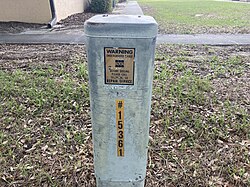
While United Telecom grew in the Midwest, the Southern Pacific Communications Company (SPCC), a unit of the Southern Pacific Railroad, was leveraging its own unique assets. The railroad possessed an extensive microwave communications system along its rights of way, originally intended for internal use.
In 1972, SPCC began selling surplus time on this system to corporations as Private Line Networks, allowing businesses to bypass AT&T's monopoly on public telephony. Following the MCI Telecommunications Corp. v. FCC (Execunet II) decision in late 1978, SPCC expanded its infrastructure with fiber optic cables and began offering long-distance telephone services.
The SPRINT service was initially launched in six major metropolitan areas: New York City, Boston, Philadelphia, Los Angeles, San Diego, and Anaheim. To use the service, customers required a Private Line connection to switches located in New York or Los Angeles, paying an access fee and a rate of 2.6 cents per tenth of a minute.
The Path to Becoming Sprint
The transition to the modern Sprint brand occurred through a series of strategic partnerships. In 1982, SPCC became part of GTE as GTE Sprint. By 1986, GTE Sprint merged with GTE Telenet, US Telecom, Uninet, and ISACOMM to create US Sprint, a joint venture between GTE and United Telecom.
United Telecom gradually increased its stake, purchasing a controlling interest in 1989 and completing the full acquisition of US Sprint in 1991. That same year, United Telecom officially changed its name to Sprint, capitalizing on the massive brand recognition generated by the "Dime Lady" advertising campaign featuring Candice Bergen.
To fund its growth, United Telecom sold its cellular arm, Telespectrum, to Centel for $763 million in 1988. However, Sprint returned to the wireless market in 1993 by merging with Centel. This move allowed Sprint to provide local service in 18 states and eventually launch Sprint PCS (Personal Communications Service) in 1995 after acquiring nationwide spectrum through a joint venture with cable companies.
Corporate Consolidation and Spinoffs
The late 1990s and early 2000s were marked by ambitious attempts at scale. In 1999, Sprint and MCI WorldCom announced a $129 billion merger—which would have been the largest in history—but the deal was blocked by the U.S. Department of Justice and the European Union due to monopoly concerns.
In 2003, the company launched "One Sprint," integrating its local, long-distance, wireline, and wireless units. This period also saw the absorption of the "PCS" tracking stock into the "FON" (Fiber Optic Network) ticker symbol, a move that led to a $57.5 million settlement with shareholders over stock devaluation.
In December 2004, Sprint announced the acquisition of NEXTEL Communications for $35 billion, becoming Sprint Nextel in August 2005. As part of this restructuring, Sprint spun off its local telephone operations into a new company called Embarq in May 2006.
The Final Transition: CenturyLink
The legacy of Sprint's local operations concluded when Embarq was acquired by the Monroe, Louisiana-based CenturyTel, Inc. in 2008. The all-stock transaction was valued at $11.6 billion, including $5.8 billion in assumed debt. On July 1, 2009, the acquisition was completed, and the combined entity was rebranded as CenturyLink in October 2009.
Key Facts
- Origin: Started as Brown Telephone Company in Abilene, Kansas.
- Infrastructure: Southern Pacific Communications used railroad rights-of-way for microwave and fiber optic networks.
- Brand Shift: United Telecom renamed itself Sprint in 1991 due to the success of the "Dime Lady" ads.
- Major Merger: A proposed $129 billion merger with MCI WorldCom was blocked by regulators in 1999.
- Wireless Expansion: Launched Sprint PCS in 1995 and acquired Nextel in 2005.
- Legacy: The local phone division (Embarq) eventually became part of CenturyLink.
| Entity/Event | Year | Key Outcome |
|---|---|---|
| United Telephone Company | 1911 | Merger of local Kansas companies |
| Uninet Launch | 1980 | National X.25 data service established |
| US Sprint Formation | 1986 | Partnership between GTE and United Telecom |
| Rebrand to Sprint | 1991 | United Telecom adopts the Sprint name |
| Sprint PCS | 1995 | Entry into nationwide wireless service |
| Sprint Nextel | 2005 | $35 billion acquisition of Nextel |
| CenturyLink | 2009 | Final rebranding of the Embarq spinoff |
Frequently Asked Questions
How did the Southern Pacific Railroad contribute to Sprint?
The Southern Pacific Communications Company (SPCC) used the railroad's existing rights-of-way to build a microwave and fiber optic network, which allowed them to offer long-distance services and Private Line Networks to corporations.
Why did United Telecom change its name to Sprint?
The company changed its name in 1991 to leverage the high brand recognition of the Sprint service, which had been popularized by the successful "Dime Lady" advertising campaign.
What happened to the merger between Sprint and MCI WorldCom?
Although a $129 billion agreement was reached in 1999, the merger was blocked by the European Union and the United States Department of Justice over concerns that it would create a monopoly.
What was Embarq and how does it relate to CenturyLink?
Embarq was the company created when Sprint Nextel spun off its local telephone operations in 2006. Embarq was later acquired by CenturyTel in 2008, and the combined company was renamed CenturyLink in 2009.
What was the significance of the "FON" ticker symbol?
The ticker symbol "FON" stood for Fiber Optic Network, highlighting Sprint's infrastructure. It was also a homophone for "phone." The absorption of PCS stock into FON led to a $57.5 million shareholder settlement.