Species Complexes: The Challenge of Cryptic Biodiversity
In the study of biology, identifying where one species ends and another begins is not always straightforward. A species complex is a group of closely related organisms that are so similar in appearance and other characteristics that the boundaries between them are often blurred. These organisms may be nearly identical to the naked eye and can sometimes hybridize, making traditional classification difficult.
Because these groups are so similar, they often lead to an underestimation of global and local biodiversity. Distinguishing between these species is not merely an academic exercise; it is critical for conservation biology, pest management, and the control of infectious diseases.
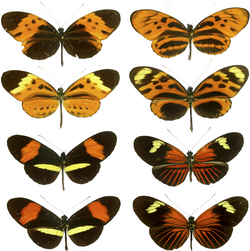
Key Facts
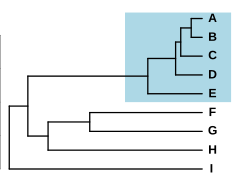
- Definition: A group of closely related taxa that are morphologically similar, often forming a monophyletic group (descended from a common ancestor).
- Identification: Modern scientists use DNA barcoding, molecular phylogenetics, and reproductive isolation tests to tell them apart.
- Evolution: They can result from recent speciation or morphological stasis, where species remain physically similar despite millions of years of separation.
- Ecological Impact: Similar species often coexist through niche partitioning, where they evolve to prefer different microhabitats.
Defining the Terminology
While "species complex" is the general term, biologists use several more precise terms to describe specific relationships within these groups:
- Cryptic Species: Two or more distinct species that are hidden under a single species name because they look identical.
- Sibling Species: Two or more species that are each other's closest relative.
- Species Flock: A group of closely related species living in the same habitat, often resulting from adaptive radiation (diversifying to fill various ecological niches).
In scientific literature, you may see the Latin phrase sensu lato (abbreviated as s.l.), meaning "in the broad sense." This is often added to a species name to indicate that the author is referring to the entire species complex rather than a single specific species.
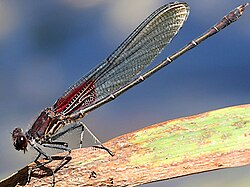
Evolution and Speciation
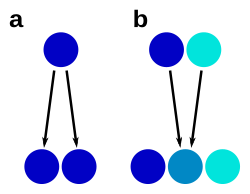
Most species complexes are monophyletic, meaning they share a common ancestor. They typically represent an early stage of speciation where populations have separated but have not yet evolved distinct physical differences. In some cases, hybrid speciation—where hybridization between two species creates a new one—plays a role in the complex's evolution.
However, similarity does not always imply a recent split. Some organisms experience morphological stasis, remaining physically unchanged for millions of years. For example, the Amazonian frog Pristimantis ockendeni (also referred to as Eleutherodactylus ockendeni) consists of at least three different species that diverged over 5 million years ago despite their similar appearance.
The Role of Habitat and Range
There is ongoing scientific debate regarding whether members of a species group share the same geographic range. Some evidence suggests they have partially overlapping ranges but do not interbreed. Others describe them as existing allopatrically (in separate areas), where their distinctness is confirmed through experimental crosses.
When similar species live in sympatry (the same area), they avoid outcompeting one another through niche partitioning. This ecological differentiation allows them to coexist by utilizing different resources or microhabitats.
Practical Implications of Cryptic Diversity
The discovery of species complexes has profound implications across various scientific fields. The use of DNA barcoding (using short genetic sequences to identify species) and phylogeography has revealed that cryptic complexes are ubiquitous, particularly in marine environments.
| Field | Importance of Identification | Example |
|---|---|---|
| Biodiversity | Prevents underestimation of species counts | Marine bryozoan Celleporella hyalina (10+ species) |
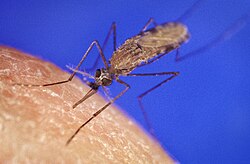
| Disease Control | Identifies which specific species carry pathogens | Anopheles gambiae mosquito complex |
| Conservation | Ensures rare, cryptic species are protected | African elephants (two distinct species) |
A prime example of the danger of ignoring species complexes is found in the Anopheles gambiae mosquito complex. Within this group, some species are vectors for malaria while others are not. Failing to distinguish between them could lead to ineffective disease control strategies.
Frequently Asked Questions
What is the difference between a species complex and a subspecies?
A species complex consists of distinct species that are very similar. Subdividing a species into infraspecific taxa (like varieties or subspecies) is a different taxonomic process and does not constitute a species complex.
How do scientists identify species that look identical?
Scientists use rigorous methods including DNA-based analysis (molecular phylogenetics and DNA barcoding), tests of reproductive isolation (mating compatibility), and the study of minute morphological details that are not obvious at first glance.
What is a species flock?
A species flock is a group of closely related species in the same habitat that evolved through adaptive radiation. A famous example is Darwin's finches on the Galápagos Islands.
Can members of a species complex interbreed?
Yes, taxa within a complex may be able to hybridize readily, which often further blurs the distinctions between them and makes their classification more challenging.