Spanish Empire: The Rise and Fall of a Global Hegemony
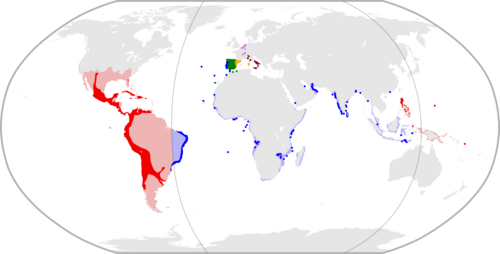
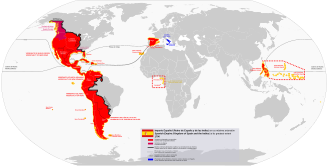
From the late 15th century until the mid-20th century, the Spanish Empire stood as one of the most expansive and influential political entities in human history. Driven by the motto Plus Ultra ("Further Beyond"), Spain evolved from a collection of Iberian kingdoms into a global superpower, spanning the Americas, the Pacific, Africa, and Europe. Its legacy is etched into the languages, religions, and architectures of dozens of modern nations.
The empire's trajectory was marked by an era of unprecedented exploration, the extraction of vast mineral wealth, and a complex administrative struggle to govern territories where the sun never set.
Key Facts
- Duration: 1492–1976.
- Peak Area: Approximately 13.7 million square kilometers by 1780.
- Key Dynasties: Trastámara, Habsburgs, Bourbons, and briefly Bonaparte and Savoy.
- Major Conquests: The Aztec Empire (1519–1521) and the Inca Empire (1532–1572).
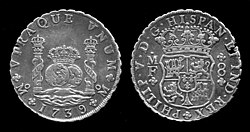
- Global Currency: The Spanish dollar (Peso), which served as a primary international coin.
- Official Religion: Catholicism.
Origins and Early Expansion
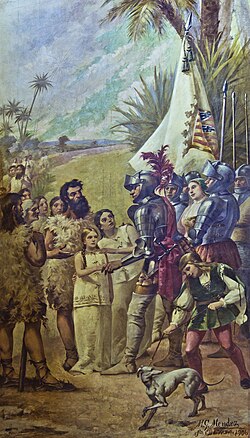
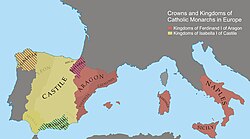
The foundations of the empire were laid by the Catholic Monarchs, whose unification of Spain provided the stability and resources necessary for overseas venture. Early expansion began with the conquest of the Canary Islands (1402–1496), which served as a vital stepping stone for Atlantic voyages.
The New World and the Treaty of Tordesillas
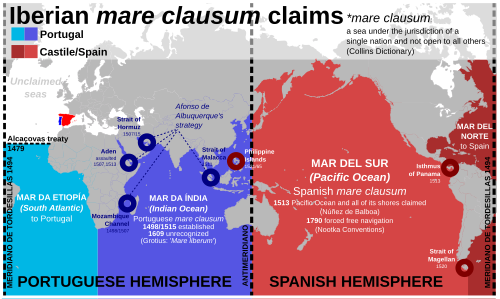
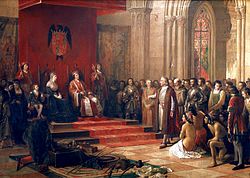
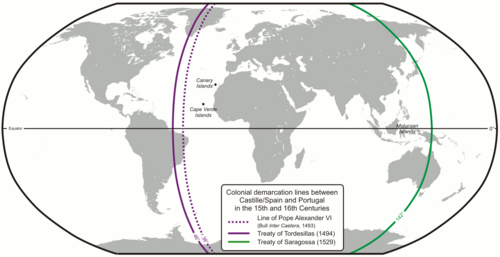
The arrival of Christopher Columbus in the Americas on October 12, 1492, triggered a race for territorial acquisition. To avoid conflict with Portugal, the two powers signed the Treaty of Tordesillas, effectively dividing the non-European world between them.
The Habsburg Era (1516–1700)
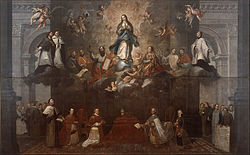
Under the House of Habsburg, Spain reached the zenith of its power. The Habsburg monarchs pursued a multifaceted strategy: containing French influence in Europe, defending Christendom against the Ottoman Empire, and spreading Catholicism to indigenous populations in the New World and the Philippines.
Conquest of the Americas
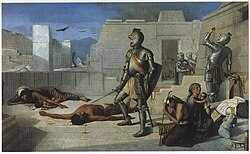
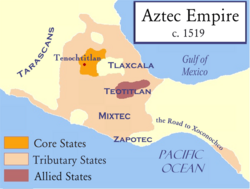
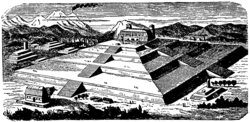
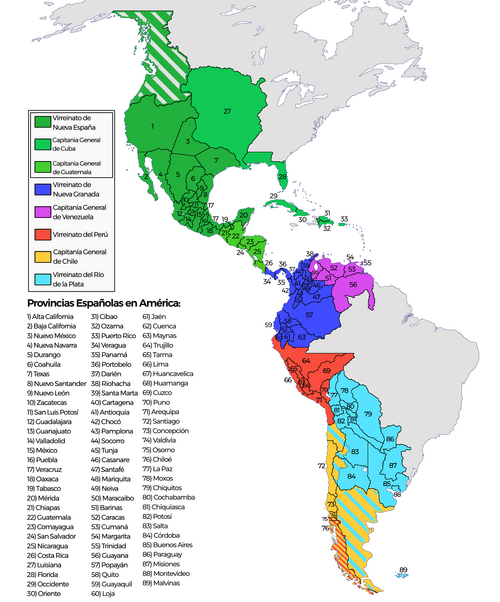
Spanish conquistadors dismantled the great empires of the West. The fall of Tenochtitlan led to the creation of the Viceroyalty of New Spain in 1535. Simultaneously, the subjugation of the Maya kingdoms and the Inca Empire secured vast territories and immense wealth in gold and silver.
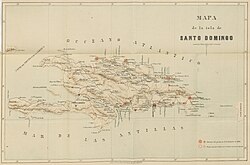
![Spanish territories in the New World around 1515. The island of Hispaniola belonged entirely to Spain until 1605, when Spain lost the western part of the island due to the devastations of Osorio.[44][45]](/images/44/fc/44fc88d5e98c2583b2681ff3eb35861b2a6cdacaf8ef61ed35389b3b4f775995.png)
The Reign of Philip II
Philip II presided over a global empire that included the Iberian Union (1580–1640), during which Spain and Portugal were joined under a single crown. This period saw the establishment of the Spanish East Indies in 1565, extending Spanish influence to Asia.
The Bourbon Reforms and 18th Century Shifts

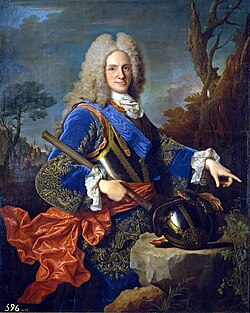
The transition to the House of Bourbon in 1700 brought a shift toward absolute monarchy and administrative modernization. The Bourbon reforms aimed to revitalize the economy and tighten royal control over the colonies.
Economic Power and Trade
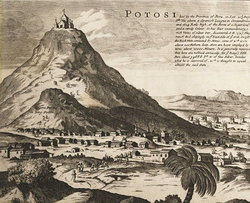
The empire's economy relied heavily on the extraction of silver, most notably from the rich mines of Potosí. Trade was strictly regulated through a fleet system, with the Havana shipyard becoming the most sophisticated dockyard in the New World.
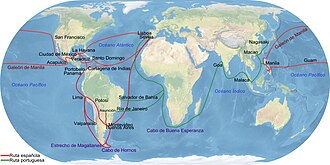
![From 1715 to 1759, a third of Spanish ship production was from the Havana shipyard. In 1735, its expansion, in the same port, meant an increase in construction capacity. This shipyard in the 18th century developed the most complete dockyard in the New World.[103]](/images/bb/a1/bba1054722f078c0a3673a9e0e2a308b4d4a93f38957dddcfc8407ff28ce6491.jpg)
Global Conflict and Contested Borders
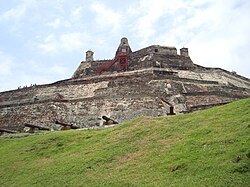
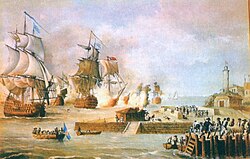
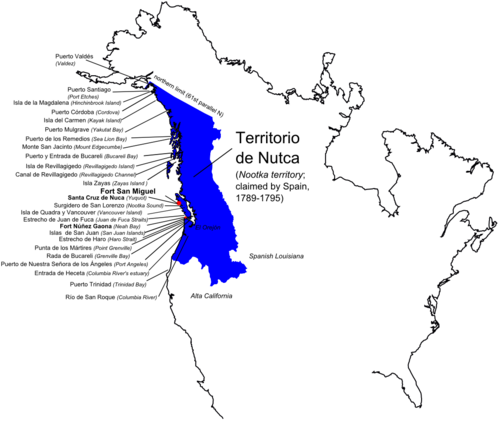
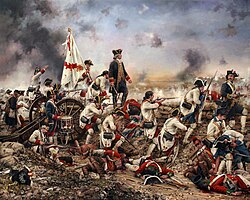
The 18th century was marked by intense rivalry with Great Britain. While Spain successfully repulsed British attacks at the Battle of Cartagena de Indias in 1741, it eventually faced pressure in the Pacific Northwest and lost Spanish Louisiana.
Decline and Dissolution
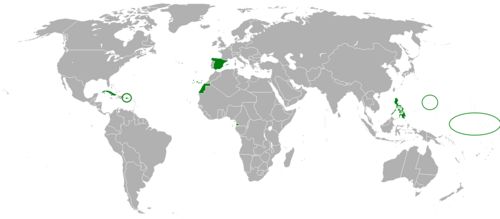
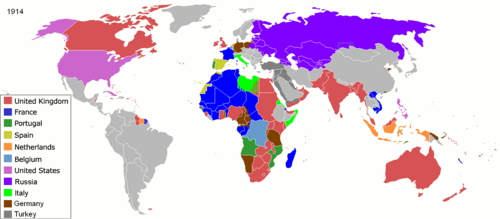
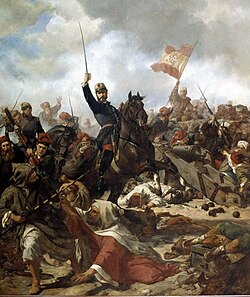
The 19th century witnessed the rapid dismantling of the empire. The Spanish American wars of independence (1808–1833) stripped Spain of most of its mainland American territories. The remaining fragments, including Cuba and the Philippines, were lost during the Spanish–American War of 1898.
The Final Territories in Africa
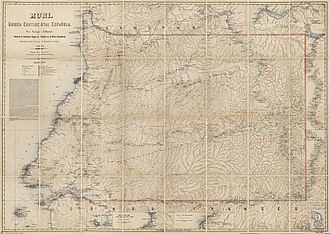
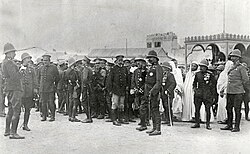
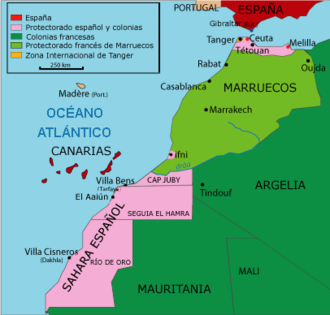
Spain's final imperial holdings were in Africa, including Spanish Guinea and the Spanish Sahara. These territories remained under Spanish control until the mid-20th century, with the final withdrawal from the Spanish Sahara occurring in 1976.
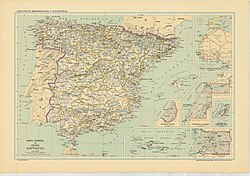
Imperial Summary
| Period | Dominant Dynasty | Key Focus | Major Outcome |
|---|---|---|---|
| 1492–1516 | Trastámara | Exploration & Unification | Discovery of Americas |
| 1516–1700 | Habsburgs | Global Hegemony & Catholicism | Conquest of Aztecs/Incas |
| 1700–1833 | Bourbons | Administrative Reform | Loss of American colonies |
| 1833–1976 | Various | African Territories | Final Decolonization |
Frequently Asked Questions
What was the Treaty of Tordesillas?
The Treaty of Tordesillas was an agreement between Spain and Portugal that divided newly discovered lands outside Europe along a meridian line, ensuring both nations had designated spheres of influence in the New World.
How did the Spanish dollar impact global trade?
The Spanish dollar, or Peso, became a dominant global currency due to the massive influx of silver from the Americas, providing a standardized medium of exchange for international trade, including with Asia.
What were the Bourbon reforms?
The Bourbon reforms were a series of political and economic changes implemented by the House of Bourbon to modernize the Spanish state, increase colonial revenue, and strengthen the crown's authority over its overseas territories.
When did Spain lose its last major colonies?
Spain lost the majority of its American colonies in the early 19th century, followed by Cuba and the Philippines in 1898. Its final imperial territory, the Spanish Sahara, was relinquished in 1976.
What was the role of the Viceroyalties?
Viceroyalties, such as New Spain and Peru, were large administrative districts governed by a Viceroy who acted as the direct representative of the Spanish monarch, managing everything from tax collection to judicial matters.