Space Shuttle Evolution: From Early Concepts to the Final Design
Following the historic Apollo 11 Moon landing in 1969, NASA began looking toward the next frontier of human spaceflight. As early as October 1968, engineers were already conducting studies to define the future of orbital transport. These early efforts, known as Phase A, eventually evolved into the more detailed Phase B studies in June 1970. The goal was to create a vehicle capable of supporting future space stations, ferrying crews of at least four, and transporting approximately 20,000 pounds (9,100 kg) of cargo with rapid turnaround capabilities.
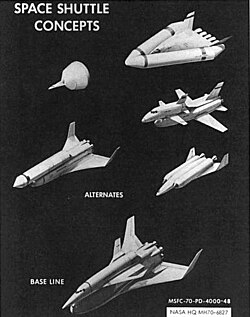
The Search for the Ideal Design
The path to the final Space Shuttle was marked by intense debate and competing visions. Two primary design philosophies emerged. One was a complex, two-stage system featuring delta wings (triangular wings) championed by George Mueller at the Manned Spaceflight Center. In an attempt to simplify this approach, Maxime Faget—the designer of the Mercury capsule—proposed the DC-3 concept, which utilized conventional straight wings.
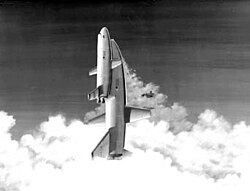
While various commercial companies submitted proposals, NASA's internal labs often pushed for their own specific versions. This period was particularly challenging as NASA faced severe budget constraints while simultaneously managing multiple post-Apollo mission proposals. Ultimately, the shuttle project emerged as the priority in 1970, largely due to the tireless campaigning of its supporters.
Strategic Decisions and the Low Earth Orbit Mandate
In 1969, the National Aeronautics and Space Council, chaired by Vice President Spiro Agnew, evaluated four major paths for human space activity: a mission to Mars, a follow-on lunar program, a low Earth orbital infrastructure program, or the discontinuation of human spaceflight. Based on council advice, President Nixon chose the low Earth orbital infrastructure option.
This decision prioritized the construction of a space station and the development of the Space Shuttle. However, because funding was limited, NASA had to choose between developing both simultaneously. They opted to develop the shuttle first, intending to use it as the primary tool to build and service the future space station.
Shifting Requirements and Payload Demands
As the program progressed, the landscape changed. The realization that the Saturn V—the massive rocket used for Apollo—would no longer be produced meant the shuttle had to take over heavy-lift responsibilities. The required payload capacity increased significantly, reaching 60,600 pounds (27,500 kg) to accommodate interplanetary probes and large space station modules. To offset these rising costs, NASA sought partnerships with the U.S. Air Force and other customers to ensure the shuttle became a versatile, national system.
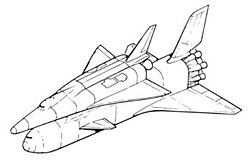
The Transition to Semi-Reusability
Early design preferences leaned toward a fully reusable system. This would have featured a large, winged, crewed booster to carry a smaller winged orbiter. The booster would lift the orbiter, separate, and then land horizontally like an airplane. However, engineers discovered that the mass required for such a massive booster would make the overall vehicle prohibitively expensive.
To manage costs and complexity, NASA moved toward a semi-reusable design. This compromise involved:
- A throw-away external fuel tank to hold liquid propellant, which allowed for a larger payload bay in a smaller craft.
- Recoverable solid rocket boosters that could be refurbished for future flights.
- A gliding orbiter design, omitting heavy jet engines to reduce weight and increase payload capacity.
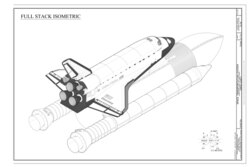
This shift also addressed the debate over crew size. While some argued for a maximum of four crew members to accommodate ejection seats, NASA designed the vehicle to carry more, anticipating that additional payload specialists would be needed for various missions.
Military Influence and the Final Configuration
The U.S. Air Force played a pivotal role in shaping the shuttle's final specifications. Following the cancellation of previous military space projects, the Air Force sought to use the shuttle for satellite reconnaissance. This influence led to specific design requirements, such as a 60-by-15-foot (18.3 by 4.6 m) payload bay to accommodate large intelligence satellites, a size larger than NASA's original 40-foot plan.
The Air Force's need for polar orbit launches also influenced the wing design. While the delta wing was not solely a military requirement, it provided the necessary characteristics for the mission profiles required by the Department of Defense. In exchange for these concessions, the Air Force supported the program's funding in Congress.
Selecting the Manufacturer
In 1972, NASA evaluated proposals from Lockheed, McDonnell Douglas, Grumman, and North American Rockwell. While other companies offered impressive designs, North American Rockwell was selected because it provided the lowest cost, the most realistic projections, and a design that was easiest to maintain. Their proven experience with electrical systems, demonstrated during the Apollo 13 mission, provided additional confidence.
Key Facts
- Primary Goal: To build and service a low Earth orbit space station.
- Final Design: A winged orbiter with three liquid-fueled engines, an expendable external tank, and two reusable solid rocket boosters.
- Payload Capacity: Increased from early estimates to 60,600 pounds (27,500 kg).
- Manufacturer: North American Rockwell was selected in July 1972.
- Avionics: The orbiter used the IBM AP-101 computer and the HAL/S programming language.
Summary of Design Evolution
| Feature | Early Phase A/B Concepts | Final Selected Design |
|---|---|---|
| Reusability | Fully reusable (winged booster) | Semi-reusable (expendable tank) |
| Wing Type | Straight wings (DC-3) or Delta wings | Delta wings |
| Propulsion | Complex multi-mode engines | 3 liquid engines + 2 solid boosters |
| Atmospheric Flight | Jet engines for maneuvering | Gliding only |
Frequently Asked Questions
Why was the external tank designed to be thrown away?
Carrying propellant in an external tank allowed the orbiter to be smaller and more efficient, providing a larger payload bay for cargo. While the tank was expendable, it represented a relatively small portion of total operating costs compared to the benefits gained.
What role did the Air Force play in the shuttle's design?
The Air Force influenced the size of the payload bay and the wing configuration to ensure the shuttle could launch large reconnaissance satellites into polar orbits. Their support was crucial for the program's political survival in Congress.
Why were solid rocket boosters chosen over liquid ones?
Although liquid boosters offered better performance and lower environmental impact, the Office of Management and Budget insisted on solid boosters because they had lower projected development costs during a time of limited funding.
How did the shuttle's payload capacity change during development?
As the Saturn V was phased out, the shuttle's required payload capacity increased from the initial 20,000 pounds to 60,600 pounds to ensure it could handle heavy-lift tasks like launching space station modules.
What was the purpose of the delta wing design?
The delta wing provided the necessary aerodynamic characteristics for reentry and maneuvering, particularly for the high-energy orbital requirements requested by the military, though it was not designed solely for the Air Force.