Southern United StatesAmerican SouthDeep SouthUpland SouthSouthern economy

Southern United States: Geography, History, and Cultural Identity

Southern United States: Geography, History, and Cultural Identity The Southern United States, often referred to as the American South, the Southland, or Dixieland, is a distinct political...

Southern United States: Geography, History, and Cultural Identity

The Southern United States, often referred to as the American South, the Southland, or Dixieland, is a distinct political and cultural region of the United States. Spanning a vast landscape from the Atlantic coast to the plains of Texas, the region is defined by its rich history, diverse demographics, and a unique cultural heritage that continues to shape the American identity.

Geographically, the South is divided into several subregions, including the South Atlantic, West South Central, and East South Central areas. Within these, the Deep South and the Upland South represent different topographic and cultural landscapes, ranging from the coastal plains to the rugged Appalachian Mountains.

Texas Hill Country
Texas Hill Country

Key Facts

Grove Plantation in Tallahassee, Florida. Known officially as the Call/Collins House at the Grove. Built c. 1840.
  • Total Population: Approximately 126.3 million (2020 Census).
  • Economic Power: Total GDP estimated at $10.938 trillion by 2025.
  • Largest City: Houston, Texas.
  • Land Area: 868,602 square miles.
  • Key Subregions: South Atlantic, East South Central, and West South Central.

Geography and Demographics

Horse race meeting at Jacksonville, Alabama, 1841

The South is a region of immense natural diversity. From the tidal wetlands of the Chesapeake Bay to the Glass Mountains of Oklahoma, the landscape varies wildly. The region includes the fertile Bluegrass region of Kentucky and the misty bluffs of the Ozark Mountains in Arkansas.


Bluegrass region, Kentucky

Glass Mountains, Oklahoma

North Carolina's Appalachian Mountains

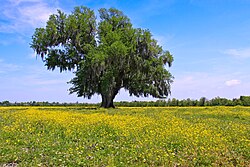
Field of yellow wildflowers in Saint Bernard Parish, Louisiana

Pearl River backwater in Mississippi

Misty Bluff along the Buffalo River, Ozark Mountains, Arkansas

Tidal wetlands of the Chesapeake Bay in Maryland

Cherry River in West Virginia

The highlands of Grayson County in Southwest Virginia

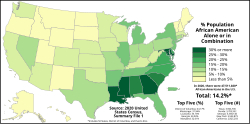
Demographically, the South is a melting pot of ethnicities and languages. While White (Non-Hispanic) residents make up 54% of the population, the region has a significant Black (Non-Hispanic) population at 18.2% and a growing Hispanic or Latino community at 19%. This diversity is reflected in the linguistic landscape, which includes Southern American English, various Afroamerican languages like Gullah, and French variants such as Louisiana Creole.

The approximate extent of Southern American English, based upon The Atlas of North American English[117][118]

Proportion of African Americans in each U.S. state, Washington, D.C., and Puerto Rico as of the 2020 United States Census

Major Southern States by Population (2020)
State Capital Population National Rank
Texas Austin 29,145,505 2
Florida Tallahassee 21,538,187 4
Georgia Atlanta 10,711,908 8
North Carolina Raleigh 10,439,388 9
Virginia Richmond 8,631,393 12

Historical Evolution

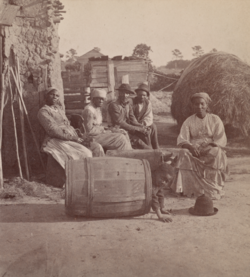
An African American family, photographed by O'Pierre Havens, c. 1868

The history of the South is marked by a complex transition from Native American territories to European colonies. The early establishment of the Southern Colonies was followed by the institution of slavery, which became central to the region's agrarian economy during the Antebellum years.
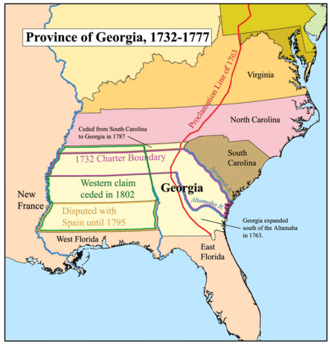
Map of the Southern Colonies, with the Proclamation Line of 1763 shown in red

A map of the Thirteen Colonies in 1770, showing the number and proportion of slaves in each colony[54]

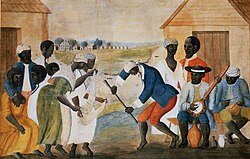
Slaves on a South Carolina plantation (The Old Plantation, c. 1790)

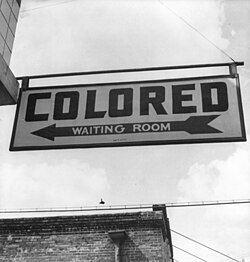
The American Revolution saw the South play a pivotal role, with key events like the Battle of Guilford Courthouse and the siege of Yorktown leading to British surrender. However, deep-seated tensions over slavery and state rights eventually culminated in the American Civil War. Following the war, the region underwent Reconstruction, which was later followed by the Jim Crow era—a period of systemic racial segregation.


1st Maryland Regiment holding the line at the Battle of Guilford Courthouse in North Carolina, 1781

The siege of Yorktown prompted Great Britain's surrender in North America during the American Revolutionary War, 1781.

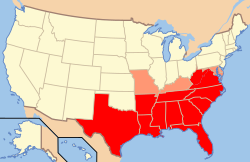
map of United States with southeastern states highlighted in shades of red
Historic Southern United States. The states in light red were considered southern "border states", and gave varying degrees of support to the Confederate cause although they remained in the Union while Kentucky and Missouri had dual competing Confederate and Unionist governments. This illustration depicts the original, trans-Allegheny borders of Virginia, and thus does not show West Virginia (which separated from Virginia in 1863)[72] separately. Although members of the Five Tribes in Indian Territory (today part of Oklahoma) aligned themselves with the Confederacy, the region is not shaded because at the time it was a territory, not a state.

Atlanta's railroad roundhouse in ruins shortly after the end of the Civil War

The mid-20th century brought the Civil Rights Movement, a transformative era that challenged segregation. This period saw the signing of the Civil Rights Act of 1964 and the Voting Rights Act of 1965, which legally ended state-mandated segregation and guaranteed voting rights for all citizens.


A rally against school integration in Little Rock, 1959

U.S. president Lyndon B. Johnson signs the historic Civil Rights Act of 1964.

Racial segregation was required by state laws in the South and other U.S. states until 1964.

Modern Economy and Education

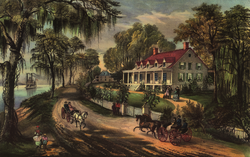
A Home on the Mississippi, by Currier and Ives, 1871

Today, the South has transitioned from a primarily agricultural economy to a diversified modern powerhouse. Major urban centers like Houston, Dallas, and Atlanta serve as hubs for technology, energy, and logistics. The region's growth is supported by a robust network of higher education institutions.

Notable public universities include the University of Texas at Austin, Georgia Tech, and the University of Florida. Private institutions such as Duke University, Rice University, and Emory University are also globally recognized for their academic excellence.
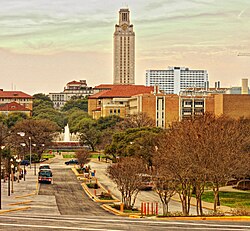

University of Texas at Austin

Virginia Tech
Virginia Tech

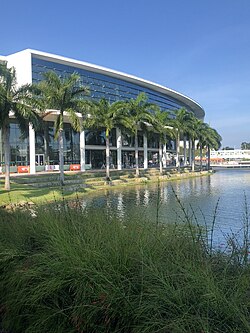
University of Miami
University of Miami

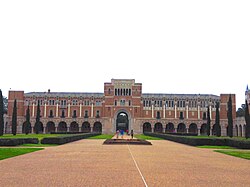
Rice University
Rice University

Sports and Popular Culture

Child laborers in Bluffton, South Carolina, 1913

Sports are deeply ingrained in Southern culture, particularly college football. The Southeastern Conference (SEC) dominates the landscape, with teams like the Texas A&M Aggies, Alabama Crimson Tide, and LSU Tigers drawing massive crowds.
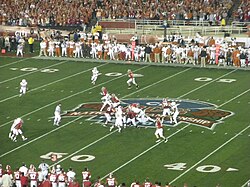
Alabama plays Texas for the 2010 BCS National Championship.

Professional sports are equally popular. Major League Baseball (MLB) teams like the Houston Astros and Atlanta Braves see high attendance, while the NFL's Dallas Cowboys remain one of the most recognized sports brands in the world. Additionally, the South is the heart of auto racing, centered around events like the Daytona 500.


The Dallas Cowboys are one of the region's most popular NFL teams.

Houston vs Texas face-off during the 2013 Lone Star Series in the American League West division of Major League Baseball.

The start of the 2015 Daytona 500, the biggest race in NASCAR, at Daytona International Speedway in Daytona Beach, Florida

Frequently Asked Questions
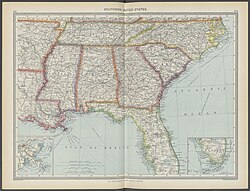
Southern United States in 1908 from The Harmsworth atlas and Gazetter
An illustration from Houston: Where Seventeen Railroads Meet the Sea, 1913
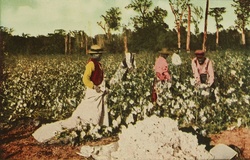
Photo of sharecropper family in Walker County, Alabama, c. 1937
Naval Air Station Miami, c. 1942–1943
Street musicians in Maynardville, Tennessee, in 1935
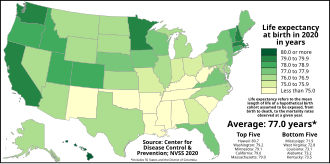
2020 life expectancy map of the United States
Bill Clinton, newly elected Governor of Arkansas, speaking with Jimmy Carter in 1978. Carter and Clinton were both Southern Democrats and elected to the presidencies in 1976, 1992 and 1996.
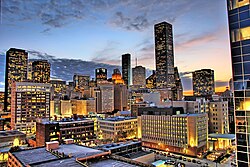
Houston
Houston
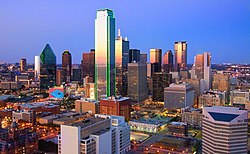
Dallas
Dallas
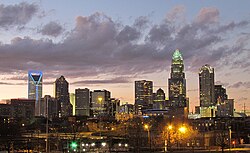
Charlotte
Charlotte
Oklahoma City
Oklahoma City
Nashville
Nashville
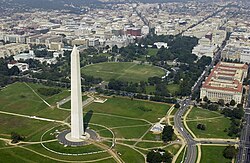
Washington, D.C.
Washington, D.C.
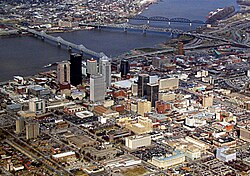
Louisville
Louisville
Baltimore
Baltimore
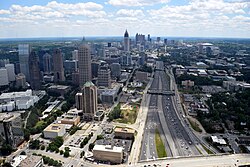
Atlanta
Atlanta
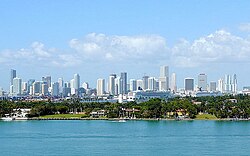
Miami
Miami
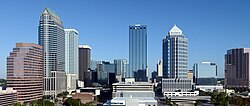
Tampa
Tampa
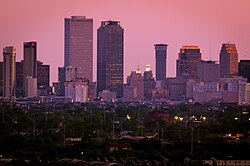
New Orleans
New Orleans

What are the primary subregions of the American South?

The South is generally divided into the South Atlantic, East South Central, and West South Central regions. Culturally and topographically, it is often split between the Deep South and the Upland South.

Which city is the largest in the Southern United States?

Houston, Texas, is the largest city in the region by population.

What was the impact of the Civil Rights Act of 1964 on the South?

The Civil Rights Act of 1964 was a landmark piece of legislation that ended legal racial segregation in public places and banned employment discrimination on the basis of race, color, religion, sex, or national origin.

Which sports are most prominent in the Southern region?

College football (particularly the SEC), NASCAR auto racing, and Major League Baseball are among the most popular sports in the South.

What are some of the most populous states in the South?

Texas and Florida are the most populous states in the region, followed by Georgia and North Carolina.

References

  1. "Census Regions and Divisions of the United States" (PDF). U.S. Census Bureau. Archived from the original (PDF) on June 17, 2016. Retrieved June 9, 2016.
  2. "Change in Resident Population of the 50 States, the District of Columbia, and Puerto Rico: 1910 to 2020" (PDF). Census.gov. United States Census Bureau. Archived (PDF) from the original on April 26, 2021. Retrieved April 27, 2021.
  3. "Gross Domestic Product (GDP) by State".
  4. The South Archived July 11, 2021, at the Wayback Machine. Britannica. Retrieved June 5, 2021.
  5. Maryland, Delaware, and Washington, D.C., are identified in a number of sources as Northeastern: "About – CSG". csg-erc.org. Archived from the original on June 23, 2016. Retrieved June 29, 2016.