South Ossetian Military: History, Evolution, and Russian Integration
The military forces of South Ossetia emerged from a period of intense regional instability, evolving from a loosely organized group of guerillas into a structured force closely integrated with the Russian military. From its inception in the early 1990s to its recent involvement in international conflicts, the trajectory of the South Ossetian armed forces reflects the complex geopolitical relationship between South Ossetia, Georgia, and Russia.
The Origins of the Republican Guard
The Ossetian Republican Guard was officially organized on November 15, 1991. Its primary initial objective was the defense of Tskhinvali, the national capital. The urgency of its creation was underscored just one week later when Georgian President Zviad Gamsakhurdia deployed over 10,000 soldiers to the republic.
During the 1991–1992 South Ossetia War, the Guard provided approximately 2,400 personnel to oppose the National Guard of Georgia. As the conflict progressed, the need for a formal military structure became apparent. On November 17, 1992, the Supreme Soviet of South Ossetia approved the creation of the Ministry of Defence (MoD) to provide centralized leadership. By February 1993, the first formal combat units were established, starting with the Artillery Division and the Military Intelligence Unit.
The 2008 Russo-Georgian War
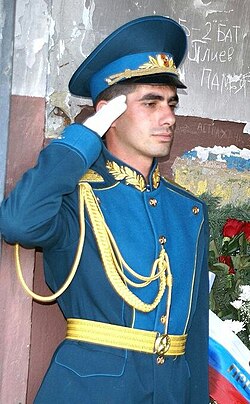
The South Ossetian military played a pivotal role during the 2008 Russo-Georgian War. At the onset of the major Georgian offensive, the majority of Ossetian forces were stationed in Java, north of Tskhinvali. However, the Centre for Analysis of Strategies and Technologies notes that the Georgian operation was ultimately thwarted by the resistance of peacekeepers and lightly armed South Ossetian units that remained to defend the capital.
On August 8, regular Russian army forces entered the conflict, advancing deep into Georgian territory. They were occasionally accompanied by South Ossetian militia, who were later reported to have committed serious human rights violations in Georgian villages within South Ossetia. Estimates suggest that the combined losses of South Ossetian military forces, volunteers, and militia totaled 150 dead.
The level of preparation for this conflict was high; in a 2012 statement, Russian President Vladimir Putin revealed that the Russian General Staff had been training South Ossetian militias since 2006–2007 specifically to rebuff Georgian forces in the event of war.
Integration with the Russian Armed Forces
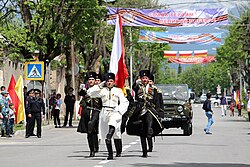
Over time, the autonomy of the South Ossetian military began to shift toward integration with Russia. In March 2015, members of the South Ossetian Parliament proposed dissolving the local military entirely to fold it into the Russian Armed Forces. While President Leonid Tibilov and Defense Minister Ibrahim Gassayev rejected the full dissolution, they agreed that units would be incorporated into the Russian military while remaining separate entities.
This process was formalized on March 31, 2017, when the defense ministers of both nations signed agreements placing several South Ossetian units under Russian command.
Deployment in the Invasion of Ukraine
On March 26, 2022, President Anatoliy Bibilov began deploying troops who served under Russian command to assist in the Russian invasion of Ukraine. Bibilov expressed strong support for the campaign, describing it as "our operation" and citing cultural and historical ties to Russia.
South Ossetian fighters operated within the 4th Guards Military Base and joined various mercenary and volunteer groups, including "Storm Ossetia," "Alania," and "Pyatnashka." However, the campaign took a toll on the force. As the conflict became a prolonged and bloody war of attrition, morale plummeted. Reports indicate widespread desertion and a decline in combat effectiveness, driven by rising casualties and panic among the population back home.
Key Facts
- Founded: November 15, 1991, as the Ossetian Republican Guard.
- Initial Strength: 2,400 guardsmen during the 1991–1992 war.
- 2008 War Losses: Approximately 150 dead among military, militia, and volunteers.
- Russian Training: Militias were trained by the Russian General Staff between 2006 and 2007.
- Command Shift: Formal agreements for Russian command of certain units were signed on March 31, 2017.
- Ukraine Involvement: Troops deployed starting March 26, 2022, via the 4th Guards Military Base and volunteer groups.
| Period | Organizational Status | Key Development |
|---|---|---|
| 1991–1992 | Republican Guard | Loosely organized guerilla groups defending Tskhinvali. |
| 1993 | Ministry of Defence (MoD) | Formation of Military Intelligence and Artillery units. |
| 2006–2008 | Russian-Trained Militia | Strategic training by Russian General Staff for the 2008 war. |
| 2017–Present | Integrated Units | Partial incorporation under Russian command. |
Frequently Asked Questions
When was the Ossetian Republican Guard formed?
The Ossetian Republican Guard was organized on November 15, 1991, primarily to defend the capital city of Tskhinvali.
What role did South Ossetian forces play in the 2008 war?
They provided critical resistance in Tskhinvali that helped thwart Georgian operations, and later accompanied Russian regular army forces during their advance into Georgia.
Is the South Ossetian military completely merged with Russia?
While a proposal for full dissolution was rejected in 2015, an agreement signed in 2017 placed several South Ossetian units under Russian command, though they remained separate units.
Which units did South Ossetians join during the invasion of Ukraine?
Fighters served within the 4th Guards Military Base and joined volunteer or mercenary groups such as "Storm Ossetia," "Alania," and "Pyatnashka."
Why did morale decline among South Ossetian troops in Ukraine?
Morale deteriorated due to the prolonged and bloody nature of the campaign, leading to rising casualties and widespread desertion.