South Korean Sports: From Traditional Martial Arts to Global Dominance
South Korea possesses a rich sporting landscape that seamlessly blends ancient traditions with a fervent passion for modern international competitions. From the disciplined movements of martial arts to the high-energy atmosphere of professional stadiums, sports are deeply woven into the cultural fabric of the nation. While traditional activities remain respected, global sports like football and baseball have ascended to become the most popular pastimes in the country.
According to a 2021 poll, football is the favorite sport for 25% of South Korean sports fans, followed closely by baseball at 18.8%.
Key Facts
- Football and Baseball are the most popular sports in South Korea.
- Taekwondo is a globally recognized martial art that became an Olympic event in 1988.
- Archery is a dominant sport for Korea, with the women's team winning 10 consecutive Olympic gold medals since 1988.
- Women's Handball is the most successful Olympic team sport for the country, with two gold medals.
- Short-track speed skating is a strategic area of national focus, leading to significant Winter Olympic success.
Traditional Sports and Martial Arts
South Korea's sporting identity begins with its traditional practices and martial arts. Among these, Taekwondo—which literally means "way of foot and fist"—is the most prominent. With historical roots dating back to the 1st century BCE, the sport gained significant momentum after World War II. Formal rules were established in 1961, and it achieved global status as an Olympic event in 1988. While it encompasses various strikes, the modern sport is characterized by its emphasis on kicking.
Another cornerstone of traditional culture is Ssireum, a form of traditional wrestling that remains a symbol of Korean heritage.
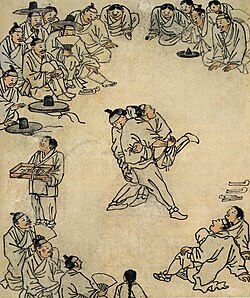
The Passion for Team Sports
Baseball
Introduced by American missionaries in the late 19th century to promote "muscular Christianity," baseball has evolved into a national obsession. The professional KBO League launched in 1982 with six teams and has since grown to ten. The league is renowned for its unique and active cheering culture, consistently attracting 8 million fans annually and averaging 11,500 spectators per game.
On the international stage, South Korea won the Gold Medal at the 2008 Olympic Games and has performed strongly in the World Baseball Classic, finishing as runners-up in 2009 and 3rd in 2006. Many Korean players have also successfully transitioned to Major League Baseball (MLB) in the United States.

Association Football
Football gained popularity in the early 1900s, initially marked by a fierce rivalry between Seoul and Pyongyang. Despite a ban by the Japanese colonial government in 1938, the sport persisted, leading to the founding of the Korea Football Association (KFA) in 1948.
The national team, competing as "Korea Republic," has qualified for twelve FIFA World Cups—an Asian record—including the 2026 tournament. A historic milestone occurred during the 2002 FIFA World Cup, co-hosted by South Korea and Japan, where the team became the first from the Asian Football Confederation (AFC) to reach the semi-finals, ultimately finishing 4th.
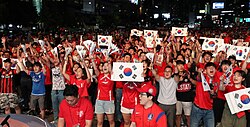
Domestically, the K League (est. 1983) is Asia's oldest professional football league. It currently consists of two professional divisions, with plans to unify the men's football structure into a single pyramid by 2027. Women's football is also growing, with the WK League aiming for full professionalization by 2035.
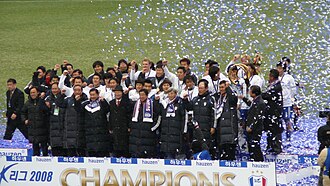
Other Team Sports
- Basketball: Highly popular in the 1990s, basketball is played professionally in the KBL and Women's KBL. Ha Seung-Jin is the only Korean player to have played in the NBA (2004–2006).
- Volleyball: The professional V-League, featuring both men's and women's competitions, was launched in 2005.
- Handball: The women's national team is a global powerhouse, becoming the first non-European team to win the World Championship in 1995 and securing two Olympic gold medals (1988, 1992).
- Field Hockey: South Korea is a dominant force in Asia, winning the Men's Asia Cup five times.
- Lacrosse: A growing sport governed by the Korea Lacrosse Association, which established a domestic "sixes" league in 2023.
Individual and Specialized Sports
Archery and Golf
South Korea is a global superpower in archery. The women's team has achieved an unprecedented streak, winning the Olympic team event 10 consecutive times since 1988.
In golf, the country is particularly strong in the women's circuit, with 47 players on the LPGA Tour. Legends like Pak Se-ri and Inbee Park have secured numerous major titles. In men's golf, Yang Yong-eun became the first Asian to win a men's major at the 2009 PGA Championship.
Ice Skating and Winter Sports
Short-track speed skating was strategically prioritized by national leadership to ensure Olympic success. This focus paid off, starting with Kim Ki-hoon's gold medal in 1992. The sport's popularity is driven by a culture of early training, with some children starting private coaching at age five.
Other Competitive Disciplines
- Table Tennis: Supported by extensive grassroots facilities and university competitions.
- Kabaddi: Korea has emerged as a top global competitor, finishing 3rd in the 2016 World Cup.
- Motorsport: After hosting the Formula One Korean Grand Prix (2010–2013), Korea secured the rights to hold the Seoul ePrix (Formula E) from 2020 to 2025.
Major Sporting Events and Leisure
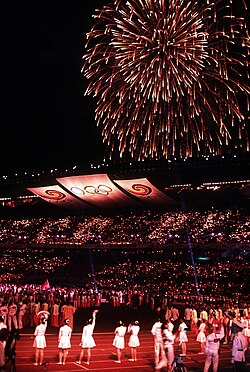
South Korea has a distinguished history of hosting world-class events. The 1988 Summer Olympics in Seoul featured 160 nations and over 8,000 athletes, marking a pivotal moment for the country's international visibility.
In winter sports, the 2018 Pyeongchang Winter Olympics returned the games to a mountain resort setting for the first time since 1994. South Korea holds the record for the most Winter Olympic medals among Asian countries, with 45 in total.
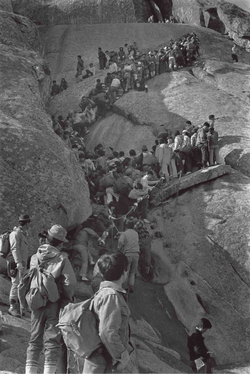
For leisure, skiing and hiking are popular. While alpine skiing has gained global attention through the 2018 and 2024 Winter Youth Olympics, resorts are currently adapting their marketing to foreign tourists to combat the effects of climate change.
| Sport | Key Achievement | Notable Milestone |
|---|---|---|
| Archery | Women's Team Dominance | 10 consecutive Olympic Golds since 1988 |
| Football | World Cup Success | 4th place in 2002 FIFA World Cup |
| Baseball | Olympic Gold | Gold Medal at 2008 Olympic Games |
| Handball | World Championship | First non-European winner (Women, 1995) |
| Ice Skating | Winter Olympic Power | 45 total Winter Olympic medals |
Frequently Asked Questions
What are the most popular sports in South Korea?
Football and baseball are the most popular. A 2021 poll indicated that 25% of fans prefer football, while 18.8% prefer baseball.
How successful is South Korea in Olympic archery?
South Korea is exceptionally dominant, particularly in the women's team event, which they have won 10 consecutive times since its introduction in 1988.
Which team sport is South Korea's most successful in the Olympics?
Women's handball is the most successful, having won two Olympic gold medals (1988 and 1992), as well as silver and bronze medals.
What is the significance of the 2002 FIFA World Cup for Korea?
South Korea co-hosted the tournament with Japan and achieved a historic 4th-place finish, becoming the first AFC team to reach the semi-finals.
Who is the only Korean player to have played in the NBA?
Ha Seung-Jin is the only South Korean player to have played in the NBA, competing from 2004 to 2006.