South Georgia and the South Sandwich Islands: A History of Sovereignty Disputes
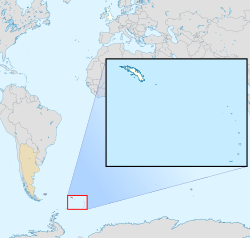
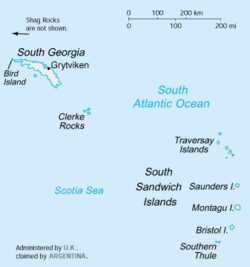
Located in the remote reaches of the South Atlantic, South Georgia and the South Sandwich Islands are the subject of a long-standing sovereignty dispute between the United Kingdom and Argentina. These islands, which possess no indigenous population and are home to only about 30 inhabitants, represent a complex intersection of colonial history, industrial whaling, and military conflict.
While the United Kingdom currently exercises de facto control as a British overseas territory, Argentina maintains a constitutional claim to the region, viewing the islands as part of the Tierra del Fuego Province.
Key Facts
- Current Status: Administered by the UK as a British overseas territory.
- Primary Dispute: Sovereignty contested by Argentina since 1927.
- Population: Approximately 30 inhabitants; no indigenous population.
- Key Historical Event: Brief Argentine occupation during the 1982 Falklands War.
- Initial Claim: Claimed by Great Britain in 1775 via Captain James Cook.
The Origins of the British Claim
The British claim began in January 1775 when Captain James Cook claimed the South Georgia archipelago for Great Britain, following its discovery by Anthony de la Roché. For several decades, the UK did little to enforce this claim. However, in 1843, Letters Patent (legal instruments issued by a monarch to grant a right or privilege) were issued to establish the government of the islands as a Falkland Islands Dependency.
In 1908, the British government formally annexed the islands and issued new Letters Patent. This decree included South Georgia, the South Sandwich Islands, South Orkney, South Shetland islands, and Graham Land. While these were managed as dependencies of the Falkland Islands for administrative convenience, the UK clarified the boundaries in 1917 to ensure the claim did not inadvertently include parts of the South American mainland.
The Origins of the Argentine Claim
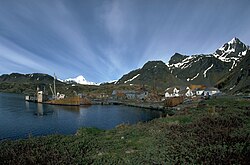
Argentina's connection to the islands grew through economic activity. In 1904, the Compañía Argentina de Pesca (CAP), a whaling company registered in Argentina and led by Norwegian Carl Anton Larsen, established the settlement of Grytviken. The employees of CAP became the first permanent residents of the island, and the Argentine government authorized a weather station there in 1905.
Interestingly, the CAP initially operated under British authority, signing a lease with the Falkland Islands government in 1906 and using British whaling licenses after the 1908 annexation. Even Carl Anton Larsen adopted British citizenship in 1910. Despite these early arrangements, Argentina made its first explicit claim to South Georgia in 1927, followed by a claim to the South Sandwich Islands in 1938.
Diplomatic Tensions and the Falklands War
Throughout the mid-20th century, the UK attempted to resolve the dispute through legal channels. Between 1947 and 1954, the UK offered to take the matter to the International Court of Justice in The Hague, but Argentina declined. A unilateral attempt by the UK to involve the court in 1955 was also rejected by Argentina, which cited a lack of jurisdiction.
Tensions escalated in November 1976 when Argentina established a base, Corbeta Uruguay, on Thule Island. This prompted the UK to launch Operation Journeyman to protect the Falkland Islands from potential invasion.
The 1982 Conflict
The dispute turned into active conflict on March 19, 1982, when 50 Argentines, posing as scrap metal merchants, landed at Leith Harbour and hoisted the Argentine flag. This was followed by the landing of further troops led by Lieutenant Alfredo Astiz. On April 3, 1982, Argentine forces seized Grytviken.
The UK responded with Operation Corporate to recapture the islands. As part of this effort, Operation Paraquet saw Royal Marines retake Grytviken in just two hours on April 25, 1982. The garrison at Leith Harbour surrendered the following day, and the Corbeta Uruguay base surrendered on June 20, 1982, before being demolished in December.
Current Legal and Political Status
Since 1985, the UK has administered the islands separately from the Falklands. Under the British Overseas Territories Act 2002, the region is officially designated as a British overseas territory.
Conversely, Argentina continues to claim the islands as part of the Islas del Atlántico Sur Department of Tierra del Fuego Province. This claim is formally enshrined in the 1994 Argentine constitution.
| Feature | United Kingdom Position | Argentina Position |
|---|---|---|
| Basis of Claim | Discovery (1775) and Annexation (1908) | Protests since 1927 and constitutional mandate |
| Administrative History | Legal administration since 1908 | Historical presence via CAP whaling operations |
| Current Status | British Overseas Territory | Part of Tierra del Fuego Province |
| 1982 Conflict | Recaptured territory from invasion | Briefly exercised control |
Frequently Asked Questions
Who currently controls South Georgia and the South Sandwich Islands?
The United Kingdom exercises de facto control and administers the islands as a British overseas territory.
Why does Argentina claim the islands?
Argentina bases its claim on historical presence, such as the early 20th-century whaling operations by the Compañía Argentina de Pesca, and has formally protested British sovereignty since 1927.
What happened during the Falklands War regarding these islands?
Argentine forces occupied parts of the islands, including Grytviken and Leith Harbour, in 1982. They were expelled by British Royal Marines during Operation Paraquet.
Are there any permanent residents on the islands?
There is no indigenous population. The islands are currently home to approximately 30 inhabitants, primarily related to administration and research.
What are Letters Patent in the context of this dispute?
Letters Patent are legal documents issued by the British monarch to formally establish the government and boundaries of the islands as dependencies.