Exploring South Chungcheong Province: South Korea's Industrial and Economic Powerhouse
Located in the Hoseo region in the southwest of the Korean Peninsula, South Chungcheong Province—commonly known as Chungnam—is a vital hub of economic activity and cultural heritage. Bordered by Gyeonggi to the north, North Chungcheong, Sejong Special Self-governing City, and Daejeon to the east, and North Jeolla to the south, this province serves as a critical link in South Korea's geography.
While Hongseong County serves as the provincial capital, the province is defined by its rapid transformation. Once primarily an agricultural region, Chungnam has evolved into one of South Korea's fastest-growing and wealthiest provinces, driven by massive industrialization and strategic infrastructure developments.
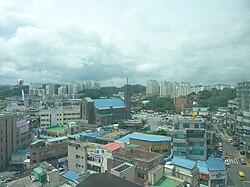
Key Facts
- Capital: Hongseong County
- Largest City: Cheonan
- Total Area: 8,226.14 km²
- Population: 2,123,037 (2022 data)
- Nominal GDP (2023): KRW 143 trillion (approx. US$ 114 billion)
- GDP Per Capita: US$ 58,937
- Administrative Divisions: 8 cities and 7 counties
Economic Growth and Infrastructure
South Chungcheong stands out as a leader in the national economy. It has experienced remarkable growth, with an average GDP increase of 9.7% between 2001 and 2007, which later accelerated to 12.4% in 2010. This economic surge has shifted the province's foundation from traditional farming to high-tech industry.
Connectivity is a major driver of this prosperity. Chungnam is one of the few provinces outside the Seoul Capital Area served by the Seoul Metropolitan Subway, with Line 1 passing through Cheonan and Asan. Furthermore, the KTX bullet train connects the major city of Cheonan to Seoul Station in under 30 minutes, facilitating massive development projects like the New Asan City near the Cheonan-Asan Station.
Natural Resources and Energy Transition
The province's landscape is highly productive. Approximately one-third of the land is dedicated to cultivation, and the coastline provides significant marine resources. The 220 square kilometers of exposed beach are utilized for salt production via solar evaporation. Additionally, the region possesses mineral wealth, including coal, gold, silver, zircon, and Monazite (a rare mineral containing thorium).
Historically, South Chungcheong was a major energy hub, hosting half of South Korea's coal-fired power generation capacity in 2018. However, in a significant move toward sustainability, the province became the first Asian member of the Powering Past Coal Alliance, committing to phasing out coal power to combat global warming and air pollution.
Geography and Natural Attractions
The province is bounded to the west by the Yellow Sea. Its diverse geography offers both industrial strength and natural beauty, ranging from mountainous terrains to scenic coastlines.
Mountainous and Coastal Wonders
For nature enthusiasts, Mount Gyeryong is a primary destination. Standing at 845 meters, it is located within a national park famous for its unique rock formations and ancient temples, such as Gwanchok-sa, which houses the largest stone Buddha in South Korea.
The coastline is equally impressive. The Taean Marine National Park, opened in 1978, features some of the country's premier bathing beaches. Nearby, the Cheollipo Arboretum—established in 1966—protects approximately 14,000 plant species, including several rare and endangered varieties.
Administrative Structure and Sejong City
The province is organized into 8 cities (si) and 7 counties (gun). While Cheonan is the largest urban center, other significant cities include Asan, Seosan, and Dangjin.
The Role of Sejong City
A unique aspect of the region's administration is the presence of Sejong Special Self-Governing City. Originally intended to replace Seoul as the national capital, a 2009 Constitutional Court ruling designated Sejong as a National Administrative Capital. Today, it serves as a secondary capital, housing approximately 36 government agencies and the Prime Minister's office.
Summary of Provincial Data
| Category | Details |
|---|---|
| ISO Code | KR-44 |
| Area Rank | 6th in South Korea |
| Population Rank | 4th in South Korea |
| Population Density | 258.08/km² |
| Area Code | 041 |
| Major Religions | Christianity (26.8%), Buddhism (13.8%), Non-religious (58.6%) |
Frequently Asked Questions
What is the capital of South Chungcheong Province?
The provincial capital is Hongseong County. While Cheonan is the largest city, the administrative seat was relocated to Hongseong in 2012.
How is the economy of Chungnam changing?
The province is transitioning from a primarily agricultural economy to a highly industrialized one. It is currently one of South Korea's richest and fastest-growing regions.
Is it easy to travel from South Chungcheong to Seoul?
Yes. Thanks to the KTX bullet train, you can travel from Cheonan-Asan to Seoul Station in less than 30 minutes. Additionally, Seoul Subway Line 1 provides direct service to Cheonan and Asan.
What are the main natural resources in the province?
The province utilizes agricultural land, marine products, and salt from solar evaporation. It also has deposits of coal, gold, silver, zircon, and Monazite.
What is the significance of Sejong City to the region?
Sejong City was created from part of South Chungcheong to serve as a National Administrative Capital. It functions as a secondary capital to Seoul, housing many of the nation's government ministries.