South African Military History: From Ancient Tribes to Modern Peacekeeping
The military history of South Africa is a complex tapestry of conflict, spanning from prehistoric tribal skirmishes to sophisticated modern international peacekeeping. This chronicle encompasses civil wars, struggles for independence, and strategic engagements fought both within the borders of the modern state and across the wider globe.
Prehistoric and Early Tribal Warfare
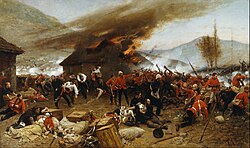
Long before European arrival, the southern tip of Africa was inhabited by the San people. Military activity during this era primarily consisted of tribal warfare and strategic alliances for survival. The landscape shifted with the Bantu expansion from Central Africa, which saw the emergence of merged tribes like the Masarwa. Archaeological evidence indicates that successive waves of Bantu immigrants possessed superior weaponry, allowing them to dominate the eastern regions and push the Khoisan into less desirable territories.
Colonial Fortifications and Early European Conflict
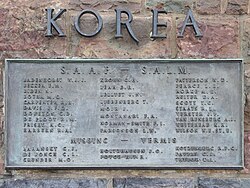
The arrival of European powers introduced new dimensions of warfare. In 1664, amid rising tensions between England and the Netherlands, Commander Zacharias Wagenaer was ordered to construct a stone fortification. This resulted in the Castle of Good Hope, a pentagonal fortress completed by the VOC (Dutch East India Company) between 1666 and 1679. As the oldest building in South Africa, it served as the local headquarters for the South African Army in the Western Cape for centuries.
The region later became a focal point of Anglo-Dutch rivalry. While the British briefly held the Cape of Good Hope, it was returned to the Batavian Government in 1804. However, the British returned in 1806, securing control for over a century after defeating the Dutch at the Battle of Blaauwberg.
The Rise of the Zulu Kingdom
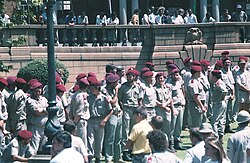
In the early 19th century, the Zulu kingdom underwent a military revolution under Shaka. He replaced traditional long-range javelins with the assegai—a short-shafted, broad-bladed spear designed for close-quarters stabbing. Shaka further modernized the military by organizing warriors into Impis, disciplined units that fought in tight formations behind large cowhide shields.
These tactics were decisively proven during the Ndwandwe-Zulu War (1817–1819). At the Battle of Gqokli Hill in 1819, Shaka's disciplined forces overcame the superior numbers of the Ndwandwe people.
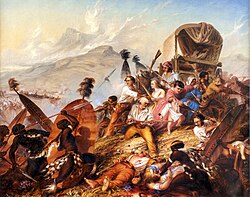
The Anglo-Boer Wars
The late 19th and early 20th centuries were defined by the clash between the British Empire and the Boers (descendants of Dutch settlers).
The First Boer War (1880–1881)
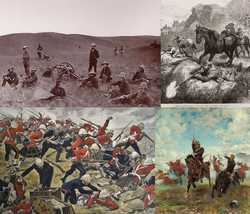
Triggered by the British annexation of the South African Republic (Transvaal) in 1877, this conflict saw the British outmaneuvered by highly mobile Boer marksmen. Disastrous defeats at Bronkhorstspruit, Laing's Nek, Schuinshoogte, and Majuba Hill—where British commander George Pomeroy Colley was killed—forced the British government to grant the Boers self-government under theoretical British oversight.
The Second Boer War (1899–1902)
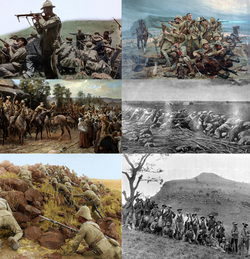
This more protracted conflict pitted Great Britain against the Orange Free State and the South African Republic. The war was brutal, resulting in approximately 75,000 deaths. This included 22,000 British and imperial soldiers, 6,000–7,000 Boer Commandos, and tens of thousands of civilians—including Boer women and children and black Africans—who died from disease in concentration camps.
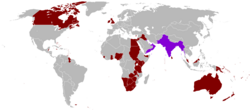
The war ended with the Treaty of Vereeniging in May 1902, absorbing the Boer republics into the British Empire and eventually leading to the creation of the Union of South Africa in 1910.
Global Conflicts: The World Wars
As part of the British Empire, South Africa contributed significantly to both World Wars.
World War I
The Union Defence Force served in German South-West Africa and on the Western Front. Over 230,000 personnel served, including 146,000 whites, 83,000 blacks, and 2,500 people of mixed race and Indian descent. Total casualties reached approximately 18,600, with over 12,452 killed.
World War II
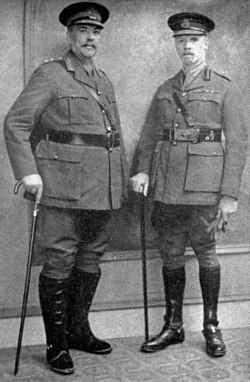
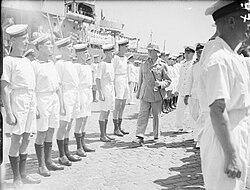
Prime Minister Jan Smuts became a pivotal figure, serving as a member of the British Imperial War Cabinet and becoming the first South African appointed as a field marshal of the British Army in 1941.
South African forces were active in several theaters:
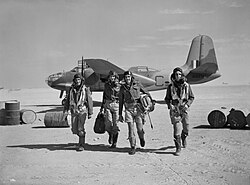
- East Africa: The South African Air Force (SAAF) launched the campaign's first bombing raid on June 11, 1940.
- North Africa: The 1st and 2nd Infantry Divisions fought in campaigns including the Battle of El Alamein, though the 2nd Division suffered heavy losses at the fall of Tobruk in 1942.
- Italy: The 6th Armoured Division operated from 1944 to 1945.
The Border War and Nuclear Disarmament
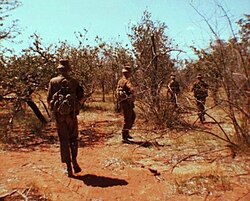
From 1966 to 1989, South Africa engaged in the South African Border War, a counter-insurgency campaign against the People's Liberation Army of Namibia (PLAN) in South-West Africa. This conflict involved clashes with the Angolan FAPLA and Cuban advisors, culminating in the Battle of Cuito Cuanavale.
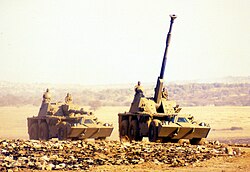
To sustain this effort under UN sanctions, the state-owned Armscor developed domestic armaments, including advanced 155mm howitzers. During this era, South Africa also developed nuclear weapons. In a historic move during the 1990s, South Africa became the first state to voluntarily dismantle its own nuclear arsenal.
Modern Era and the SANDF
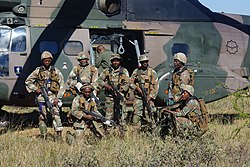
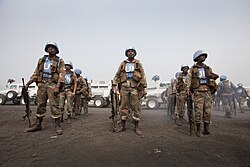
Today, the South African National Defence Force (SANDF) is the unified military body of the country. It consists of four primary services: the Army, Air Force, Navy, and Military Health Service. The SANDF has transitioned toward international peacekeeping, including deployments with the United Nations Force Intervention Brigade in the Democratic Republic of Congo.
Key Facts
- Oldest Building: The Castle of Good Hope (built 1666–1679) is the oldest existing building in South Africa.
- Tactical Innovation: Shaka Zulu revolutionized warfare with the assegai (stabbing spear) and the Impi formation.
- Nuclear Milestone: South Africa is the first country to develop nuclear weapons, dismantle them, and subsequently sign the Treaty on the Prohibition of Nuclear Weapons.
- WWII Leadership: Jan Smuts was the first South African to reach the rank of Field Marshal in the British Army.
- Border War: The conflict (1966–1989) involved elite units like Koevoet and 32 Battalion against Soviet-backed PLAN forces.
| Conflict | Period | Primary Opponents | Key Outcome |
|---|---|---|---|
| Ndwandwe-Zulu War | 1817–1819 | Zulu vs. Ndwandwe | Zulu dominance in the region |
| First Boer War | 1880–1881 | Boers vs. British | Boer self-government in Transvaal |
| Second Boer War | 1899–1902 | Boer Republics vs. British | Absorption into British Empire |
| South African Border War | 1966–1989 | SADF vs. PLAN/FAPLA | End of South African rule in Namibia |
Frequently Asked Questions
What was the significance of the assegai in Zulu warfare?
The assegai was a short-shafted, broad-bladed spear used for close-quarters stabbing. Introduced by Shaka Zulu, it replaced the traditional throwing javelin, forcing warriors to engage in direct, decisive combat.
How did the First Boer War differ from the Second?
The First Boer War was a shorter conflict that resulted in a British truce and Boer self-government. The Second Boer War was a protracted struggle that ended with the total defeat of the Boer republics and their incorporation into the British Empire.
Who was Jan Smuts in the context of military history?
Jan Smuts was a South African Prime Minister and Field Marshal who served in the British Imperial War Cabinet during World War II, acting as a key advisor to Winston Churchill.
What is the SANDF?
The South African National Defence Force (SANDF) is the modern military of South Africa, comprising the Army, Air Force, Navy, and Military Health Service.
Why is South Africa's nuclear history unique?
South Africa is the only nation in history to have developed its own nuclear weapons and then voluntarily dismantled them entirely before signing international non-proliferation treaties.